
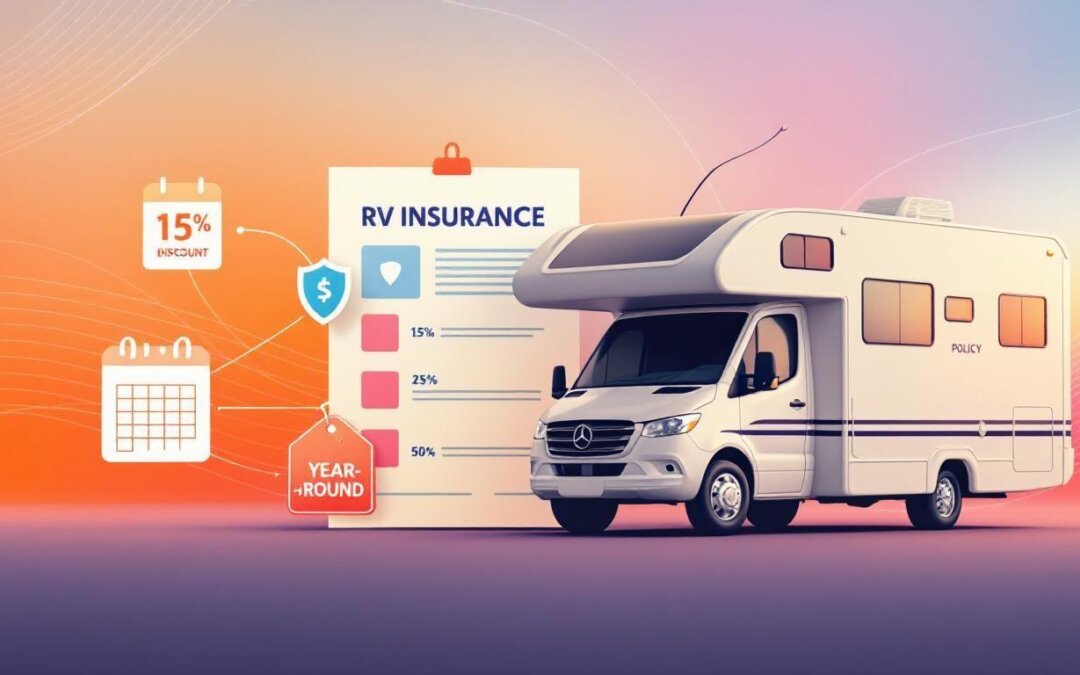
RV insurance doesn’t have to drain your budget. Most RV owners miss out on substantial savings simply because they don’t know where to look.
At Leslie Kay’s, Inc., we’ve helped thousands of RV enthusiasts find RV insurance discounts that actually add up. Whether you’re a seasonal traveler or a full-time nomad, this guide shows you exactly how to cut your costs year-round.
Multi-Policy Bundling Discounts
Bundling your RV with auto and home insurance isn’t optional advice-it’s the fastest way to cut your annual costs. Most RV owners carry multiple policies scattered across different insurers, which means they’re leaving money on the table.
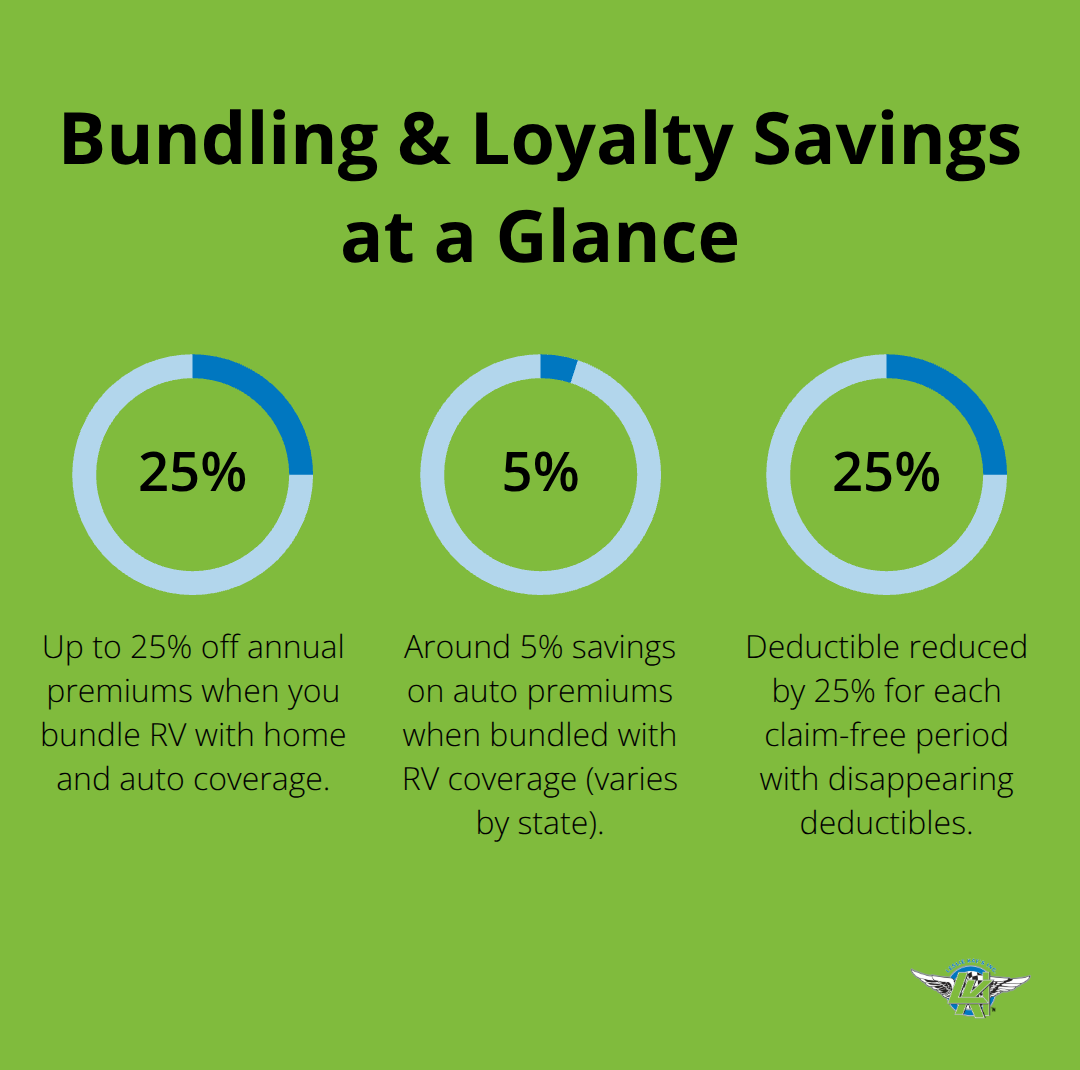
Bundling RV insurance with home and auto coverage can save you up to 25% on your annual premiums, and that’s just the starting point. Progressive typically delivers around 5% savings on auto premiums alone when you bundle with RV coverage, though the actual discount varies by state and your specific situation.
How Bundling Reduces Your Annual Premiums
The math is straightforward. If you insure your RV separately from your auto and home, you pay full price for each policy. A bundled approach typically saves 10% to 20% across your combined policies, which translates to $200 to $400 annually on a moderate insurance portfolio. Beyond the discount percentage, bundling simplifies everything. Your renewal dates align, your deductibles stay consistent across policies, and filing a claim becomes one phone call instead of three. Full-time RVers especially benefit because they can bundle RV coverage with auto, homeowners, or renters insurance depending on their situation. Part-time RVers gain the same advantage.
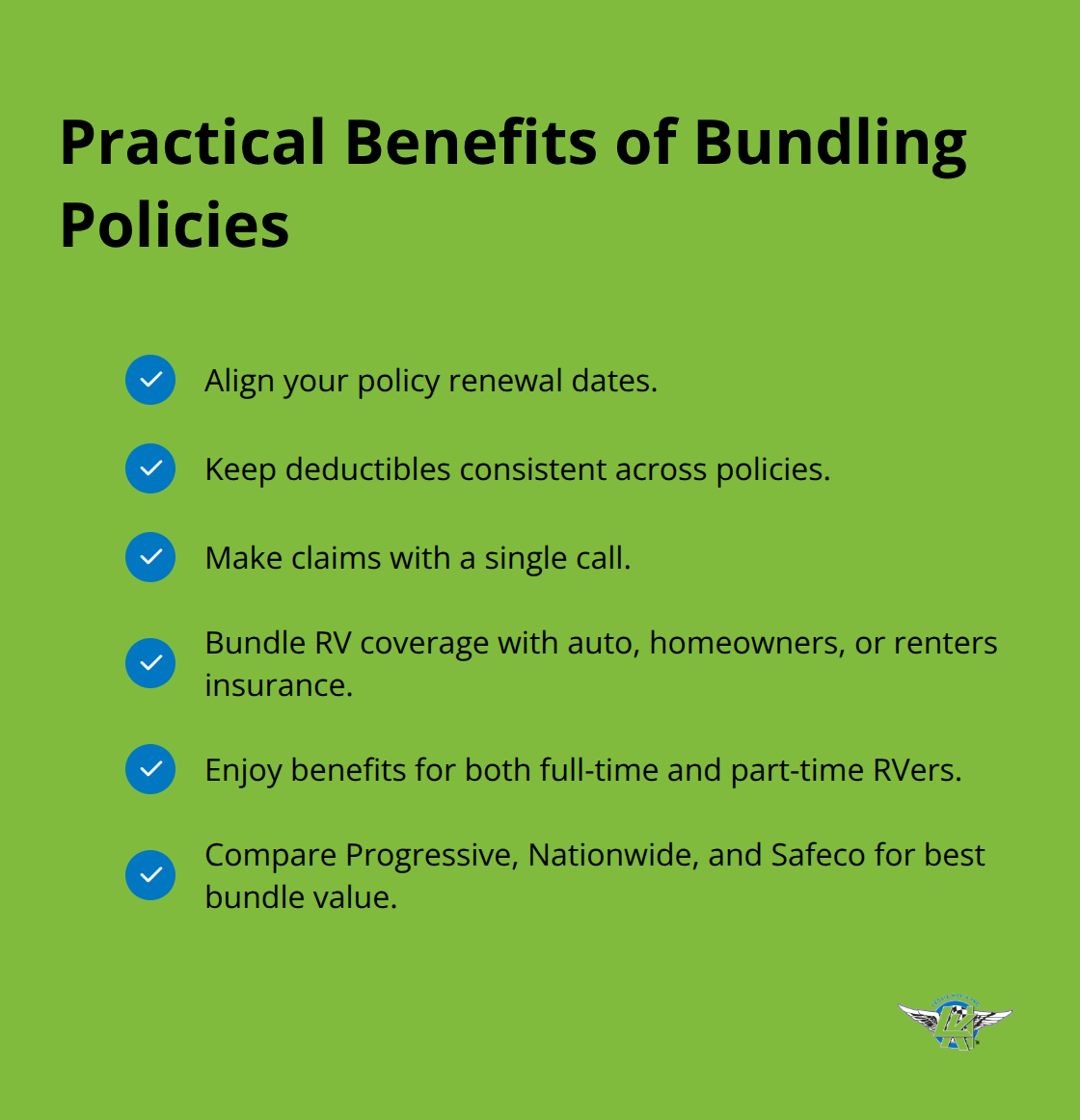
The insurers offering the strongest bundling discounts include Progressive, Nationwide, and Safeco, each with slightly different reward structures, so comparing quotes from these carriers matters before you commit.
Loyalty Rewards That Increase Over Time
The real benefit compounds over time. When you stack your RV, auto, and home policies under one insurer, you eliminate the friction of managing separate accounts, separate renewal dates, and separate claims processes. You also gain loyalty rewards that increase as you stay with the same company. Progressive’s continuous insurance discount rewards customers who switch to them from another insurer and stay put, while their disappearing deductibles feature reduces your out-of-pocket costs by 25% for each claim-free period. This means your first renewal without a claim could lower your deductible from $1,000 to $750, and another claim-free year brings it down to $500. That’s real money staying in your pocket.
Stacking Discounts on Top of Your Bundle
Bundling serves as your foundation, but it’s not your only discount. Once your policies are bundled, you can layer on additional savings. A responsible driver discount for three years without violations, a paperless discount for electronic statements, and a paid-in-full discount for upfront payment can each reduce your rate further. Some insurers, like Progressive, offer accident forgiveness on claims under $500, which means a minor incident won’t trigger a rate increase. Progressive also provides this protection automatically when you start a policy. After four years with Progressive and three years without an accident, even larger claims won’t raise your rates. Combining a 20% multi-vehicle discount with a 10% multi-policy discount, plus a 5% safe driver discount, can easily exceed 30% in total savings. That’s not theoretical-those are real discount amounts from actual carriers. The key is asking about every available discount during your quote process, because some insurers don’t list all of them online. Nationwide, for example, offers eight separate RV discounts but only reveals some during the quoting conversation, not on their website.
Safety features and anti-theft devices represent your next opportunity to cut costs even further.
Safety Features and Usage-Based Discounts
Low Mileage and Seasonal Use Discounts
Your RV sits parked most of the year. That’s not a waste-it’s an opportunity to slash your insurance costs. Insurers reward low-mileage and seasonal-use RVers with meaningful discounts because your vehicle spends less time on the road, which means lower risk. If you use your RV for 60 days annually instead of 200 days, you represent a different risk profile entirely, and your premium should reflect that difference. National General and other carriers specifically offer low-mileage discounts that reduce your annual cost by 10 to 15 percent. The calculation is simple: fewer days on the road equals fewer chances for accidents, theft, or weather-related damage.
When you quote your RV insurance, report your actual usage accurately. Many seasonal RVers underestimate or overestimate their travel days, which throws off the quote. If you travel four weekends per month plus two weeks in summer, that equals roughly 130 days-count it precisely. Full-time RVers who spend 150 nights or more annually don’t qualify for these discounts, but they access other savings like continuous coverage discounts or bundling benefits that compound differently. Part-time RVers should capitalize on this advantage immediately because it requires no additional effort beyond accurate reporting during the quoting process.
Anti-Theft Devices and Safety Equipment
Anti-theft devices and safety equipment represent your second lever for reducing premiums, and this one requires action on your part. Alarms, GPS trackers, immobilizers, and wheel locks all qualify for discounts because they lower theft risk, which is a real concern in many regions. Anti-theft devices qualify you for premium reductions because the insurer’s exposure drops significantly. Beyond theft protection, brake systems, tire condition, and smoke detectors inside your RV all influence insurability and premium rates. Keeping your RV mechanically sound proves to insurers that you maintain your vehicle responsibly, which often qualifies you for loyalty discounts or accident forgiveness programs at renewal time.
Telematics Programs That Monitor Safe Driving
Telematics programs monitor your actual driving behavior and reward safe habits with discounts up to 40 percent according to Nationwide’s SmartRide program. These usage-based programs track your mileage, acceleration patterns, braking habits, and time of day you drive your RV. If you drive conservatively and avoid hard braking, night driving, or excessive speeding, the insurer passes those savings back to you through lower premiums. This isn’t speculation-Progressive, Geico, and Nationwide all offer telematics programs with documented savings.
The catch is that you must opt in and install their tracking app, which some RV owners resist. However, if you’re a safe driver, this program pays for itself within months. A driver with a clean record using a telematics program can stack this discount on top of bundling, safety features, and low-mileage discounts, creating a compounding effect that cuts total annual costs by 40 to 50 percent.
Your membership status and professional affiliations unlock another category of discounts that many RV owners overlook entirely.
Memberships and Affiliations That Cut Your Insurance Costs
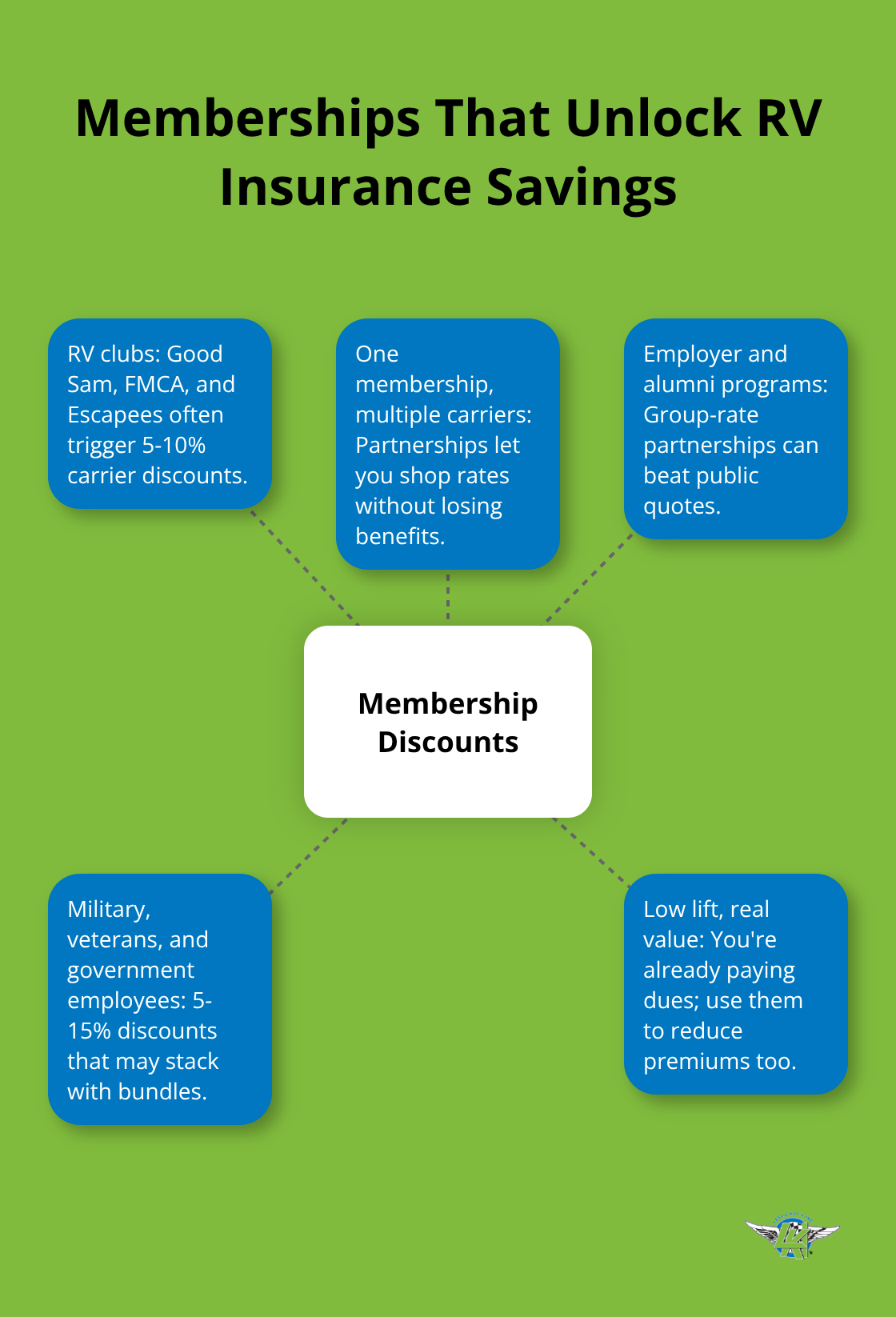
RV club memberships and professional affiliations represent one of the easiest discounts to overlook, yet they deliver real savings with minimal effort. Nationwide explicitly offers discounts for RV association memberships, and this isn’t a small incentive buried in fine print. If you belong to Good Sam Club, Family Motor Coach Association, Escapees RV Club, or similar organizations, you already qualify for premium reductions at multiple carriers. The discount typically ranges from 5 to 10 percent depending on the insurer and your membership status. What makes this opportunity so valuable is that you probably already pay membership dues for roadside assistance, campground discounts, or trip planning resources.
Your membership card now becomes a tool to reduce your insurance costs simultaneously.
RV Club Memberships and Organization Discounts
Roamly specifically rewards full-time RVers with discounts for existing RV or auto insurance, military status, homeownership, and early-bird enrollment when you quote before your current policy expires. These stacking opportunities mean a member of Escapees RV Club with a clean driving record and an existing auto policy can easily accumulate 20 to 25 percent in combined savings. The key is mentioning every affiliation during your quote process, since many carriers don’t automatically apply these discounts unless you explicitly state your membership status. Organizations like Good Sam Club often partner with multiple insurers, which means your single membership unlocks savings across different carriers. This flexibility allows you to shop around while maintaining your membership benefits.
Professional and Alumni Association Discounts
Professional associations, alumni networks, and employer partnerships unlock a second tier of discounts that work independently from your RV club benefits. College alumni associations sometimes offer RV insurance discounts through preferred vendor programs, though availability varies significantly by school and insurer. The practical approach involves contacting your employer’s benefits department or HR office and asking specifically about insurance partnerships. Many organizations negotiate group rates that never appear on the insurer’s public website. If your employer maintains relationships with insurance carriers, you have leverage to negotiate better rates than the standard quote.
Military, Veterans, and Government Employee Discounts
Military members and veterans access dedicated RV insurance discounts across State Farm, Allstate, Progressive, and Geico. These discounts typically range from 5 to 15 percent and sometimes stack with other savings like bundling or safe driver discounts. Government employees, first responders, and teachers often qualify for occupational discounts through employers or professional associations. Your military service or government employment status represents real negotiating power with insurers. Combine a military discount with a multi-policy bundle, add a safe driver discount, and you approach 35 to 40 percent in total savings. That’s the difference between paying $1,200 annually and paying $720 annually for the same coverage on a motorhome.
Final Thoughts
RV insurance discounts stack on top of each other to create substantial year-round savings that most owners never realize. Bundling your RV with auto and home coverage delivers 10 to 20 percent in immediate reductions, while adding safety features, telematics programs, and low-mileage discounts compounds those savings further. Layer in your RV club membership, military status, or professional affiliations, and you reach 35 to 40 percent in total savings compared to standard rates.
The real challenge lies in knowing which discounts apply to your specific situation and how to combine them effectively. Different carriers offer different discount combinations, and some only reveal their full RV insurance discounts during the quoting conversation, not on their websites. Shopping multiple carriers takes time and expertise that most RV owners simply don’t have.
We at Leslie Kay’s, Inc. specialize in comparing multiple carriers to find the RV insurance discounts and coverage options that match your actual usage and budget. Contact Leslie Kay’s, Inc. today to see exactly how much you can save with personalized quotes tailored to your situation.
The information provided in this blog is for general informational purposes only and does not constitute legal, financial, or insurance advice. Coverage options, terms, and availability may vary. Please consult with a licensed professional for advice specific to your situation.
Artificial intelligence may have been used to generate text and images in some blog articles.