
RV travel doesn’t stop when the seasons change. Whether you’re chasing winter sun or summer adventures, your insurance needs shift throughout the year.
At Leslie Kay’s, Inc., we know that all season RV insurance requires more than a one-size-fits-all policy. Different weather conditions, travel routes, and seasonal risks demand coverage that adapts with you.
Why Your Coverage Shifts With Every Season
Winter Hazards Demand Specialized Protection
Winter RV travel exposes you to hazards that summer camping simply doesn’t encounter. Frozen water lines, battery failure, and tire blowouts from temperature fluctuations happen regularly, yet standard policies often exclude weather-related damage from neglect. If you travel through snow or ice, comprehensive coverage becomes non-negotiable-it protects against theft, vandalism, and weather damage while your RV sits parked. Road salt corrodes undercarriages and metal fixtures, accelerating rust that can total an older RV within years. Winterizing your RV prevents many claims, but the insurance itself must cover what maintenance cannot.
Tire maintenance becomes critical during cold months. Proper inflation changes as temperatures drop, and underinflated tires fail more frequently in winter conditions. A thorough pre-travel inspection verifies that awnings, antennas, steps, and other accessories remain properly secured before you hit icy roads.
Summer Brings Different Exposures
Summer presents entirely different risks. Heat warps seals, causes battery discharge, and increases the risk of fires in propane systems. Liability claims spike during peak camping season when you occupy stationary positions at crowded RV parks-a neighbor’s child injured near your awning or a guest slipping on wet steps can trigger medical payment claims that standard policies cap too low. Many year-round travelers discover coverage gaps mid-season because they failed to account for extended liability needs.
Full-time RV insurance includes personal liability protection that recreational policies skip entirely. This coverage protects you when your RV functions as your home, not just your vacation vehicle.
Spring and Fall Transitions Create Exposure Windows
Spring and fall transitions demand attention because weather volatility peaks. Severe storms arrive unpredictably, and your RV transitions between storage and active use, creating exposure windows where coverage lapses. If you store your RV during off-months, suspension options reduce premiums by pausing unnecessary coverages-but you must actively manage these changes rather than assume your policy adapts automatically.
Year-round explorers need coverage that travels across state lines without gaps, includes emergency expense allowances for lodging when your RV becomes uninhabitable, and accounts for personal belongings totaling thousands of dollars inside. The cost difference between basic recreational coverage and comprehensive year-round protection remains modest compared to replacement costs. Shopping multiple carriers reveals significant variations in how they handle seasonal adjustments, storage discounts, and full-time living provisions-which makes selecting the right policy your next critical step.
Coverage That Moves With You Across Every Season
Comprehensive and collision protection Year-Round
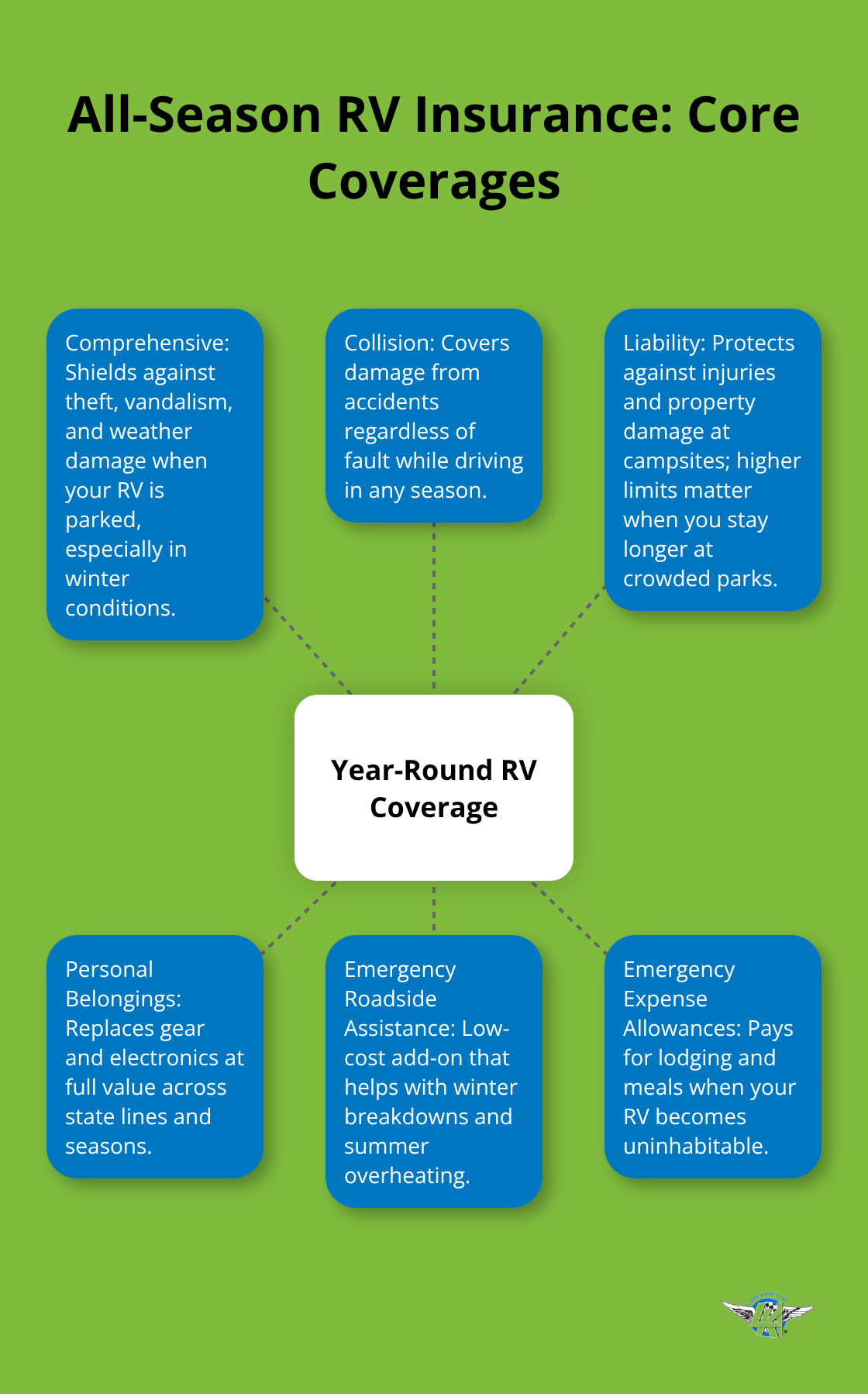
Comprehensive and collision protection form the foundation of year-round RV travel, yet most policies treat all seasons identically despite vastly different risks. Winter travel demands comprehensive coverage without question-it shields you against theft, vandalism, and weather damage while your RV sits vulnerable at rest stops or campgrounds. Collision coverage protects you when you drive, covering damage from accidents regardless of fault. The critical insight most year-round explorers miss is that deductibles matter more than premium costs. Raising your deductible from $500 to $1,000 on a motorhome can cut your annual premium by 15 to 20 percent, but only if your RV is paid in full and you can absorb that higher out-of-pocket cost during winter breakdowns.
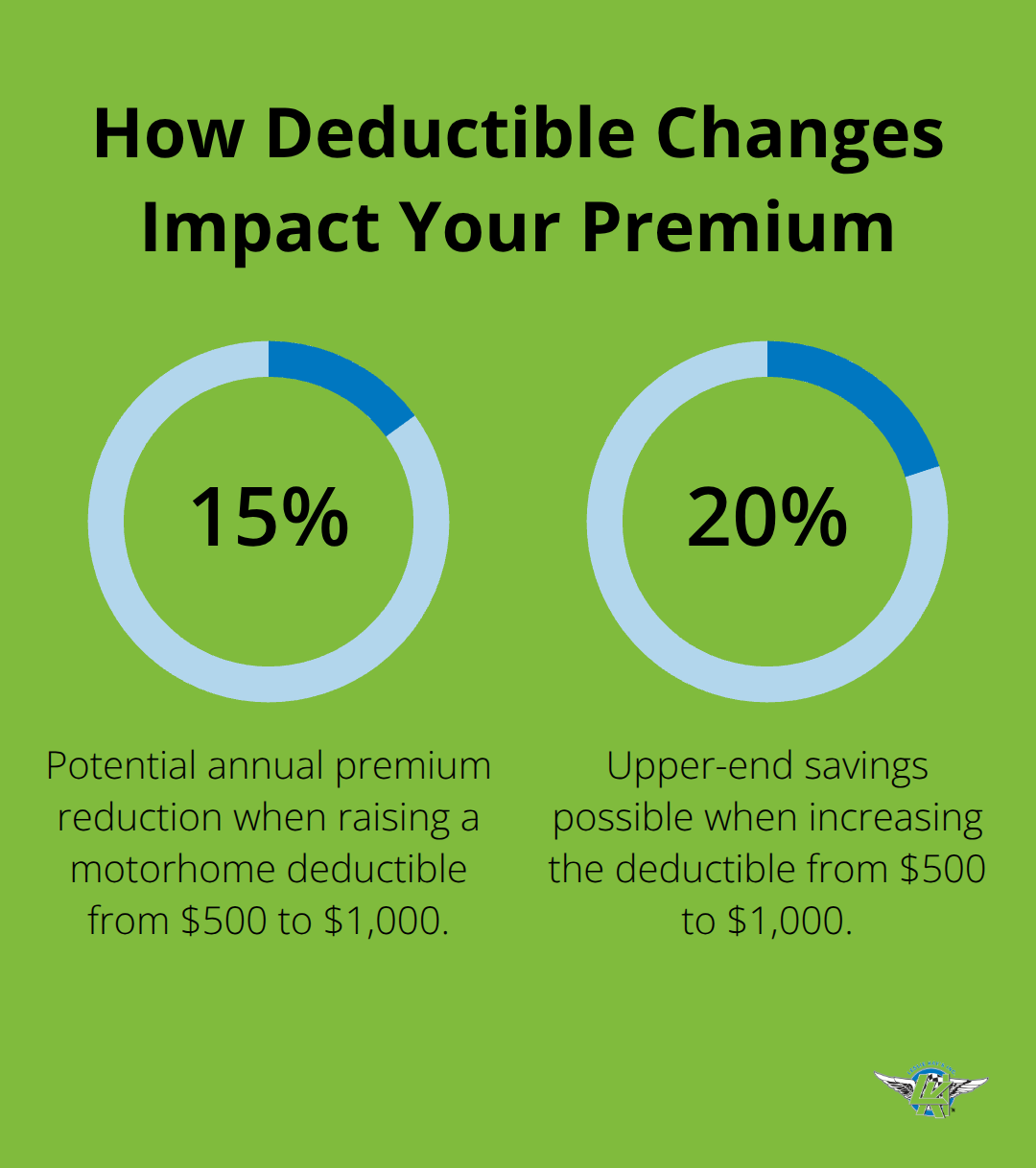
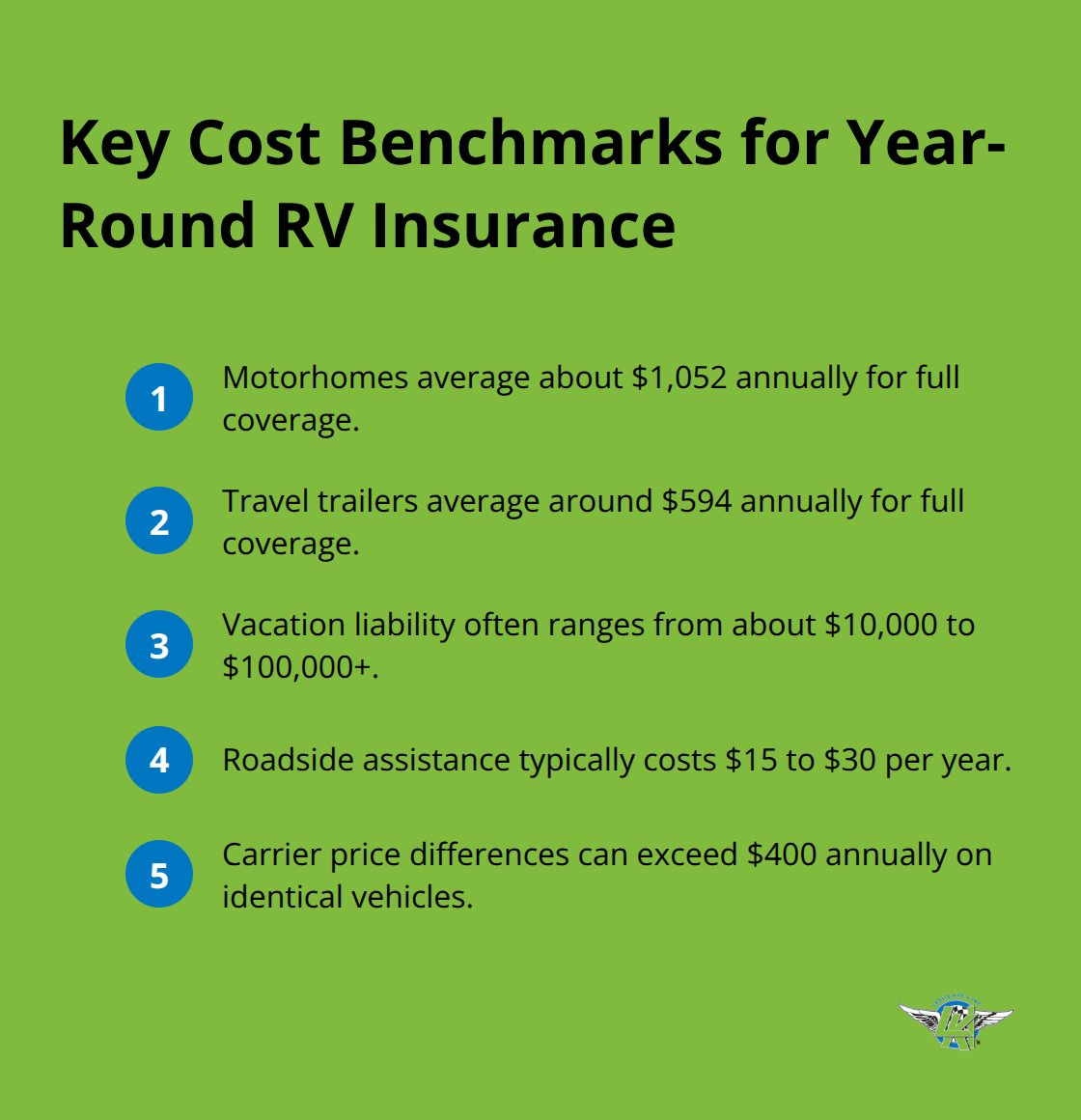
Travel trailers require comprehensive and collision coverage regardless of financing status, so negotiating deductibles becomes your primary lever for cost control. Progressive data from 2024 shows motorhomes cost roughly $1,052 annually for full coverage, while travel trailers average around $594-but these figures assume standard deductibles and single-season use, not year-round travel across multiple climate zones.
Liability Protection Across State Lines
Liability coverage becomes non-negotiable when you cross state lines repeatedly throughout the year. Your standard limits of $25,000 or $50,000 per person vanish quickly when a serious injury occurs at your campsite-a guest’s broken arm, a neighbor’s medical bills, or property damage to park infrastructure can easily exceed these thresholds. Full-time RV insurance includes personal liability protection that extends beyond vehicle accidents, covering injuries that happen while your RV sits parked.
Vacation liability coverage starts around $10,000 but can reach $100,000 or higher, and year-round travelers should prioritize higher limits because you occupy more campgrounds annually than seasonal users. This expanded protection reflects the reality that stationary liability exposure increases dramatically when you spend months at individual locations rather than days.
Personal Belongings and Emergency Support
Personal belongings coverage protects the thousands of dollars in gear, electronics, and furniture inside your RV, replacing items at full value rather than depreciated amounts-critical since a single laptop, drone, or bicycle collection can represent substantial loss. This coverage travels with you across seasons and state lines, maintaining protection regardless of where you park.
Emergency roadside assistance becomes genuinely valuable across multiple seasons; winter breakdowns in remote areas and summer overheating incidents both justify the modest cost of this add-on (typically $15 to $30 annually depending on your carrier). When your RV becomes uninhabitable due to mechanical failure, emergency expense allowances cover lodging and meals elsewhere-a protection that recreational policies frequently omit entirely. These layered coverages work together to address the specific exposures year-round travel creates, which means customized coverage that fits your specific needs becomes your next essential task.
How to Choose All-Season RV Insurance That Fits Your Travel Life
Document Your Actual Travel Patterns
Start by writing down exactly how you use your RV across twelve months. Year-round explorers rarely follow identical patterns-some spend winters in the Southwest and summers in the Pacific Northwest, while others split time between stationary park locations and constant movement. This distinction matters enormously because insurers price policies differently based on whether your RV sits parked for extended periods or moves continuously. Contact three to five carriers directly and provide specific travel details: the states you visit monthly, how many days annually you’re on the road versus parked, whether you work remotely from your RV (which triggers full-time coverage requirements), and your total belongings value inside the vehicle. Generic online quotes often miss critical details that affect your actual premium.
Progressive, Auto-Owners Insurance, Nationwide, and National General each handle seasonal adjustments differently-some offer storage discounts that suspend unnecessary coverages during months when your RV remains stationary, while others charge flat annual rates regardless of usage patterns. The difference between carriers can exceed $400 annually on identical vehicles, which makes shopping non-negotiable.
When comparing quotes, ignore the headline premium number and instead examine what each policy actually covers during different seasons.
Evaluate What Each Policy Actually Covers
One carrier might include personal liability protection automatically while another charges extra. Winter travel in snow states may trigger higher comprehensive premiums with some insurers but not others. Request quotes that reflect your specific seasonal routes, not hypothetical scenarios. Once you have three quotes in hand, stop focusing on price and instead evaluate deductible flexibility and policy limits across seasons.
A motorhome might cost $950 with a $1,000 deductible versus $1,100 with a $500 deductible-meaning your deductible choice creates the actual savings, not shopping around. Year-round travelers should prioritize higher liability limits ($100,000 minimum rather than $25,000) because stationary exposure compounds when you occupy dozens of campgrounds annually.
Match Personal Belongings Coverage to Your Inventory
Personal belongings coverage should match your actual inventory-measure the replacement cost of electronics, gear, and furniture inside your RV, then confirm the policy covers full replacement value, not depreciated amounts. Travel trailers require comprehensive and collision coverage regardless of financing status, eliminating one variable from your decision. Motorhomes with paid-in-full status offer flexibility to drop physical damage coverage and reduce premiums substantially, but only if you can absorb a major repair cost.
Request written confirmation of how each carrier handles storage options, what coverages suspend during inactive months, and whether vacation liability can increase beyond standard limits. Ask specifically whether the policy covers personal liability when your RV is parked-this protection separates full-time policies from recreational coverage and often gets overlooked during the quote process.
Work With an Agent Who Knows Multiple Carriers
Schedule a conversation with an independent agent who represents multiple carriers; they can identify which insurer best matches your seasonal patterns rather than pushing you toward their preferred provider. An agent familiar with year-round RV travel understands the nuances that online quote systems miss (storage discounts, state-specific requirements, full-time living provisions). They can also explain how each carrier handles claims during different seasons and whether your chosen policy adapts to your changing travel needs without requiring policy rewrites.
Final Thoughts
Year-round RV travel demands insurance that adapts to your changing environment, not a static policy designed for occasional weekend trips. All-season RV insurance protects you across winter ice, summer heat, and unpredictable spring storms by combining comprehensive coverage, expanded liability limits, and personal belongings protection that moves with you across state lines. The carriers that excel at year-round coverage understand that your exposure shifts dramatically between seasons-winter demands comprehensive protection against weather damage and theft, summer requires higher liability limits for crowded campgrounds, and transition periods need flexible storage options that pause unnecessary coverages without leaving gaps.
Your policy review should happen annually, ideally before your travel season begins. Premiums change yearly, and your coverage needs evolve as your RV ages, your belongings accumulate, or your travel patterns shift. A motorhome that cost $1,052 to insure last year might qualify for different discounts this year, or your expanded liability needs might justify higher limits that cost less than you expect.
Start by documenting your specific travel patterns across all twelve months, then contact multiple carriers with those details rather than relying on generic online quotes. Request written confirmation of how each policy handles storage discounts, personal liability coverage, and seasonal adjustments. Connect with Leslie Kay’s, Inc. to discuss your year-round travel plans and get quotes that reflect your actual exposure across every season.
The information provided in this blog is for general informational purposes only and does not constitute legal, financial, or insurance advice. Coverage options, terms, and availability may vary. Please consult with a licensed professional for advice specific to your situation.
Artificial intelligence may have been used to generate text and images in some blog articles.