

Your RV is more than a vehicle-it’s your home on wheels. Standard auto insurance falls short because it doesn’t account for the unique risks that come with living or traveling in an RV.
Getting personalized RV policy quotes means you’re not paying for coverage you don’t need or leaving gaps in protection. We at Leslie Kay’s, Inc. help RV owners find policies that match their specific lifestyle, whether you’re a full-time nomad or a seasonal traveler.
Why Standard Auto Insurance Leaves RVs Unprotected
Standard auto insurance simply doesn’t account for what an RV actually is. Your homeowners policy won’t cover your motorhome or travel trailer. Your car insurance won’t protect the belongings inside your RV, the awnings attached to it, or your liability exposure when someone gets injured at your campsite. The National Highway Traffic Safety Administration has documented rising RV accident trends over the past decade, yet most drivers still operate with inadequate coverage. RV insurance is a specialized hybrid that blends auto, home, and travel protection into one policy because RVs face risks that traditional vehicles never encounter.
The Liability Gap in Full-Time RV Living
When you live full-time in your RV, your liability exposure skyrockets. If someone slips on your awning or gets injured inside your motorhome while visiting, a standard auto policy won’t defend you. Full-time RV living requires expanded personal liability coverage, medical payments protection, and loss assessment coverage that mirrors what homeowners carry-not what drivers carry. Most states legally require motorhome liability coverage, but the limits you choose matter significantly. A Class A motorhome carrying multiple guests needs higher limits than a Class B camper van used for solo travel. If you finance your RV, your lender will demand comprehensive and collision coverage, but those minimums often fall short of actual replacement costs.
Coverage for Belongings and Attachments
Your RV contains expensive belongings that standard auto insurance ignores. Personal effects coverage protects laptops, cameras, clothing, and appliances inside your RV up to your policy limits. This coverage becomes essential if you travel with high-value gear. Permanent attachments coverage protects fixed features like awnings, antennas, and satellite dishes that would cost thousands to replace. If you’ve upgraded your RV with solar panels, lithium batteries, or custom equipment, you need to list those upgrades with receipts so they’re covered at replacement cost.
Water Damage and Roof Protection
Water damage presents a particular challenge because coverage depends on the cause. Sudden and accidental water damage from a roof leak may be covered under comprehensive coverage, but gradual deterioration and wear-and-tear are typically excluded. Roof Protection Plus, available for motorhomes and trailers under six years old with a $250 deductible, adds extra roof-related coverage that standard comprehensive doesn’t provide. Total loss replacement coverage will replace a totaled RV with a brand-new one if your RV is five model years old or less-a significant advantage over standard auto policies that pay only actual cash value.
Comparing Specialized Coverages Across Carriers
When you shop quotes, compare these specialized coverages across carriers because availability and pricing vary significantly by insurer and state. Each carrier structures personal effects limits, attachment coverage, and water damage protection differently. The right policy matches both your RV’s features and your travel patterns, which is why getting multiple quotes from different insurers reveals the true range of protection available to you.
Which RV Type Shapes Your Coverage Needs Most
Class A Motorhomes Require the Highest Protection
Class A motorhomes demand the highest coverage limits because they’re luxury vehicles carrying substantial guest capacity and expensive built-in systems. These rigs range from 30 to 45 feet, weigh 10,000 to 33,000 pounds, and often cost $100,000 to $300,000 new. Your liability limits should reflect this value-most insurers recommend $300,000 to $500,000 in bodily injury liability for Class A owners because a single injury claim inside your motorhome or at your campsite can easily exceed $100,000. The size and cost of these vehicles create exposure that smaller RVs simply don’t carry.
Class B and Class C Motorhomes Call for Different Limits
Class B camper vans are smaller, lighter, and typically serve solo or couples travel, which means your liability exposure drops significantly. These compact rigs cost $40,000 to $80,000 and need lower coverage limits, often $100,000 to $250,000, depending on whether you frequently host guests. Class C motorhomes sit between these two, ranging from 20 to 35 feet and costing $50,000 to $150,000. If you use a Class C for seasonal family vacations, your coverage needs differ dramatically from full-time living.
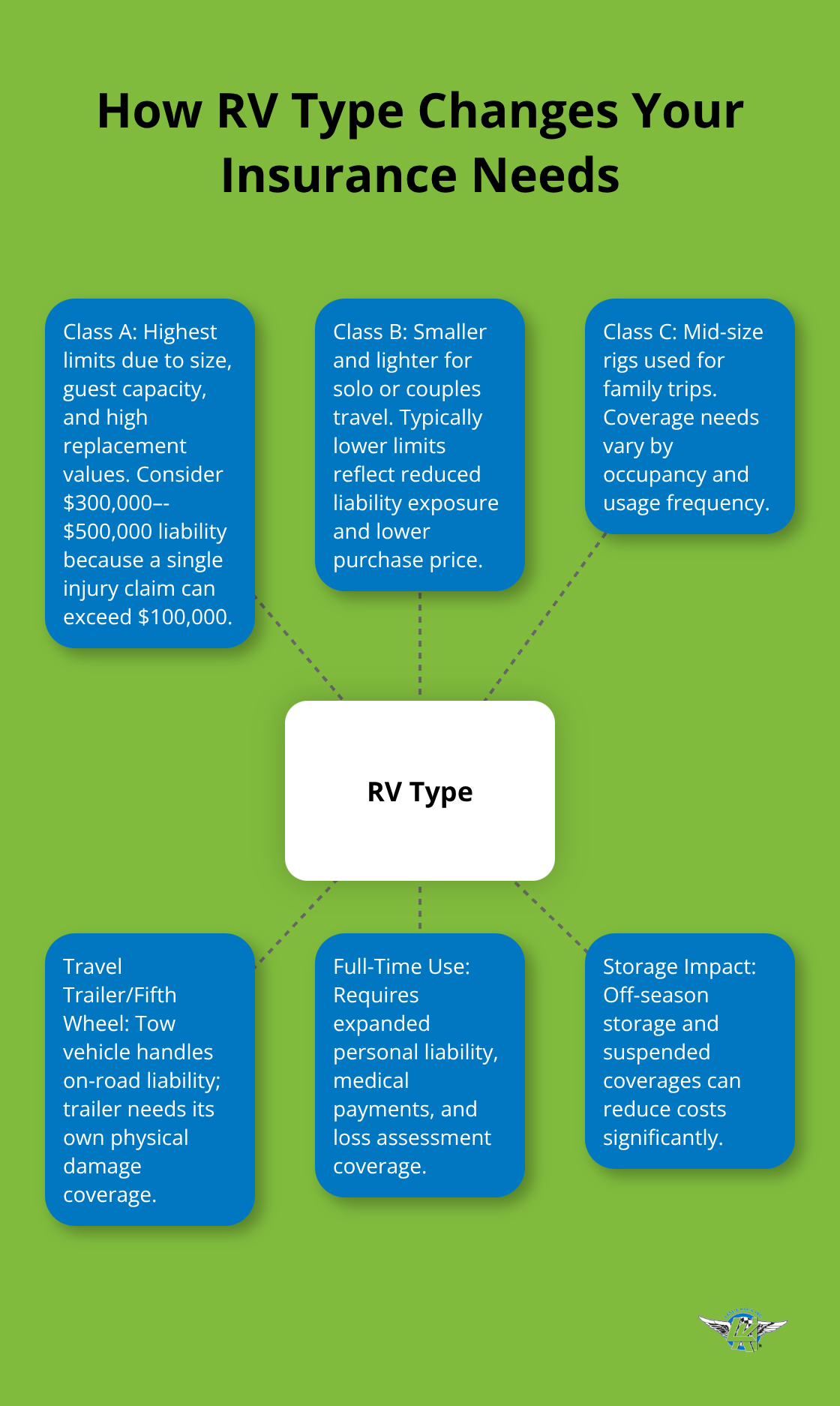
The key difference isn’t just vehicle size-it’s how many people occupy your RV and how often.
Travel Trailers and Fifth Wheels Shift the Liability Math
Travel trailers and fifth wheels shift the liability math entirely because you don’t drive them. Your tow vehicle’s auto insurance covers on-road liability, but trailer’s physical damage protection must come from a separate policy. Fifth wheels, which range from 21 to 42 feet and can cost $30,000 to $80,000, need comprehensive and collision coverage at higher limits than smaller travel trailers because they often serve as permanent seasonal residences. Travel trailers, ranging from 14 to 38 feet, present lower replacement costs but identical coverage gaps if you don’t carry a dedicated policy.
Full-Time Living Demands Additional Protections
Full-time RV living, regardless of type, demands additional coverage that part-time users skip. If your RV is your primary residence, you need expanded personal liability (typically $300,000 to $500,000), medical payments coverage of $5,000 to $10,000, and loss assessment protection that mirrors homeowners policies. Seasonal travelers can often reduce these limits and skip optional coverages entirely, cutting premiums significantly. The difference between full-time and seasonal usage can reduce your annual premium by 30 to 50 percent because insurers charge more for year-round exposure.
Storage Options and Usage Patterns Lower Your Costs
Storage options matter significantly-if you park your RV for winter months, suspending collision and liability while maintaining comprehensive protection can save up to 53 percent annually, according to industry data. Getting an accurate quote requires telling your insurer exactly how many days per year you use your RV, whether anyone lives in it full-time, and what equipment you’ve added.
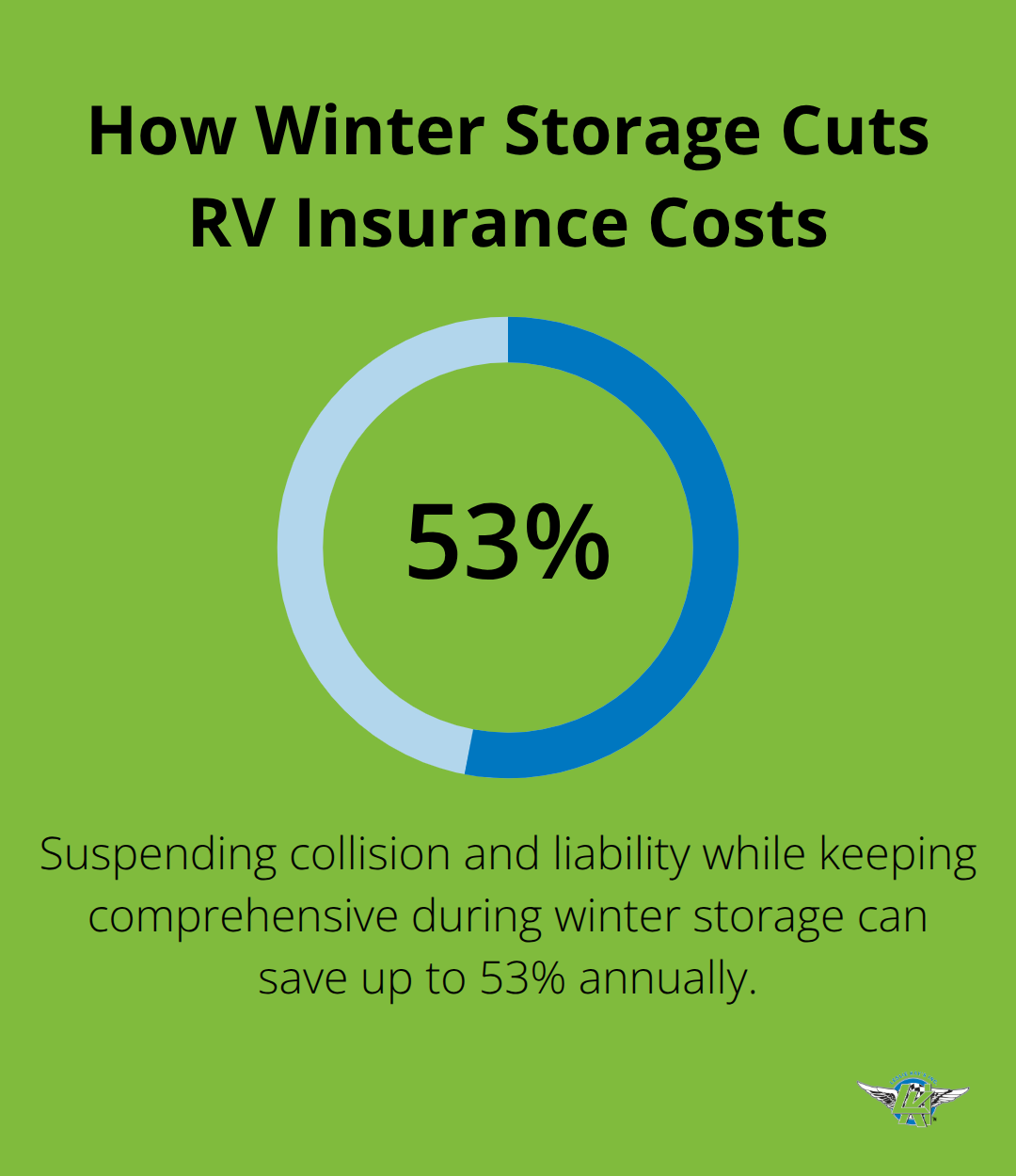
Underreporting usage or omitting full-time residence status voids your coverage when claims arise, so honesty determines whether your policy actually protects you. The quotes you receive depend entirely on the information you provide, which is why the next step involves gathering the specific details insurers need to build a policy that truly matches your RV and your travel patterns.
Building Your RV Quote: What Insurers Actually Need to Know
Provide Accurate RV Details and Ownership Information
The difference between a generic quote and one that actually protects your RV comes down to accuracy. Insurers need specific information about your RV, how you use it, and your driving history-and vague answers produce vague quotes that leave gaps when claims happen. Start with your RV’s year, make, model, and series name or model number because these details determine replacement costs and base premiums. If you’ve financed or leased your RV, have your lienholder’s contact information ready since they’ll dictate minimum coverage requirements.
List All Drivers and Their Driving Records
Next, list every person who will drive the RV, including their age, driving history, and any accidents or violations from the past three to five years. Accuracy matters here because underreporting drivers or omitting violations voids your coverage when claims arise.
Document Your Usage Patterns and Storage Location
Provide your actual usage patterns-how many days per year you’ll use the RV, whether anyone lives in it full-time, where you store it during off-season months, and whether you’ll tow other vehicles. Underreporting usage by even a few weeks annually can void your claim when it matters most. If you park your RV for winter months, mention this because storage options can save up to 53 percent annually when you suspend collision and liability while maintaining comprehensive protection for theft and weather damage.
Record Equipment Upgrades with Receipts
Document any upgrades you’ve made: solar panels, lithium batteries, custom awnings, satellite systems, or entertainment equipment. Bring receipts for these upgrades since insurers use them to establish replacement cost values. If you travel internationally, mention Mexico trips specifically because standard comprehensive and collision coverage requires separate Mexican liability insurance and advance notification to your carrier.
Compare Quotes Across Multiple Carriers with Identical Coverage
Shopping multiple carriers reveals massive premium differences for identical coverage. Quotes from different insurers for the same Class A motorhome with $300,000 bodily injury liability, $50,000 property damage liability, and $1,000 deductibles can vary by 40 to 60 percent annually, making comparison essential. When you request quotes, ensure each one includes the same liability limits, deductibles, and optional coverages so you’re comparing apples to apples.
A $500 deductible might save 10 to 15 percent compared to $250, but a higher deductible only makes sense if you can afford out-of-pocket costs after an accident. Personal effects coverage limits should match your actual belongings-if you travel with $8,000 worth of camera equipment and electronics, setting personal effects at $2,500 leaves you severely underinsured. Bundling your RV policy with auto, home, or other policies typically saves 5 to 20 percent across your entire policy portfolio, and some carriers offer additional discounts for multi-vehicle households. Paid-in-full discounts of 5 to 10 percent apply if you pay your annual premium upfront rather than monthly. A clean driving record qualifies you for responsible driver discounts if you’ve gone three years accident-free and ticket-free.
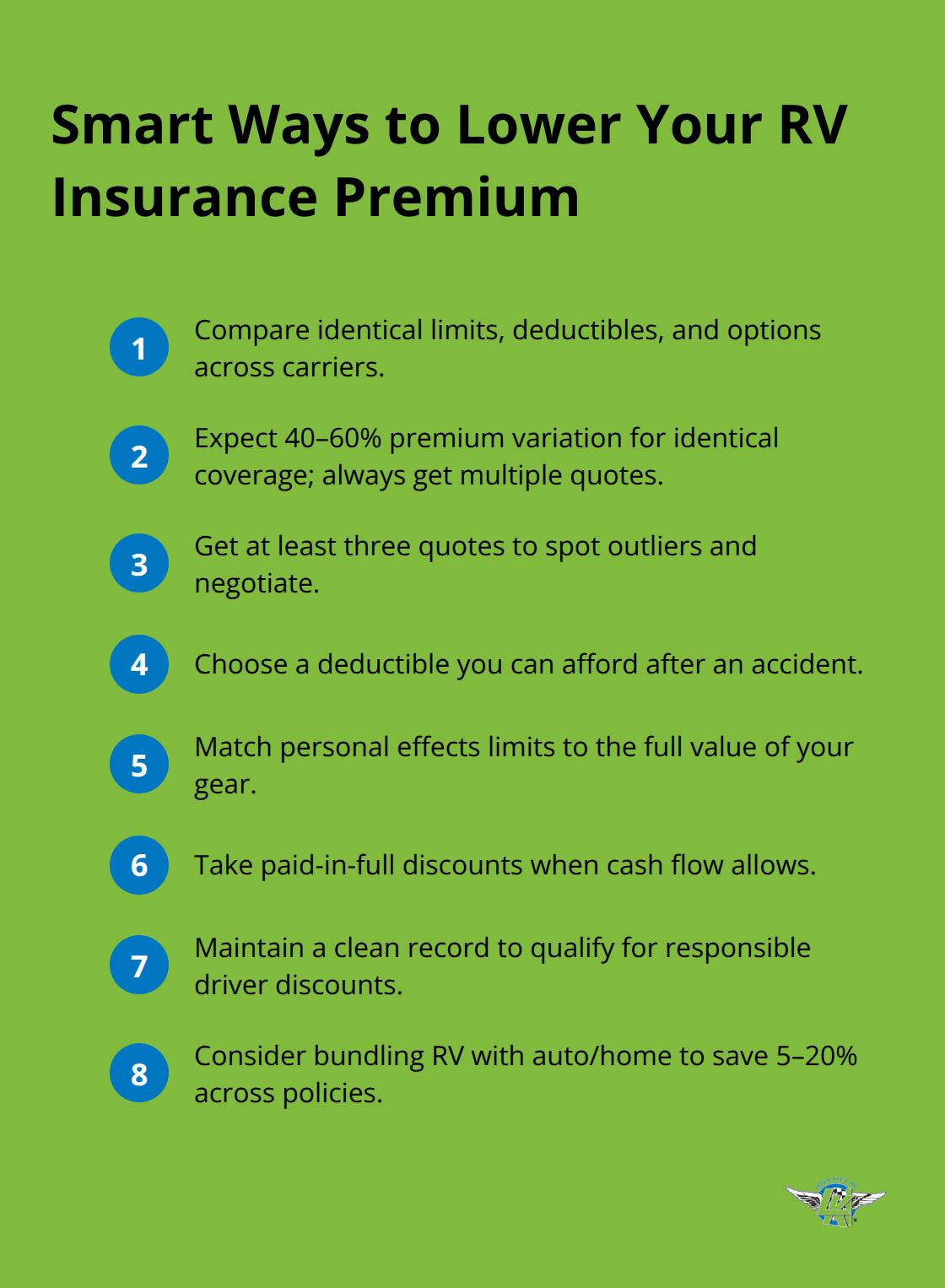
Get quotes from at least three carriers because premium variation at this stage determines whether you pay $800 or $1,200 annually for nearly identical protection.
Final Thoughts
Personalized RV policy quotes form the foundation of actual protection, not a luxury item you can skip. A generic quote misses your specific risks, your RV’s unique features, and your travel patterns entirely. When you gather accurate information about your motorhome or travel trailer, your driving history, and how you actually use your RV, insurers build coverage that defends you instead of leaving gaps that surface during claims.
Take these concrete steps before you purchase any policy. Collect your RV’s year, make, model, and series information along with any upgrade receipts for solar panels, lithium batteries, or custom equipment, then list every driver who will operate the RV and their complete driving records. Document your actual usage-how many days annually you’ll travel, whether anyone lives in your RV full-time, and where you store it seasonally-then request quotes from at least three different carriers using identical coverage limits and deductibles so you can see real premium differences. Calculate whether bundling your RV policy with auto or home coverage saves you 5 to 20 percent across your entire portfolio, since these steps take an hour but determine whether you pay fair rates and carry genuine protection.
Visit https://lesliekays.com to get started with personalized RV policy quotes that actually reflect your RV and your journey. We shop multiple carriers to find policies that match your motorhome, travel trailer, or fifth wheel while delivering competitive pricing and hands-on claims support. Whether you’re a full-time nomad needing expanded personal liability or a seasonal traveler looking to reduce costs through storage options, our team reveals coverage options you won’t find by shopping alone.
The information provided in this blog is for general informational purposes only and does not constitute legal, financial, or insurance advice. Coverage options, terms, and availability may vary. Please consult with a licensed professional for advice specific to your situation.
Artificial intelligence may have been used to generate text and images in some blog articles.