
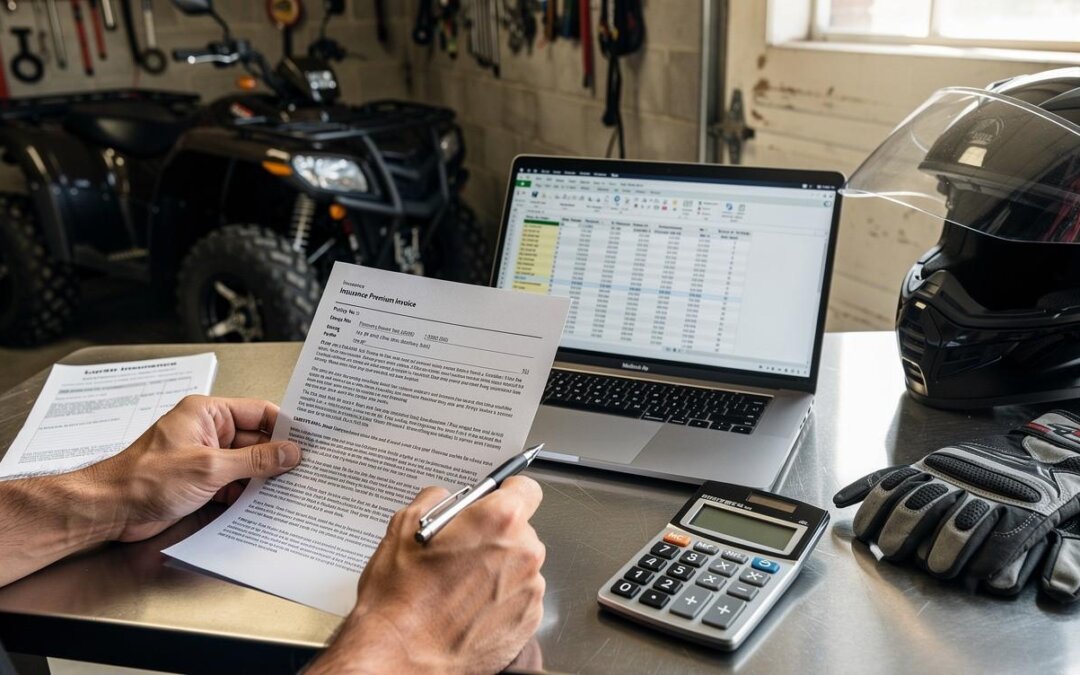
ATV insurance costs explained can vary wildly depending on who you are and how you ride. At Leslie Kay’s, Inc., we’ve helped countless riders understand what drives their premiums up or down.
The good news is that many of these factors are within your control. Read on to learn what affects your rates and how to pay less.
What Determines Your ATV Insurance Rate
Age and Riding Experience Shape Your Premium
Your age and riding experience are among the first things insurers evaluate. Younger riders file claims at higher rates, which directly affects your premium. If you’re a newer rider regardless of age, expect to pay more until you can demonstrate years of claim-free riding.
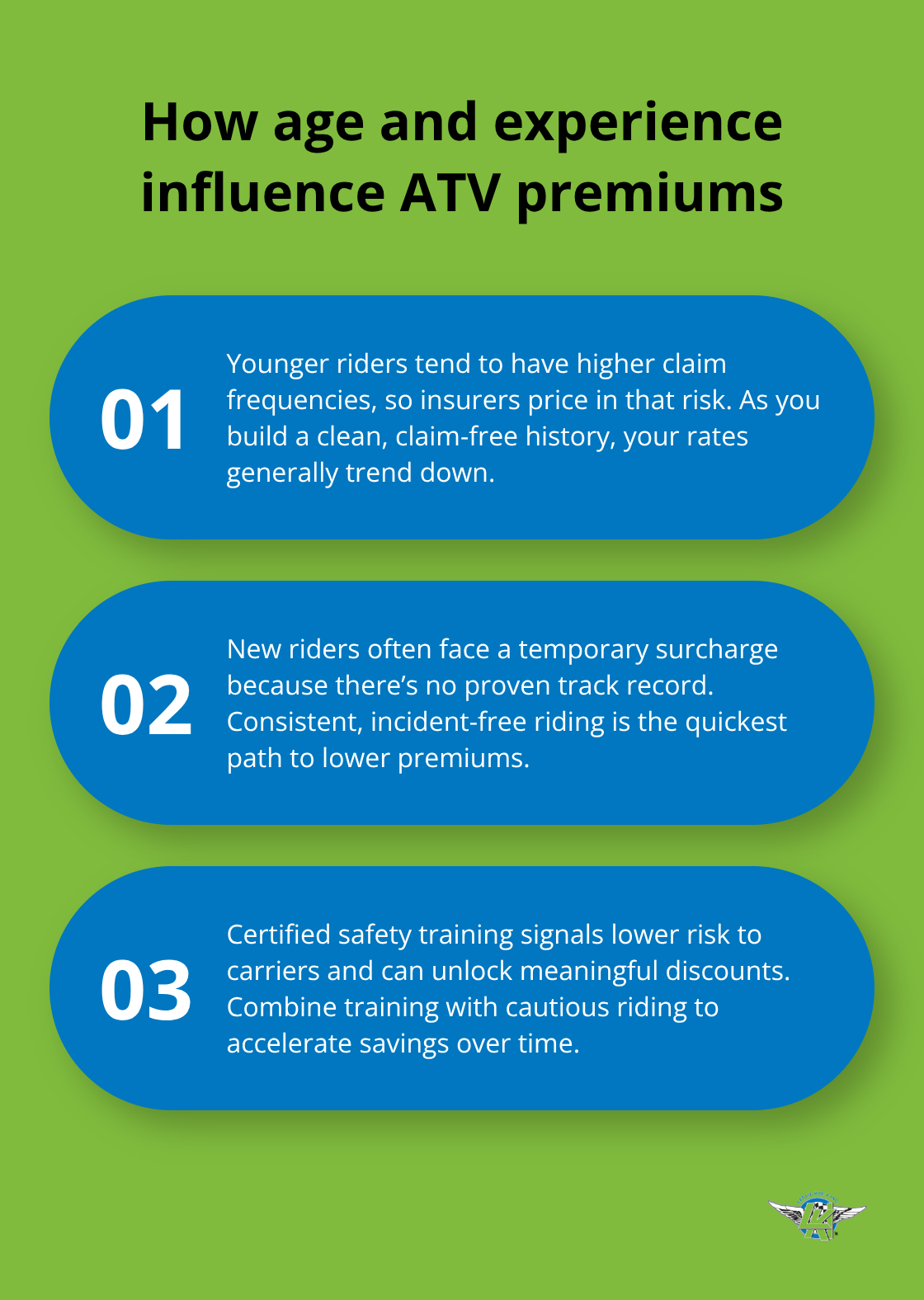
Some insurers offer rider training discounts of 5 to 15 percent if you complete a recognized safety course, which is one of the fastest ways to offset the age penalty.
Your ATV’s Type and Model Directly Impact Cost
The type and model of your ATV matters just as much as who operates it. A high-performance sport ATV costs substantially more to insure than a utility model because repair costs and accident severity differ dramatically. A Yamaha Raptor 700 will carry a higher premium than a Honda Rancher 420 for the same rider, sometimes 30 to 40 percent higher.
Insurers also consider the replacement cost of your machine-if your ATV is worth $3,000, your comprehensive and collision premiums reflect that lower value compared to a $10,000 model.
Storage Location and Geography Affect Your Rate
Where you ride and store your vehicle directly affects your rate because geographic risk varies. Riders in rural areas typically pay less than those in cities where theft and accident rates run higher. How you store your ATV matters too-keeping it in a locked garage reduces theft risk and can lower your premium by 5 to 10 percent compared to outdoor storage.
If you store it seasonally and only ride during specific months, tell your insurer, as some offer reduced rates for limited-use vehicles. Riders in states with severe winters or high ATV theft rates face steeper premiums, with some regions running 20 to 30 percent higher than low-risk areas. Understanding these geographic factors helps you anticipate what your rate will look like before you shop for coverage.
Ways to Cut Your ATV Insurance Premium
Bundle Policies to Stack Discounts
Stacking discounts represents the fastest way to lower what you pay for ATV coverage. Most insurers offer 10 to 25 percent off your ATV premium if you bundle it with auto, home, or motorcycle policies. The math works because carriers reduce overhead when they manage multiple policies for one customer. If you already carry auto insurance elsewhere, moving your ATV coverage to that same company often saves you $200 to $400 annually.
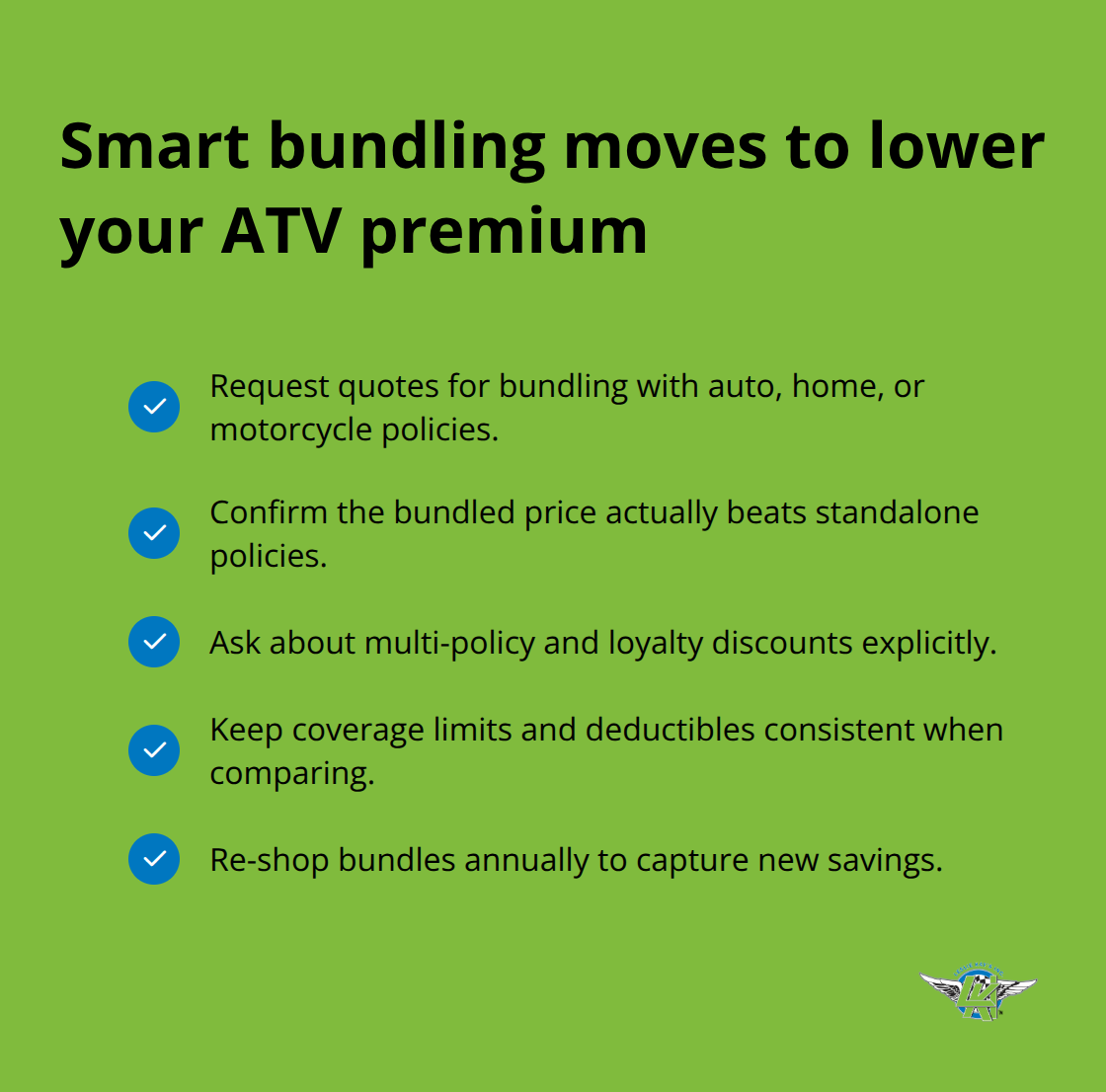
Don’t assume your current auto insurer offers the best ATV rates-many don’t-so comparing quotes across at least three carriers before bundling reveals whether you’re actually saving money or just consolidating policies at inflated prices. We at Leslie Kay’s, Inc. shop multiple carriers to find which combination delivers the lowest total cost for your specific situation.
Complete Rider Training for Immediate Savings
Rider training courses deliver tangible savings that stack on top of other discounts. Approved sponsoring agencies provide crash prevention courses that reduce points and insurance premiums. These aren’t theoretical benefits-insurers tie discounts directly to documented training because riders who complete courses file fewer claims. A single course costs $150 to $250 and typically lasts four to eight hours, so the discount pays for itself within the first year on most policies.
Maintain a Clean Driving Record
Your driving record matters equally to training completion. Even one minor accident or speeding ticket raises your premium by 20 to 40 percent for three to five years. Maintaining a clean record means avoiding risky behavior entirely, not just following speed limits. High-risk violations like DUI or reckless driving can triple your premium or result in coverage denial. Defensive riding combined with formal training and a clean history forms the foundation of lower premiums, and these factors remain within your control longer than age or vehicle type.
The steps you take today to lower your premium set the stage for better rates tomorrow. Once you’ve maximized these savings opportunities, the next decision involves comparing what different carriers actually offer in their coverage options-because the cheapest quote means nothing if it leaves gaps in your protection.
Comparing ATV Insurance Quotes and Coverage Options
Shop Multiple Carriers for the Best Rate
Getting the lowest price on ATV insurance requires comparing actual quotes from at least three different carriers, not just asking for a rate over the phone. When you request quotes, provide identical information to each insurer-same ATV model, same coverage limits, same deductible amounts-so the numbers are truly comparable. Most carriers offer online quote tools that take 10 to 15 minutes and show you a preliminary rate instantly. Price variations for identical coverage can exceed 40 percent between carriers, which means skipping this step costs you real money.
Once you have quotes in hand, resist the temptation to pick the cheapest option without examining what coverage each policy actually includes. A $600 annual premium means nothing if it carries a $2,500 deductible and minimal liability limits that leave you exposed in a serious accident.
Understand Your Three Core Coverage Types
Liability coverage pays for injuries or property damage you cause to others and is required by law in most states-minimum limits typically run $25,000 per person and $50,000 per accident, though you should try at least $100,000 per person given the severity of ATV accidents. Collision coverage pays to repair or replace your ATV if you hit an object or another vehicle, while comprehensive coverage handles theft, weather damage, and vandalism.
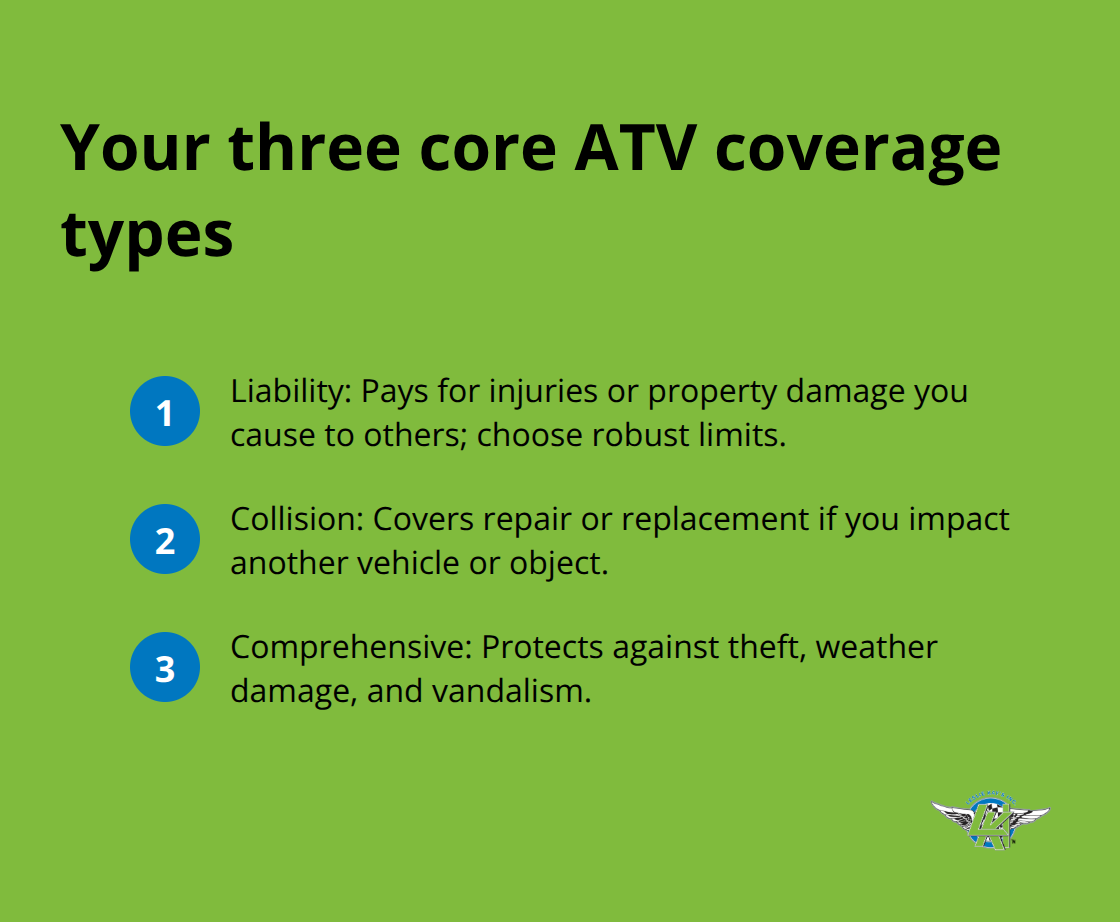
Your deductible directly affects your premium-raising it from $250 to $1,000 typically saves 15 to 25 percent annually, but only makes sense if you can actually afford that out-of-pocket cost after an accident. Policy limits determine the maximum your insurer pays, and choosing limits too low creates a dangerous gap in protection.
Set Appropriate Deductibles and Policy Limits
Most riders carrying a $5,000 to $10,000 ATV should maintain at least $100,000 in liability coverage and comprehensive and collision limits matching their vehicle’s actual cash value (not some theoretical replacement cost). This approach protects your financial security without overpaying for coverage you don’t need. The relationship between deductible and premium works in your favor if you’re a cautious rider-higher deductibles reward safe behavior with lower annual costs.
Final Thoughts
ATV insurance costs explained ultimately rest on three factors you can influence: your age and riding history, your machine’s value, and your location. Most riders who complete a safety course, bundle policies, and maintain a clean record see measurable savings that add up year after year. Shopping quotes across multiple carriers remains essential because rate differences for identical coverage regularly exceed 40 percent, and accepting the first quote you receive costs hundreds annually.
An independent agency like Leslie Kay’s, Inc. shops multiple carriers simultaneously to find the combination that delivers the lowest total cost for your specific situation. This approach matters because the best rate for a 25-year-old sport ATV rider differs completely from what works for a 55-year-old utility rider, and no single carrier excels at pricing every scenario. Independent agencies also handle claims support directly, which means you navigate the process with professional guidance when something goes wrong.
Start by gathering quotes from at least three carriers using identical information, then compare what each policy actually covers rather than just the premium amount. Set your deductible based on what you can afford out-of-pocket, choose liability limits of at least $100,000 per person, and match your comprehensive and collision limits to your ATV’s actual cash value. Revisit your policy annually because your situation changes and new discounts emerge regularly.
The information provided in this blog is for general informational purposes only and does not constitute legal, financial, or insurance advice. Coverage options, terms, and availability may vary. Please consult with a licensed professional for advice specific to your situation.
Artificial intelligence may have been used to generate text and images in some blog articles.