
Most boat owners buy standard insurance policies without realizing how many gaps exist in their coverage. Off-the-shelf plans rarely account for your specific vessel, equipment, or how you actually use your boat.
At Leslie Kay’s, Inc., we’ve seen firsthand how boat policy customization makes the difference between adequate protection and real peace of mind. The right tailored coverage matches your watercraft and your lifestyle.
Why Standard Boat Insurance Falls Short
Standard boat insurance policies operate on a one-size-fits-all model that ignores the reality of modern boating. Most insurers calculate premiums based on vessel type and age, then apply generic coverage limits that bear little relationship to what you actually own or how you use your boat. This approach creates serious blind spots.
Specialized Equipment Gets Left Behind
Specialized equipment represents the first major gap. If you own a fishing boat with electronics, tackle, and gear, your standard policy often sets limits on personal property coverage at around 10% of your boat’s insured value. Navigation systems, fish finders, and premium fishing gear require specific endorsements that most base policies don’t include.
High-performance boats face similar problems. A boat with custom engines, upgraded sound systems, or aftermarket modifications may have replacement value exceeding $200,000, but standard policies cap hull coverage at the manufacturer’s original price. You’re left covering the difference yourself.
Unique Vessel Types Expose Coverage Voids
Sailboats, catamarans, pontoons, and houseboats operate under different risk profiles than standard recreational boats, yet insurers often force them into cookie-cutter plans. A sailboat used for racing requires different liability protection than one used for casual cruising, but most policies don’t distinguish between the two.
Houseboats present even greater complications because they blur the line between boat and home. Standard marine policies exclude homeowner-type risks like theft from inside the cabin, while homeowner policies exclude water-related damage. You end up with overlapping gaps in coverage. Pontoon boats used for commercial purposes, like charter operations, face complete coverage denial under standard recreational policies.
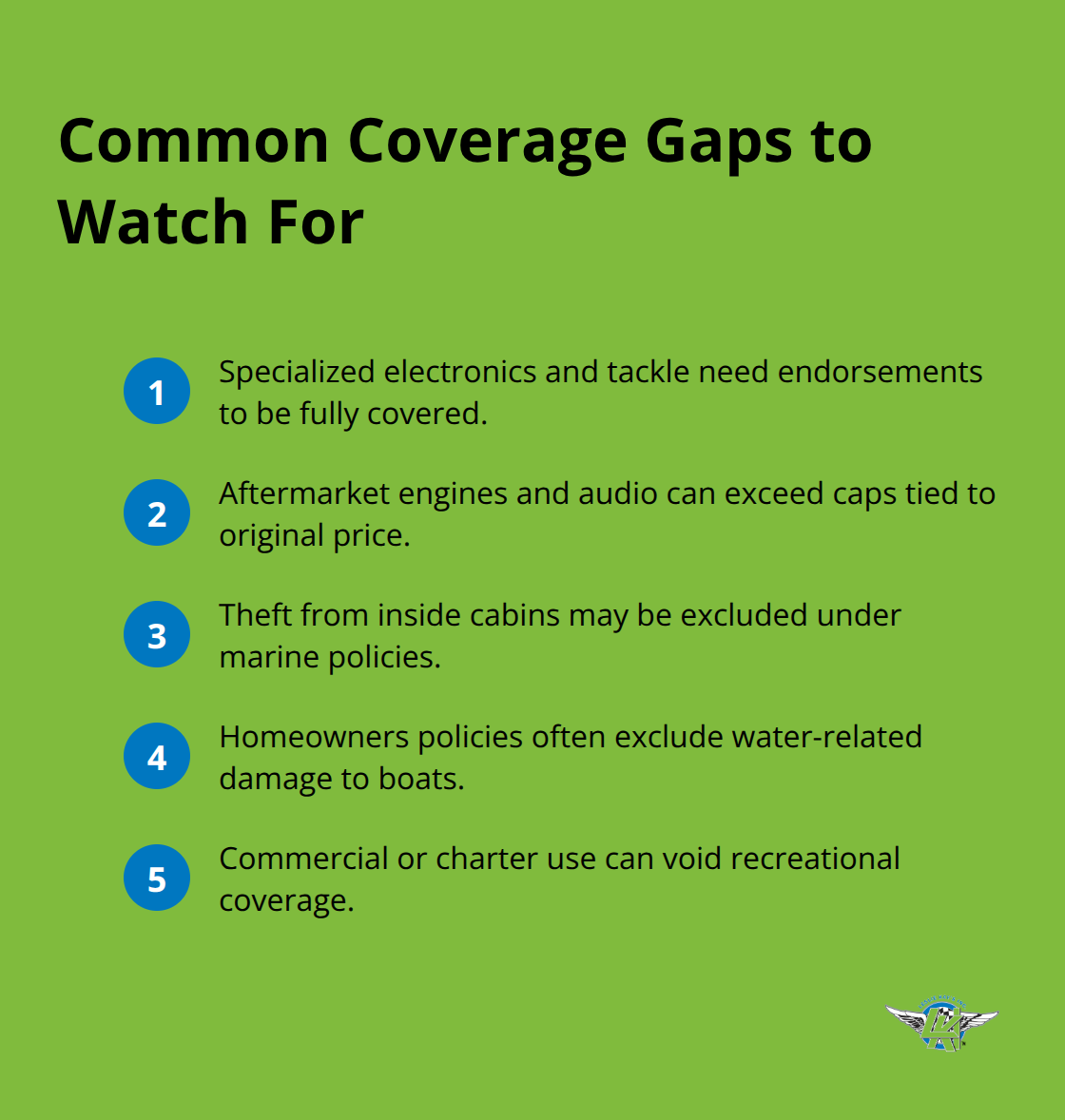
Many boat owners don’t realize their coverage becomes void the moment they generate income from their vessel.
High-Value Watercraft Need Adequate Limits
The insurance industry uses outdated valuation methods that underestimate modern boat costs. A 2024 Marine Industries Association survey found that new boat prices increased 22% over three years, yet many policies haven’t adjusted coverage limits accordingly. If your boat is worth $150,000 and your policy caps hull coverage at $100,000, you’re self-insuring the remaining $50,000.
Replacement cost coverage becomes critical for newer vessels, but standard policies often offer depreciated value instead, meaning you receive far less when filing a claim. Liability limits present another problem. Most standard policies include $100,000 to $300,000 in liability coverage, which sounds adequate until you cause serious injury or property damage. A single incident involving another vessel, dock damage, or severe injuries can easily exceed $500,000 in damages. Standard limits leave you personally liable for amounts beyond your policy cap.
These gaps explain why boat owners need to work with agents who understand watercraft coverage and can build policies that actually match their vessels and activities.
Key Coverage Options to Customize Your Boat Policy
Hull Protection: Agreed Value vs. Actual Cash Value
Customizing your boat policy means moving beyond standard hull and liability checkboxes to coverage that reflects what you actually own and how you use it. Hull protection alone comes in multiple forms, and selecting the wrong option leaves you significantly underprotected.
Agreed value hull coverage pays your boat’s full insured value if it becomes a total loss, with no depreciation applied. This matters enormously because actual repair and replacement costs for boats have climbed sharply. Actual cash value coverage, by contrast, deducts depreciation from any payout, meaning a five-year-old boat worth $80,000 might only net you $50,000 after depreciation calculations. For any boat under fifteen years old-particularly if you’ve invested in upgrades or maintenance that extends its lifespan-agreed value offers substantially better protection.
Collision Deductibles and Premium Impact
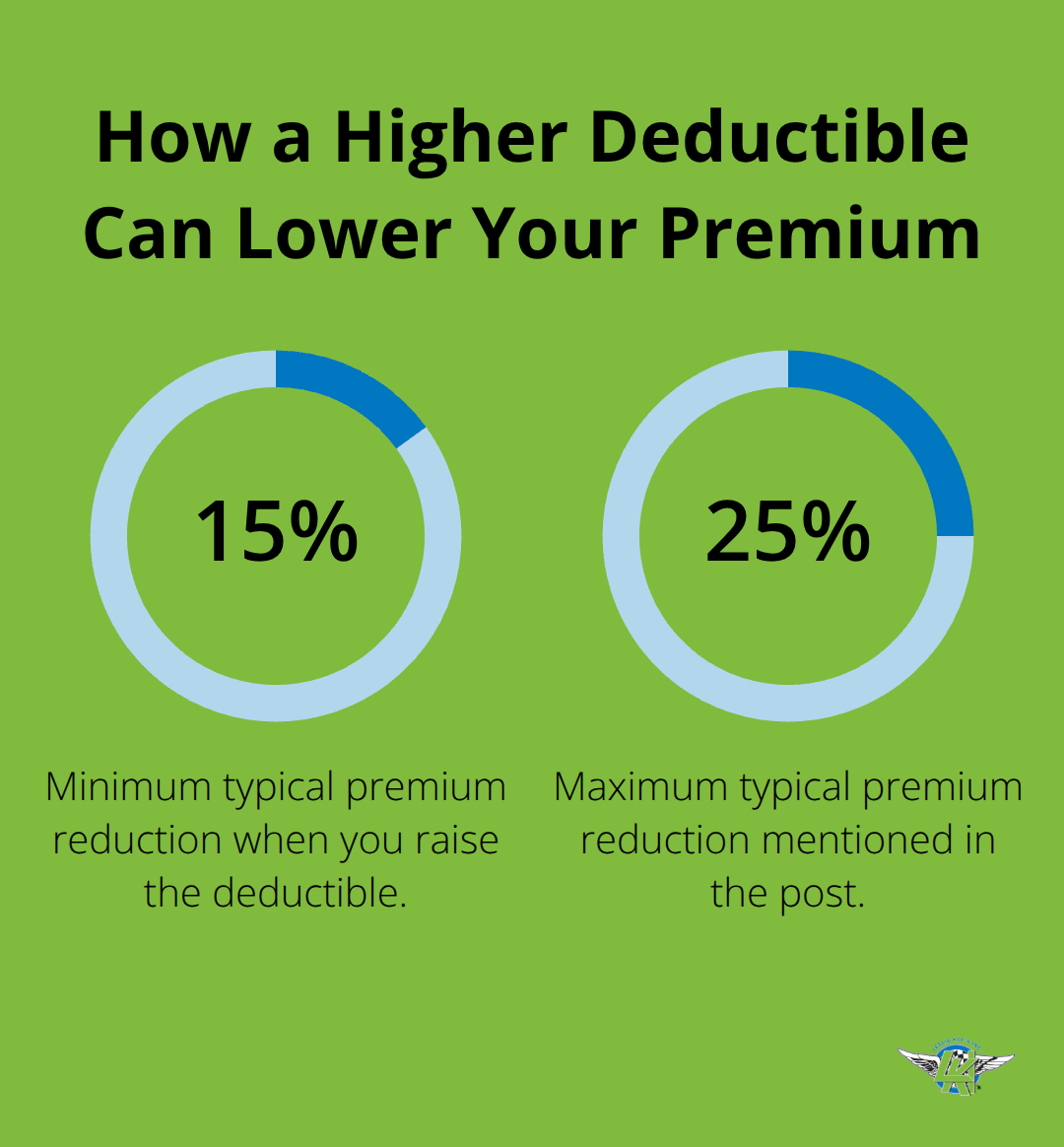
Collision coverage options vary significantly. You choose a deductible of $500, $1,000, or higher, and that decision directly impacts your premium. A higher deductible cuts annual costs by 15 to 25 percent, but only makes sense if you can comfortably cover that amount from your own funds when an accident happens.
Liability Limits That Match Your Vessel and Activities
Liability limits must scale with your vessel size and how aggressively you operate it. A 16-foot recreational boat used for occasional weekend trips can function adequately with $300,000 in bodily injury liability, but a 40-foot powerboat used for entertaining guests or a fishing charter operation absolutely needs $500,000 to $1,000,000 in coverage. The National Association of Insurance Commissioners reports that serious boating accidents regularly generate liability claims exceeding $750,000 when medical costs and property damage combine.
Specialized Equipment Endorsements
Specialized equipment endorsements protect the gear that makes boating worthwhile. Fish finders, GPS systems, premium tackle, watersports equipment like jet skis or wake boards, and custom audio systems all require specific add-ons because standard policies cap personal property coverage at 10 percent of hull value. For a fishing boat, you must endorse each major piece of electronics and tackle separately rather than hope base coverage handles them.
Watersports equipment receives particularly limited protection under standard policies. If you tow tubes, wakeboards, or pull skiers, that activity and the equipment supporting it need explicit coverage. Accessories like upgraded engines, custom fuel systems, and aftermarket modifications won’t be covered at replacement cost without endorsements that specify their current value. Photograph and document every upgrade and accessory with purchase receipts, then review those items annually with your agent to keep coverage aligned with what you’ve actually invested in your boat.
Understanding these customization options positions you to work effectively with an insurance professional who can translate your specific boating activities into the right policy structure.
How to Work With Your Insurance Agent to Build the Right Coverage
Document Your Actual Boating Habits
The gap between what you think your boat is covered for and what your policy actually covers narrows dramatically when you work with an agent who understands watercraft insurance. Most boat owners approach their insurance renewal like they approach paying taxes-minimize time and move on. This mistake costs thousands when claims happen.
Start by documenting everything about how you actually use your boat. Write down the number of days per year you operate it, the maximum distance you travel from your home port, whether you tow watersports equipment, if you fish commercially or recreationally, and whether guests regularly operate the vessel. This information directly determines your risk profile and which coverage options make financial sense.
An agent needs specifics, not generalizations. If you say you use your boat casually, that means something entirely different from weekend racing or charter operations. The National Association of Insurance Commissioners data shows that usage patterns account for roughly 40 percent of premium variation among identical boats, so accuracy here saves money and prevents coverage gaps.
Inventory Your Vessel’s Value and Upgrades
Conduct a complete inventory your vessel’s current value and all upgrades. Pull your purchase receipt, then photograph every modification, accessory, and piece of equipment with purchase dates and prices. Many boat owners dramatically underestimate what they’ve invested.
A fishing boat might include a $3,000 trolling motor, $2,500 GPS chartplotter, $1,800 fish finder, $1,200 premium tackle storage system, and $2,500 in quality rods and reels-totaling $11,000 in specialized equipment alone. Standard policies cap personal property coverage at 10 percent of hull value, so a boat insured for $80,000 receives only $8,000 in equipment coverage. You’re immediately $3,000 short before any claim happens.
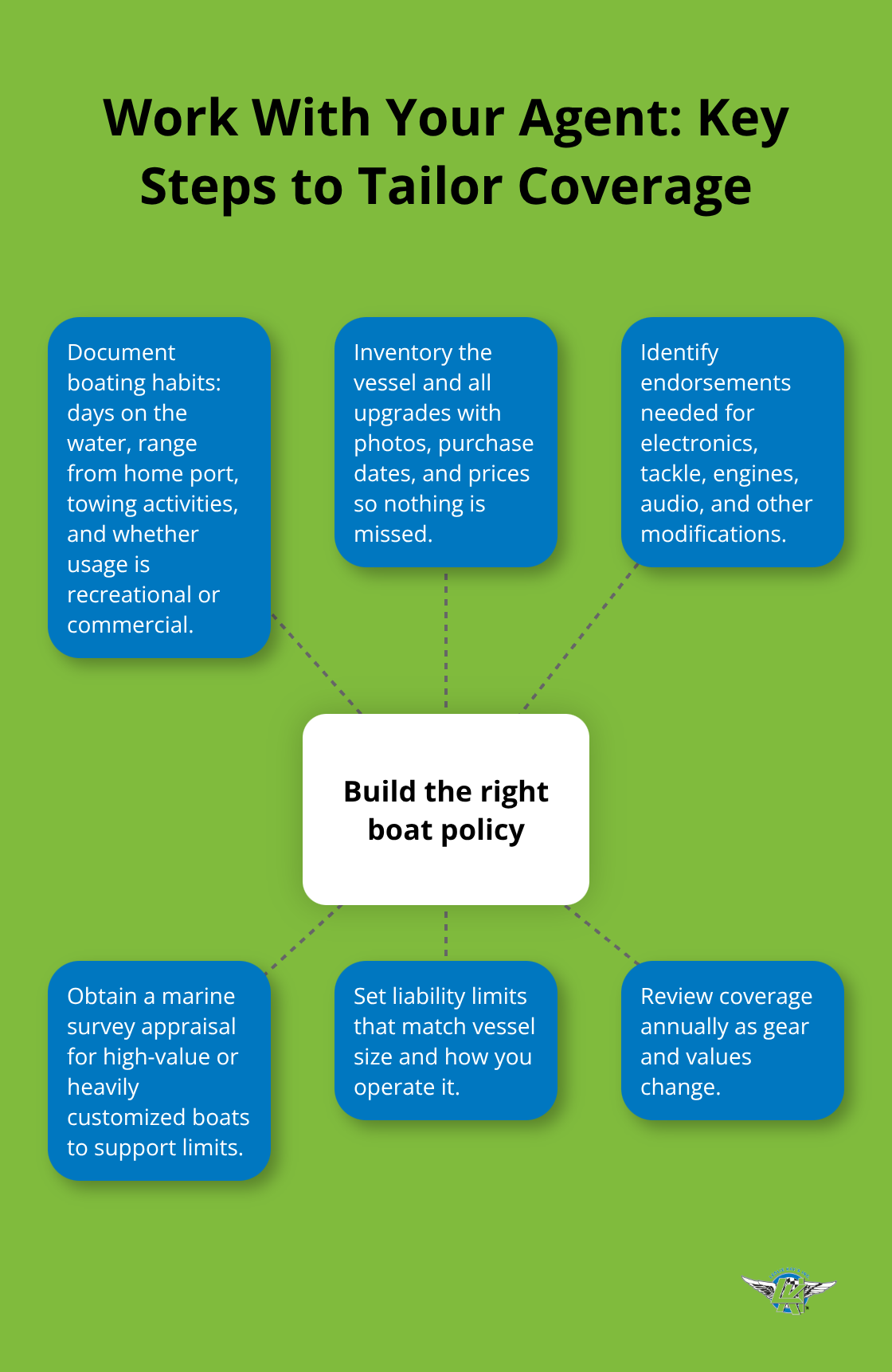
Share this complete inventory with your agent and ask specifically which items require individual endorsements versus which ones fall under base coverage limits. For high-value boats or those with extensive customization, request an appraisal from a marine surveyor. A professional appraisal costs $300 to $600 but provides documentation that supports your coverage limits if disputes arise during claims. Insurance companies respect independent valuations far more than owner estimates.
Match Coverage to Your Watercraft Type and Activities
Match your coverage structure to your specific watercraft type and activities. A sailboat used exclusively for weekend cruising needs different liability limits than one used for racing, yet many policies treat them identically. A pontoon boat used for personal entertaining requires different coverage than one used for commercial charter services.
Your vessel’s specific characteristics and how you operate it should drive every coverage decision you make. An agent who specializes in watercraft insurance understands these distinctions and works with boat owners to build policies that reflect them rather than forcing vessels into generic categories that leave you exposed.
Final Thoughts
Boat policy customization isn’t a luxury reserved for high-net-worth boat owners-it’s a necessity for anyone who wants protection that actually matches what they own and how they operate it. Standard policies leave gaps that cost thousands when claims happen, and those gaps expand every year as boat prices climb and equipment becomes more sophisticated. The difference between adequate coverage and real peace of mind comes down to working with someone who understands watercraft insurance deeply enough to ask the right questions about your vessel, your equipment, and your boating activities.
Your boat represents a significant investment, whether it’s a modest recreational vessel or a high-performance watercraft. That investment deserves protection built specifically for it, not coverage designed for boats that look similar on paper but operate entirely differently in reality. We at Leslie Kay’s, Inc. specialize in watercraft coverage and work with boat owners across multiple states to build policies that reflect their actual vessels and activities.
Contact Leslie Kay’s, Inc. to review your current boat policy and identify the gaps that exist in your coverage. Our team shops multiple carriers to find customized, competitively priced coverage rather than forcing you into standard plans that leave you exposed. The right customized policy protects your investment and lets you focus on what matters: enjoying your boat.
The information provided in this blog is for general informational purposes only and does not constitute legal, financial, or insurance advice. Coverage options, terms, and availability may vary. Please consult with a licensed professional for advice specific to your situation.
Artificial intelligence may have been used to generate text and images in some blog articles.