
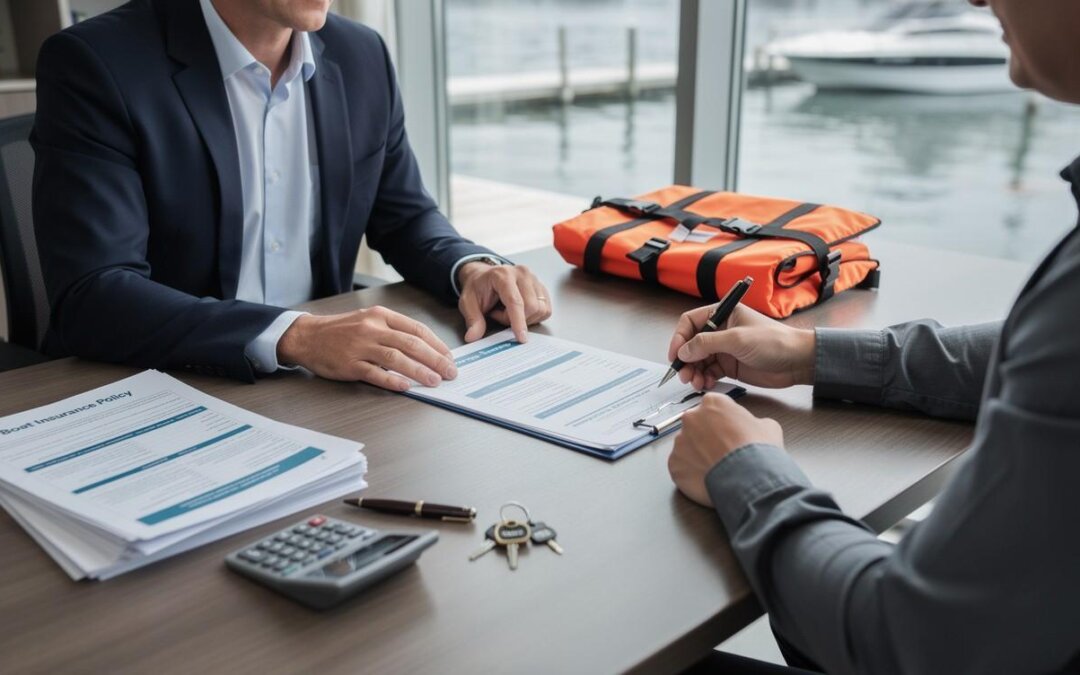
Boat owners face real financial risks on the water, from liability claims to collision damage. At Leslie Kay’s, Inc., we know that picking the right watercraft insurance options means understanding what actually protects you and your vessel.
This guide walks you through the coverage types that matter, what drives your rates, and how to match a policy to your boating life.
Types of Watercraft Coverage
Liability Protection: Your First Line of Defense
Liability protection forms the foundation of any watercraft policy, and it’s non-negotiable. This coverage handles bodily injury claims if you’re at fault in an accident-say another boater gets hurt and sues you-plus property damage to their vessel or dock. Most states require minimum liability limits, but you should go higher than the legal minimum. If you cause serious injury to multiple people, state minimums often fall short. A $300,000 liability limit costs only slightly more than $100,000 but protects substantially more of your assets.
Collision and Comprehensive: Protecting Your Own Vessel
Collision pays for damage to your own boat when you hit something, whether that’s another vessel, rocks, or a dock. Comprehensive covers non-collision damage like theft, storms, vandalism, or fire. If your boat is financed, your lender requires both coverages. If you own it outright, collision and comprehensive become optional, but skipping them on a newer vessel exposes you to massive replacement costs.
Medical Payments and Uninsured Boater Protection
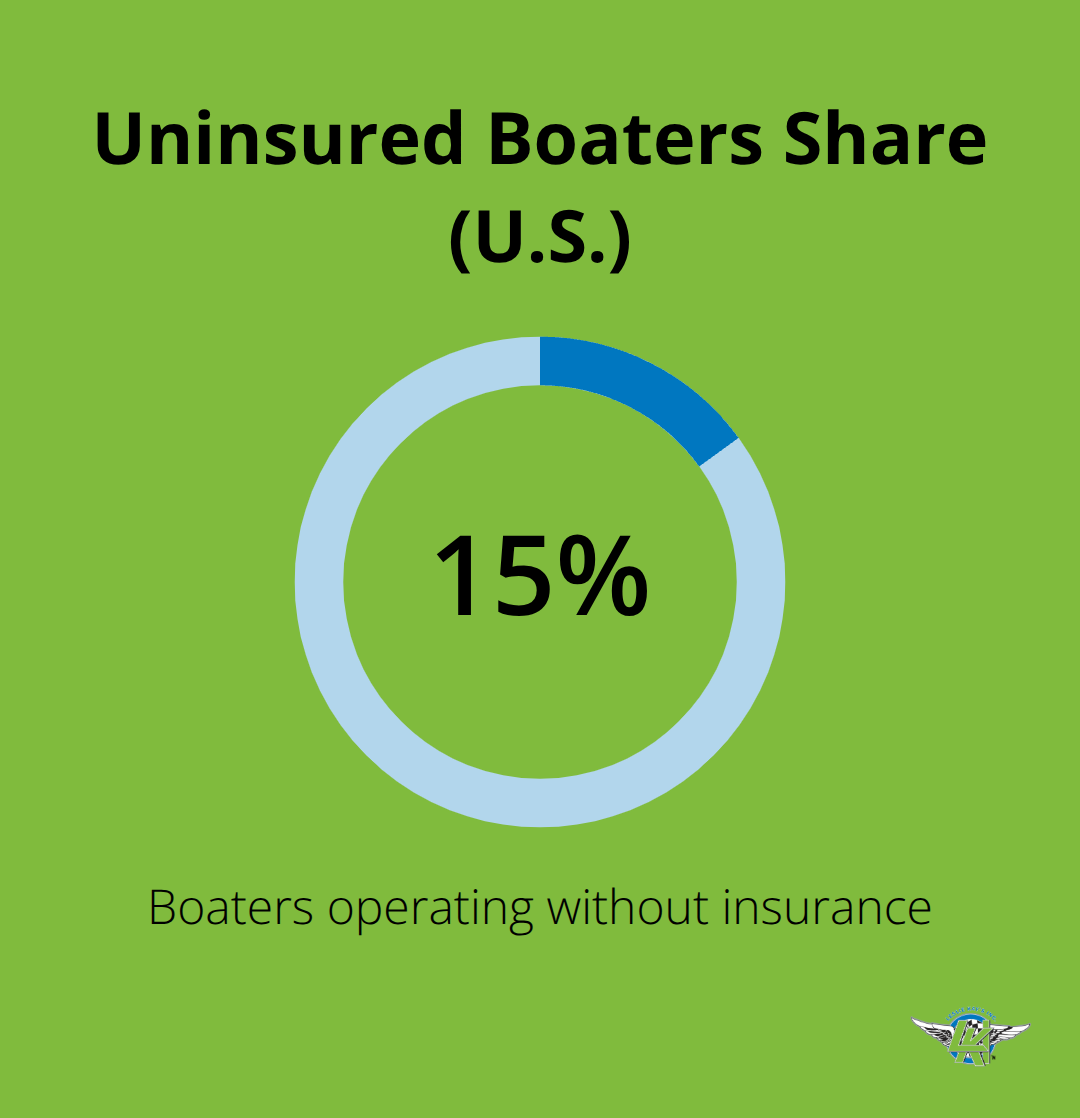
Medical payments coverage and uninsured boater protection address gaps that liability won’t cover. Medical payments covers your own injuries and your passengers’ injuries regardless of who’s at fault, up to your policy limit. Uninsured boater protection works like uninsured motorist coverage for cars-it protects you if an uninsured or hit-and-run boater causes damage. According to the National Association of Insurance Commissioners, roughly 15% of boaters operate without insurance, making this protection genuinely valuable.
Deductibles: Balancing Premium and Out-of-Pocket Costs
Your deductible choices directly impact your premium. A $500 deductible costs more than a $1,000 deductible, but you’ll pay less out-of-pocket when you file a claim. Choose based on what you can actually afford to pay after an incident, not what sounds cheapest monthly. Understanding these coverage types sets you up to evaluate which combinations match your specific boating situation and financial position.
Factors That Affect Watercraft Insurance Rates
Vessel Type, Size, and Age Shape Your Premium
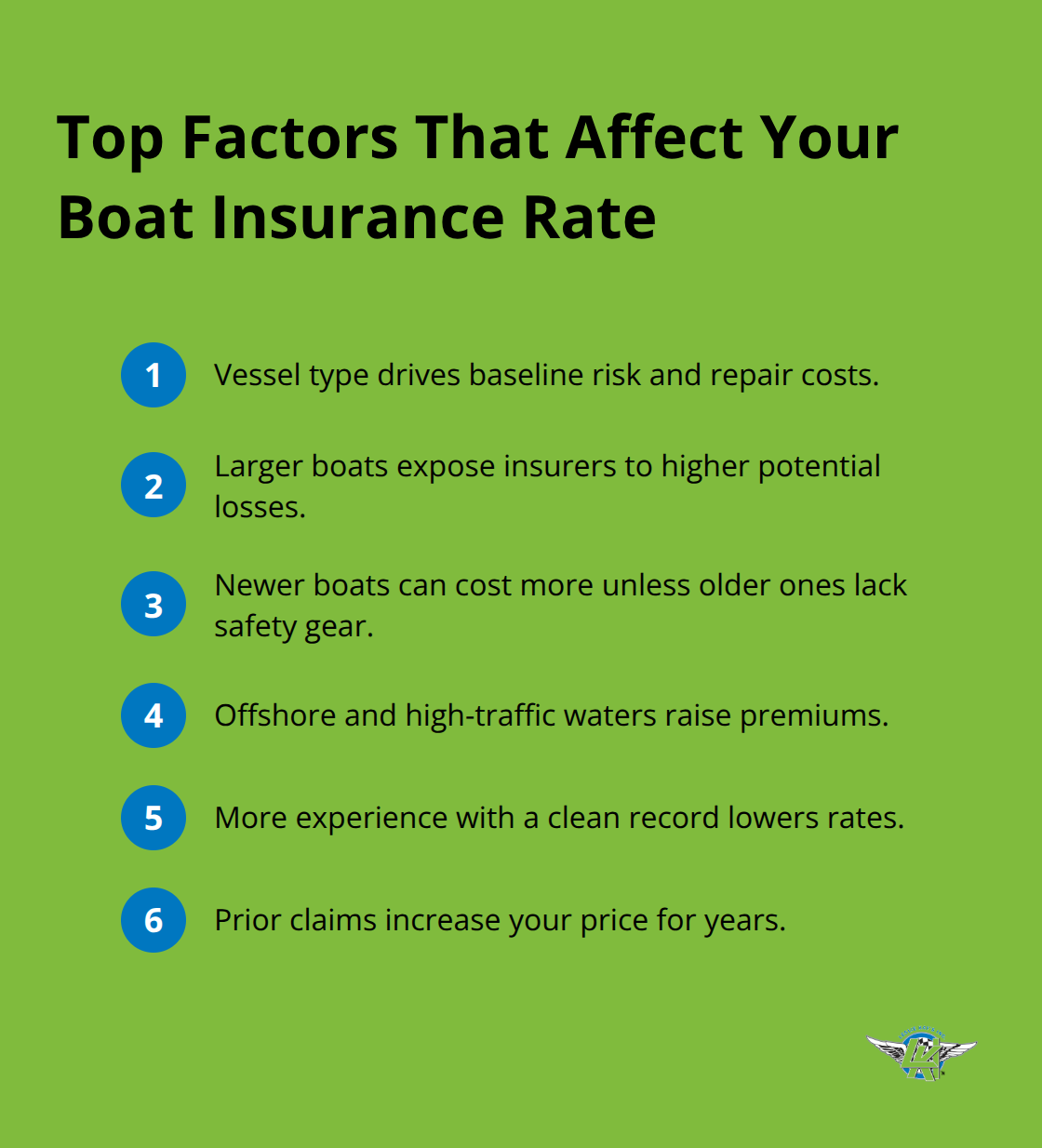
Your boat’s characteristics form the backbone of your insurance rate. Insurers assess vessel type first-a 25-foot center console costs far more to insure than a 16-foot pontoon because repair and replacement costs run higher, and liability exposure increases with speed and offshore capability. A 10-year-old boat typically costs less to insure than a brand-new model, though this relationship inverts if the older vessel lacks modern safety equipment. Size matters directly: a 40-foot yacht exposes insurers to catastrophic loss scenarios that a 20-foot recreational boat does not. When you upgrade to your dream vessel, your premium often doubles-not because insurers are unfair, but because the underwriting math reflects genuine risk differences.
Navigation Patterns and Boating Location Drive Costs
Where you boat determines your rates more than most owners realize. Geography plays a major role in determining your insurance costs. The specific waters you frequent matter as much as how often you venture out. Insurers track accident rates by region and water type, then price accordingly.
Your Experience and Claims History Seal the Rate
Your boating experience and claims history complete the rate calculation. A skipper with 20 years of clean boating history pays less than someone taking their first boat out. Prior claims-whether your fault or not-signal future risk to underwriters. A single at-fault collision claim typically raises your rate 20-30% for three years. Uninsured or underinsured boaters, combined with inexperienced operators, create the conditions for accidents that drive everyone’s rates upward.
Honesty Matters When You Shop
When you shop for coverage, you must be honest about your actual usage and experience level. Misrepresenting either will either inflate your rate needlessly or leave you uninsured when a claim hits. Insurers verify information through marine databases and prior loss reports, so inaccuracies surface quickly. Your rate reflects the real risk you present, and accurate information protects both your wallet and your coverage.
How to Choose the Right Watercraft Insurance Policy
Document Your Actual Boating Usage
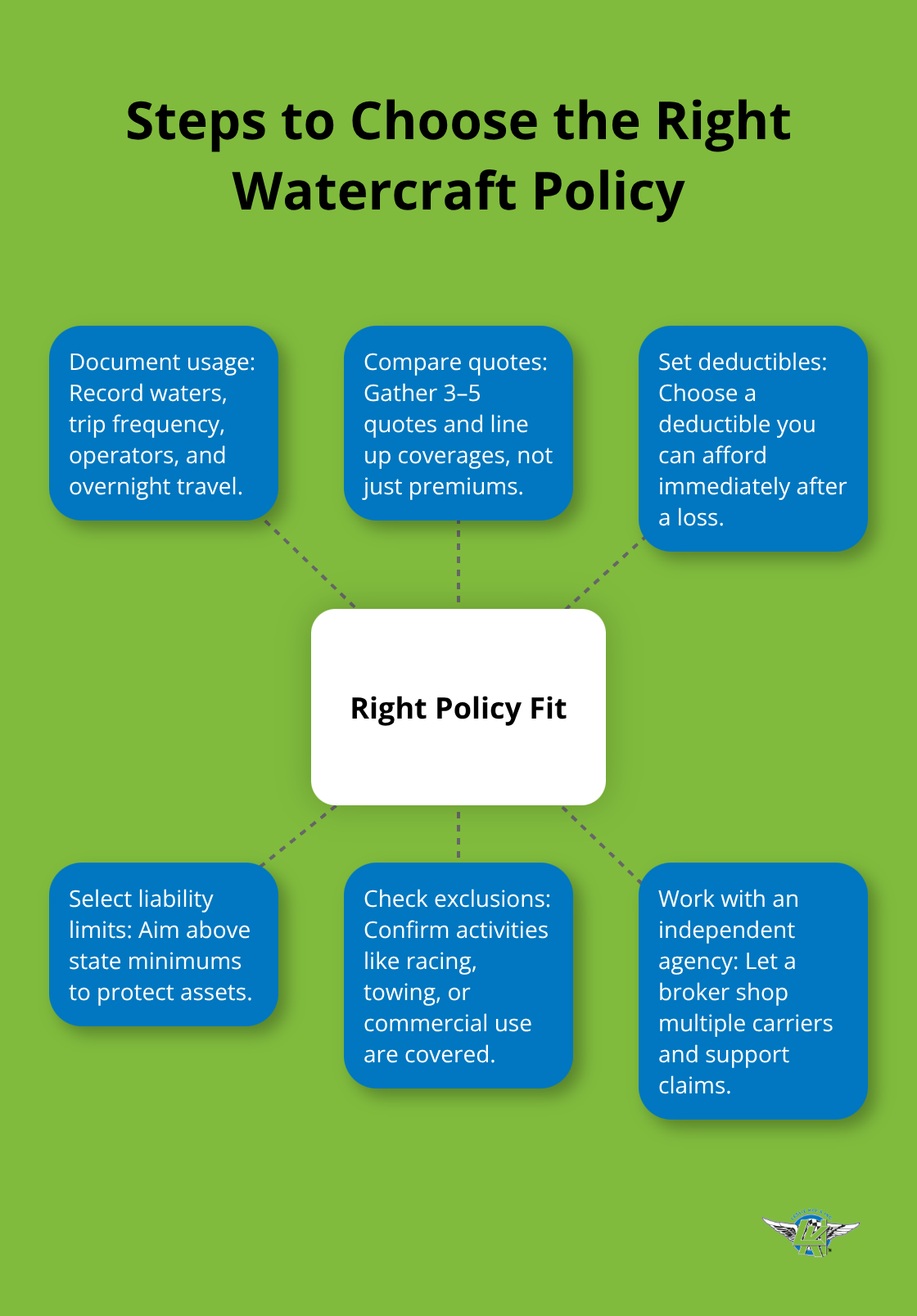
Start with facts about how you operate your boat and where. Write down the specific waters you navigate, how many days per year you’re actually on the water, whether you take overnight trips, and who operates the boat besides you. A boat that stays in a protected marina 30 miles from the coast faces different risks than one that runs offshore 100 miles out. Freshwater lake boating differs fundamentally from saltwater operation.
Your insurance company will ask these questions anyway, so documenting them now prevents rate surprises later. Once you have this usage profile, you can match it against what different carriers actually cover. Many boat owners find their policy excludes the exact activity they do most-racing, commercial fishing, or towing water skiers-because they never specified their usage when purchasing.
Understand Why Usage Reporting Matters
The National Association of Insurance Commissioners found that underreporting usage ranks among the top reasons claims get denied. Your answers about how you use your boat become the foundation for every quote you request. Inaccurate information either inflates your rate needlessly or leaves you uninsured when a claim hits. Insurers verify information through marine databases and prior loss reports, so inaccuracies surface quickly.
Compare Multiple Quotes Side by Side
Gathering three to five quotes from different carriers reveals real pricing differences and exposes coverage gaps you might miss with a single quote. Insurers price identical boats differently based on their loss history and underwriting appetite, so a $1,200 annual premium from one carrier might be $900 from another for the same vessel and coverage.
When you compare quotes, stack the actual coverage side by side instead of just looking at the premium. One carrier might offer $300,000 liability as standard while another starts at $100,000, making the cheaper quote actually more expensive when you add coverage to match. This comparison prevents you from selecting a policy that looks affordable but leaves you underprotected.
Make Strategic Deductible Choices
Your deductible choice matters more than most boat owners realize. A $1,000 deductible saves roughly 10-15% on your annual premium compared to $500, but after an accident, you’ll pay that extra $500 out-of-pocket. Try choosing your deductible based on what you can afford to pay immediately after a loss, not what sounds cheapest on the monthly bill.
This decision requires honest self-assessment about your financial situation. If an unexpected $1,000 expense would strain your budget, the lower deductible protects your finances even though it costs more monthly. If you have emergency savings to cover larger out-of-pocket costs, the higher deductible reduces your annual spending significantly.
Work With an Agency That Shops Multiple Carriers
An independent insurance agency that represents multiple carriers can compare options across the market rather than pushing you toward one company’s products. We at Leslie Kay’s, Inc. shop multiple carriers to find coverage that matches both your boat and your budget, with claims support available seven days a week when something goes wrong.
Final Thoughts
Selecting the right watercraft insurance options requires matching your coverage to how you actually boat, not to what sounds cheapest. The coverage types we’ve covered-liability, collision, comprehensive, medical payments, and uninsured boater protection-form the building blocks of a solid policy. Your rates depend on your vessel’s characteristics, where you navigate, and your experience level, so accuracy matters when you apply.
Comparing multiple quotes side by side prevents you from accidentally choosing inadequate coverage or overpaying for protection you don’t need. A policy built for someone who keeps their boat in a protected marina differs fundamentally from one for someone running offshore regularly. The deductible you choose, the liability limits you select, and the optional coverages you add should all connect to your actual usage patterns and financial situation.
Documenting your boating habits and shopping multiple carriers will help you find real options that fit your needs. We at Leslie Kay’s, Inc. specialize in watercraft coverage and shop multiple insurers to deliver policies matched to your boat and your budget. Contact us to discuss your watercraft insurance needs and find coverage that protects your vessel and your peace of mind.
The information provided in this blog is for general informational purposes only and does not constitute legal, financial, or insurance advice. Coverage options, terms, and availability may vary. Please consult with a licensed professional for advice specific to your situation.
Artificial intelligence may have been used to generate text and images in some blog articles.