

Motorcycle insurance doesn’t have to drain your wallet. We at Leslie Kay’s, Inc. know that riders want protection without overpaying, which is why we’ve put together this affordable motorcycle coverage guide.
The right strategy can cut your premiums significantly. This guide walks you through the exact factors that impact your rates and the concrete steps you can take to lower them.
What Really Drives Your Motorcycle Insurance Rate
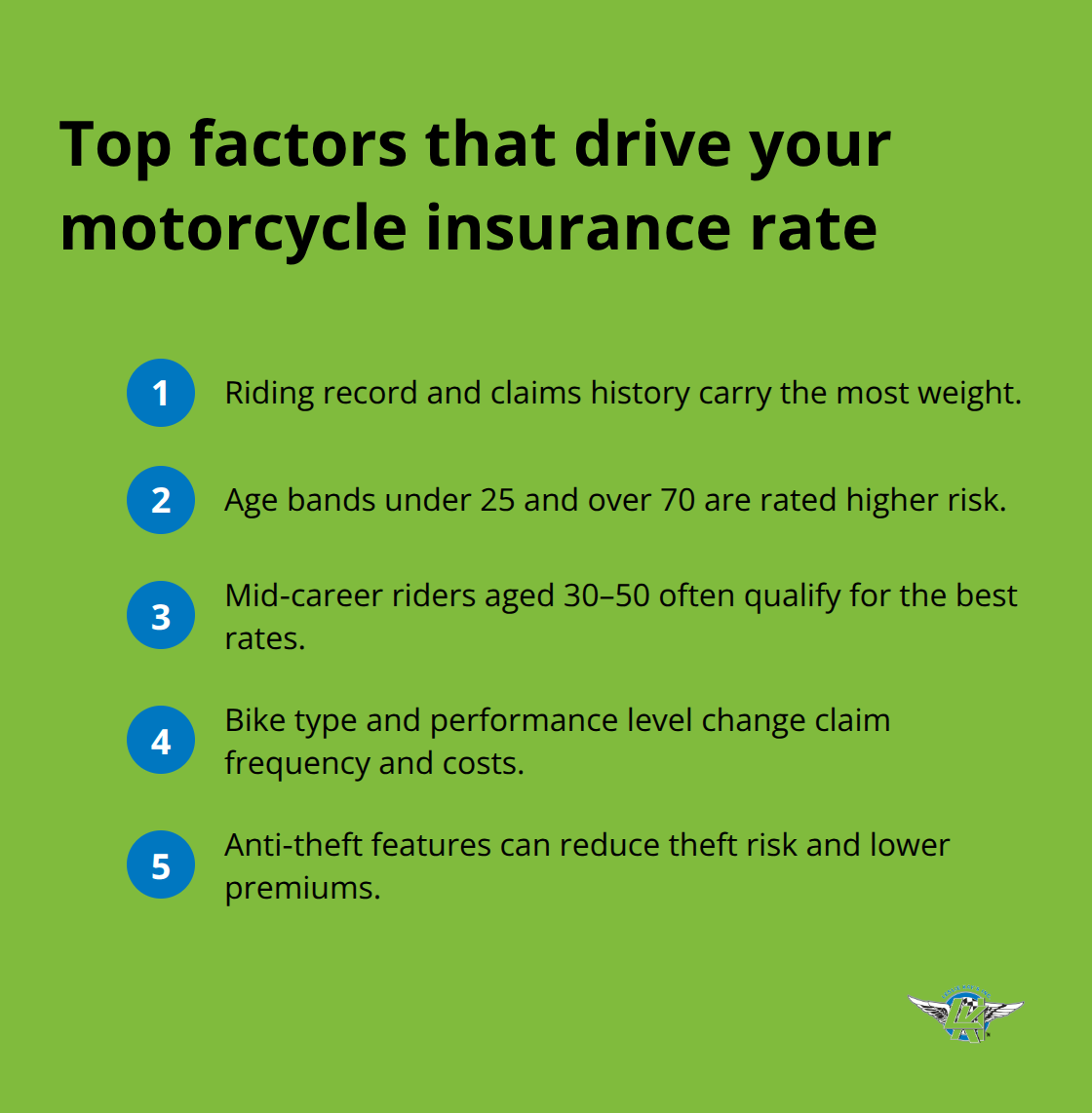
Insurance companies calculate your premium using a formula that reflects the expected cost of claims, underwriting expenses, operating costs, and profit margins. Understanding this formula helps you see exactly where your rate comes from and what you can actually control. Your riding experience and history sit at the top of this calculation because insurers rely on historical loss data to predict future claims. A clean riding record with no accidents or violations signals lower risk, while even one at-fault accident can increase your premium by 20–40% depending on the severity and your state’s regulations. Age matters significantly too-riders under 25 and over 70 typically pay substantially higher rates because insurance data shows these groups file more claims. Mid-career riders aged 30–50 with several claim-free years generally qualify for the best rates available.
Your Bike’s Type and Condition Shape Your Cost
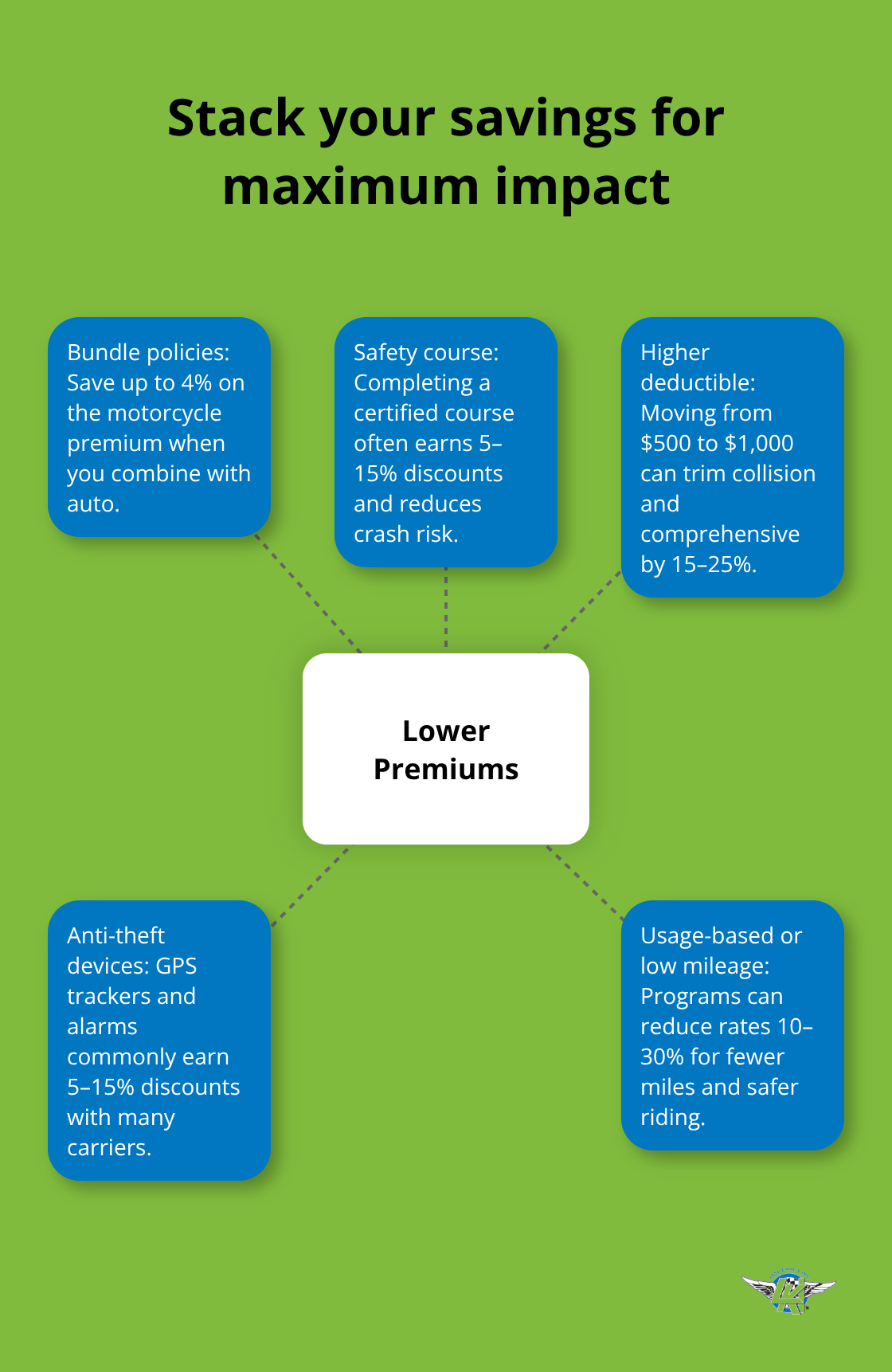
The motorcycle itself is the second major factor in your rate calculation. Sport bikes and high-performance models cost far more to insure than cruisers or standard bikes because they’re involved in more accidents and attract riders who engage in riskier behavior. A brand-new sport bike might cost $1,500+ annually to insure, while an equivalent cruiser costs 30–50% less. Age also matters-newer bikes with better safety features and anti-theft systems typically qualify for lower premiums, though this advantage shrinks as the bike depreciates. Insurance companies use replacement cost data to set rates, so a five-year-old bike worth $8,000 will generate lower premiums than the same model brand new. You can reduce this cost by installing anti-theft devices like GPS trackers or alarm systems, which many insurers reward with 5–15% discounts because they reduce theft claims.
Deductible and Coverage Decisions Control Your Premium Directly
Your deductible is the one lever you control most directly. Raising your deductible from $500 to $1,000 typically cuts your collision and comprehensive premiums by 15–25%, saving you $150–300 annually on a moderate policy. The tradeoff is clear-you pay less monthly but more out-of-pocket if you file a claim. For riders who rarely claim and have solid emergency savings, this math works. For someone living paycheck-to-paycheck, a lower deductible protects you from catastrophic expense. Coverage level matters equally. Liability-only policies cost roughly half what full coverage costs, but they leave your bike unprotected if you cause an accident. Full coverage protects both you and your bike, though it makes sense primarily if you’re financing the bike or it’s worth more than $3,000. Your actual bike value and financial situation should guide your coverage choices rather than simply selecting the cheapest option available.
Now that you understand what drives your rate, the real savings come from taking action on the factors within your control-and that’s where practical strategies make the difference.
How to Cut Your Premium Without Cutting Coverage
Bundle Policies to Unlock Immediate Savings
Bundling policies stands out as the single most effective move you can make. Riders who combine motorcycle coverage with auto insurance save up to 4% on the motorcycle premium. The math is straightforward: insurers reward customers who consolidate multiple policies because it reduces their administrative costs and increases customer lifetime value.
If you’re financing your motorcycle through a loan, bundling becomes even smarter because you’re already managing multiple financial products. The savings vary by state and carrier, but getting quotes from carriers that specialize in bundling takes minutes online, and comparing the total cost of bundled policies against separate quotes reveals whether consolidation makes financial sense for your specific situation.
Complete a Motorcycle Safety Course
Your riding record and demonstrated safety competence directly influence what insurers charge. Completing a motorcycle safety course qualifies you for discounts ranging from 5–15% depending on your carrier and state, and more importantly, the course teaches techniques that reduce accident risk over your riding lifetime. Insurance companies track loss data showing that riders who complete formal safety training file fewer claims, which is why they’re willing to cut rates.
A clean driving record without accidents or traffic violations keeps your premiums at baseline rates, but a single at-fault accident can spike your premium by 20–40% for three to five years. This means protecting your record is worth far more than the $100–300 a safety course costs. If you’ve already had an accident, the course won’t erase it, but it signals to insurers that you’re committed to improvement and can help offset some rate increases.
Stack Your Advantages for Maximum Impact
The combination of bundled policies, formal safety training, and accident-free riding creates a compounding effect: each factor alone saves money, but stacking them together moves you into the lowest-risk category where carriers compete hardest for your business. This is where shopping smart becomes your next critical step-because even with all these strategies in place, the carrier you choose and how you compare their offers determines whether you actually capture these savings.
How to Find the Best Rate for Your Situation
Obtaining quotes from at least three different carriers is non-negotiable if you want affordable coverage. Comparing quotes takes 15–20 minutes per carrier, and the difference between the lowest and highest quote for identical coverage often exceeds $300 annually. Many riders accept the first quote they receive or stick with their existing insurer out of inertia, which costs them hundreds of dollars yearly.
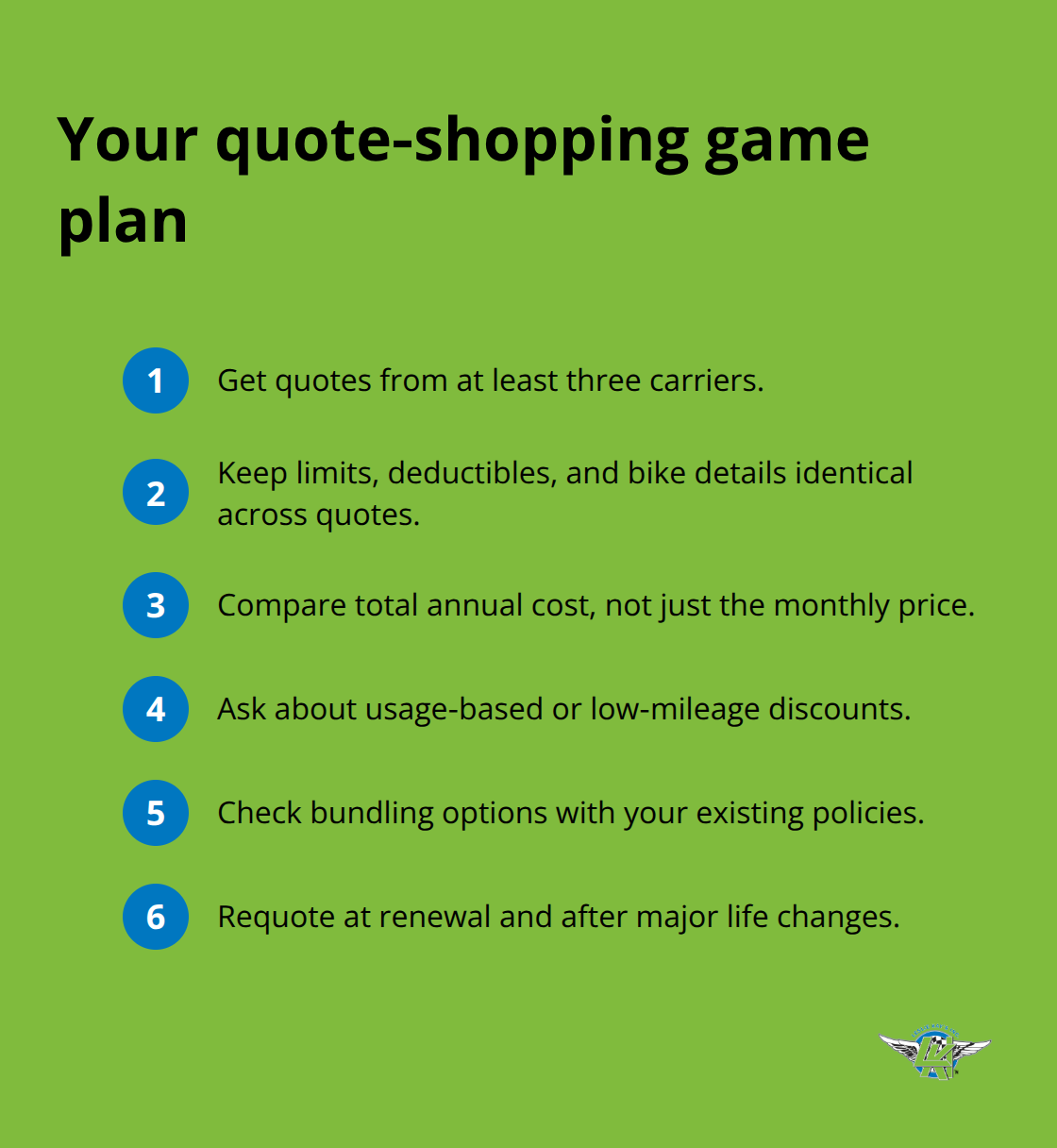
When you request quotes, provide identical coverage limits, deductibles, and bike information across all carriers so you’re actually comparing apples to apples. A $500 deductible with $100,000 liability coverage is fundamentally different from a $1,000 deductible with $50,000 liability, and the price difference reflects coverage, not just the insurer’s rate. Progressive reports that drivers who switch auto insurance save an average of $975 annually, and motorcycle riders who shop multiple carriers typically see similar or larger savings because motorcycle markets are less competitive than auto markets.
Comparing quotes across multiple carriers
The carriers that dominate motorcycle insurance include Progressive and Liberty Mutual, along with independent agencies that shop multiple carriers to find you the lowest premiums without forcing you into inadequate coverage. Each carrier weights risk factors differently, so one insurer might charge $600 annually while another charges $850 for the same bike and rider profile. This variation exists because underwriting models differ, and some carriers specialize in specific rider demographics or bike types. Spending an extra 30 minutes to contact three carriers instead of one typically saves $300–500 annually-a return of $10–17 per minute of your time. Most carriers now offer online quotes that generate estimates in minutes, so the friction that once made comparison shopping difficult has largely disappeared.
Usage-Based Discounts Reward Actual Riding Behavior
If you ride fewer than 5,000 miles annually or use your bike seasonally, usage-based discount programs can cut your premium by 10–30%. Progressive’s Snapshot program tracks your riding habits and rewards safer behavior with discounts, while some carriers offer low-mileage discounts as a flat reduction if you certify annual mileage under specific thresholds. The catch is that not all carriers offer these programs in all states, so asking during your quote process matters. Your actual riding pattern-whether you commute daily on highways or weekend-only on back roads-directly impacts your risk profile, and insurers increasingly price based on this reality rather than broad demographic assumptions. If you ride infrequently, this discount category alone can justify shopping around, since some carriers won’t even offer it.
Annual Policy Reviews Prevent Overpaying for Outdated Coverage
Your bike depreciates, your situation changes, and your coverage needs shift over time. A 30-minute annual review often reveals that you’re carrying unnecessary coverage or paying for features you no longer need. If your motorcycle dropped from $12,000 to $7,000 in value over four years, your comprehensive and collision premiums should decrease accordingly, yet many riders never adjust. Conversely, if you financed a new bike or upgraded to a more expensive model, you might need additional coverage that your old policy doesn’t provide. Life changes matter too-moving to a different state, getting married, or changing jobs can all trigger rate adjustments or unlock discounts you didn’t qualify for previously (such as bundling discounts if you acquire additional policies). Set a calendar reminder each renewal date to spend 15 minutes comparing your current coverage against current quotes from two other carriers.
Final Thoughts
Reducing your motorcycle insurance costs requires three concrete actions: understanding what drives your rates, taking steps within your control, and shopping strategically across multiple carriers. A clean riding record, a completed safety course, and bundled policies stack together to move you into the lowest-risk category where insurers compete hardest for your business. Raising your deductible, installing anti-theft devices, and riding fewer miles each year all cut premiums without sacrificing the protection you need.
An independent agent makes a measurable difference because they shop multiple carriers simultaneously rather than forcing you into one company’s offerings. They understand your specific situation-your bike type, riding habits, location, and financial constraints-and match you with carriers that actually want your business at competitive rates. They handle the comparison work for you, explain coverage options in plain language, and manage claims support when you need it.
Visit Leslie Kay’s, Inc. to get quotes from multiple carriers and see exactly how much you could save on your motorcycle coverage. Our team shops multiple carriers to deliver customized, competitively priced policies tailored to your actual needs. The affordable motorcycle coverage guide you’ve just read provides the knowledge; we provide the execution to help you secure the right protection at the right price.
The information provided in this blog is for general informational purposes only and does not constitute legal, financial, or insurance advice. Coverage options, terms, and availability may vary. Please consult with a licensed professional for advice specific to your situation.
Artificial intelligence may have been used to generate text and images in some blog articles.