
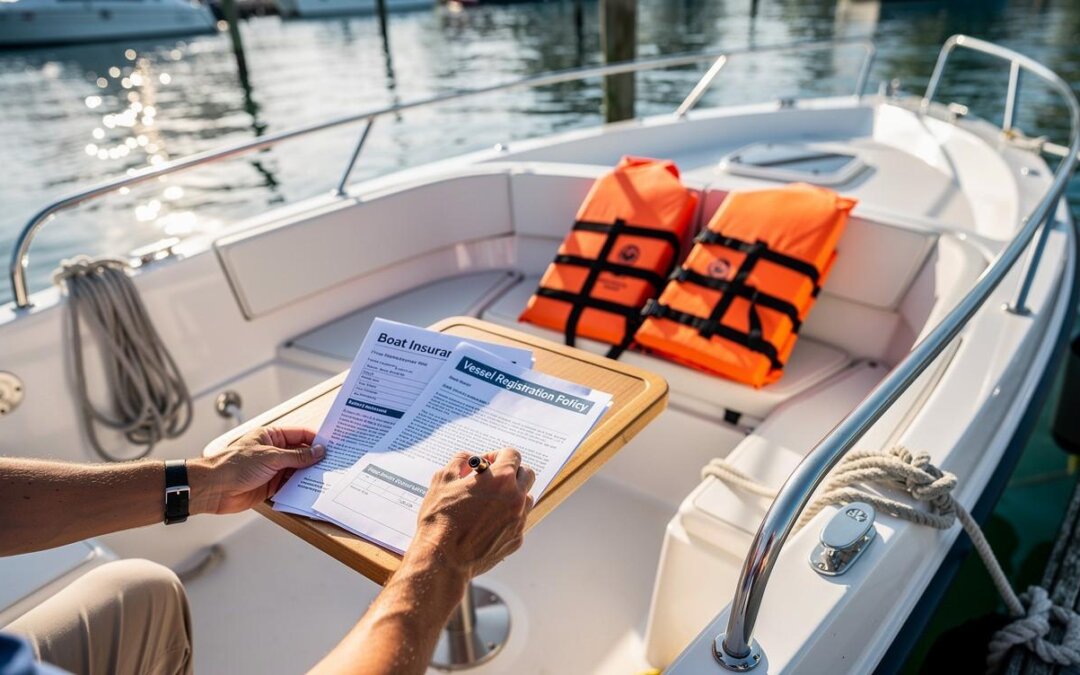
Owning a boat opens up endless opportunities for adventure on the water. But without proper protection, a single accident can turn your dream into a financial nightmare.
At Leslie Kay’s, Inc., we know that recreational boat insurance is about more than just following the rules-it’s about safeguarding your investment and your peace of mind. This guide walks you through the coverage options that matter most, so you can spend less time worrying and more time enjoying the water.
What Your Boat Insurance Actually Covers
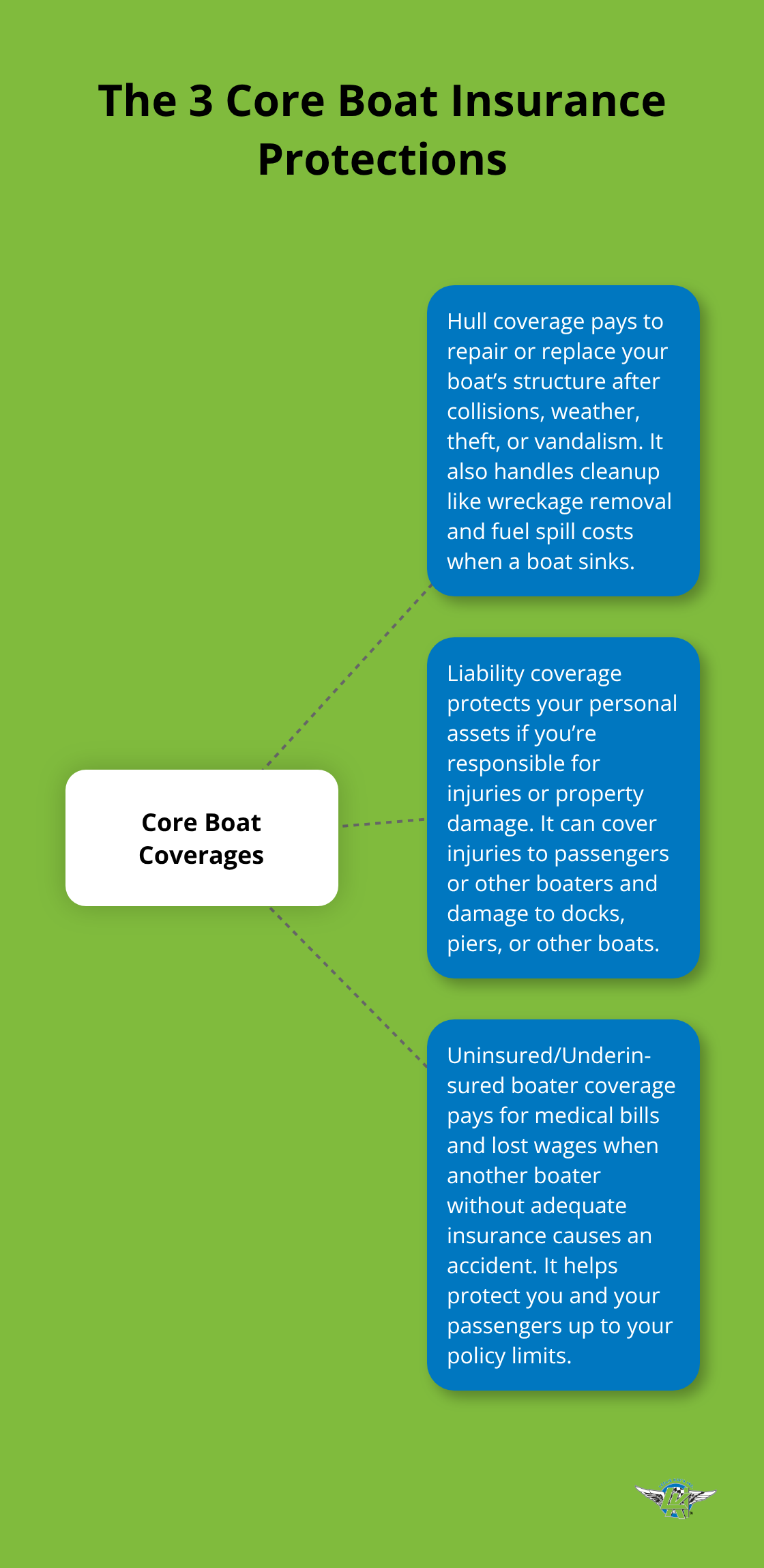
Recreational boat insurance protects three critical areas that most boat owners face when they’re on the water. Hull coverage pays for damage to your boat’s structure from collisions, weather, theft, or vandalism. If you hit a submerged log and need $7,800 in repairs, or a storm damages your boat while it sits at the dock, hull coverage handles those costs. Liability coverage protects your personal assets when you are responsible for someone else’s injury or property damage. This covers injuries to your passengers or other boaters, damage you cause to someone else’s boat, dock, or pier, and even fuel spill remediation if your boat sinks. Uninsured boater coverage protects you and your passengers if someone without adequate insurance hits you, covering medical bills and lost wages up to your policy limits. These three categories form the backbone of comprehensive boat protection, but understanding what fits your specific situation matters far more than generic coverage levels.
Hull Damage: More Than Just Collision Protection
Hull coverage comes in two forms with real cost differences. Agreed Hull Value coverage pays the full amount you and your insurer agree on if your boat is totaled, making it ideal if you want predictable replacement value. Actual Cash Value coverage pays what your boat is currently worth on the market, which costs less in premiums but pays less in a total loss claim. For a 15-year-old fishing boat, Actual Cash Value makes financial sense since the boat has already depreciated significantly. For a newer pontoon boat financed through a lender, Agreed Hull Value is typically required and protects your investment better. Comprehensive coverage within your hull protection handles theft, vandalism, fire, and weather damage-the incidents you cannot control. Collision coverage handles the accidents you cause, including capsizing. One critical detail most boat owners miss: wreckage removal and fuel spill coverage are automatically included in every boat policy, protecting you from the expensive cleanup costs when a boat sinks or needs recovery.
Liability: Your Real Financial Risk on the Water
Liability coverage protects your personal assets when you are responsible for someone else’s injury or property damage. A wakeboarding accident that injures a passenger, a docking mistake that damages another boat, or a fuel spill that requires environmental cleanup-all fall under liability. Your liability limits determine how much your insurance pays before you are personally responsible. Most policies offer limits ranging from $100,000 to $500,000 in liability coverage. If you face a lawsuit for $250,000 and your limit is $100,000, you are liable for the remaining $150,000. Uninsured and underinsured boater coverage fills the gap when someone else causes the accident but lacks adequate insurance. This coverage pays for your medical expenses, lost wages, and pain and suffering up to your policy limits. In states with longer boating seasons and higher traffic on the water, this protection becomes increasingly valuable since the odds of encountering an uninsured boater increase significantly.
Optional Add-Ons That Protect Your Wallet
Beyond the core three coverages, several optional add-ons address specific risks boat owners face. Propulsion Plus coverage repairs or replaces your outboard motor or inboard/outboard engine after mechanical breakdown-a protection that standard hull coverage excludes. Sign & Glide provides on-water towing, fuel delivery, soft ungroundings, and jump starts when your boat breaks down far from shore. Medical payments coverage pays hospital bills for you and your passengers after an accident, regardless of who caused it. Fishing equipment coverage protects your rods, tackle, and other carry-on items (up to $10,000 for fishing gear and $5,000 for personal items like phones or tablets) if they are lost or damaged on board. These add-ons cost relatively little but address the real expenses that hull and liability coverage alone cannot handle. When you shop multiple carriers, you discover which add-ons each insurer includes standard and which ones cost extra-a significant factor in your final premium.
Boat Type, Coverage Needs, and Premium Reality
Different boats demand different protection strategies, and insurance costs reflect those differences directly. Speedboats and performance vessels with high-horsepower engines carry substantially higher premiums than slower recreational boats because engine power drives underwriting risk. A 300-horsepower speedboat costs more to insure than a 115-horsepower pontoon boat, even if both are the same age and value. Progressive’s 2024-2025 data shows state-level variation matters enormously: Wisconsin averages $274.42 annually while Florida reaches $867.86, a 216% difference driven partly by boat types prevalent in each state.
How Boat Type Affects Your Premium
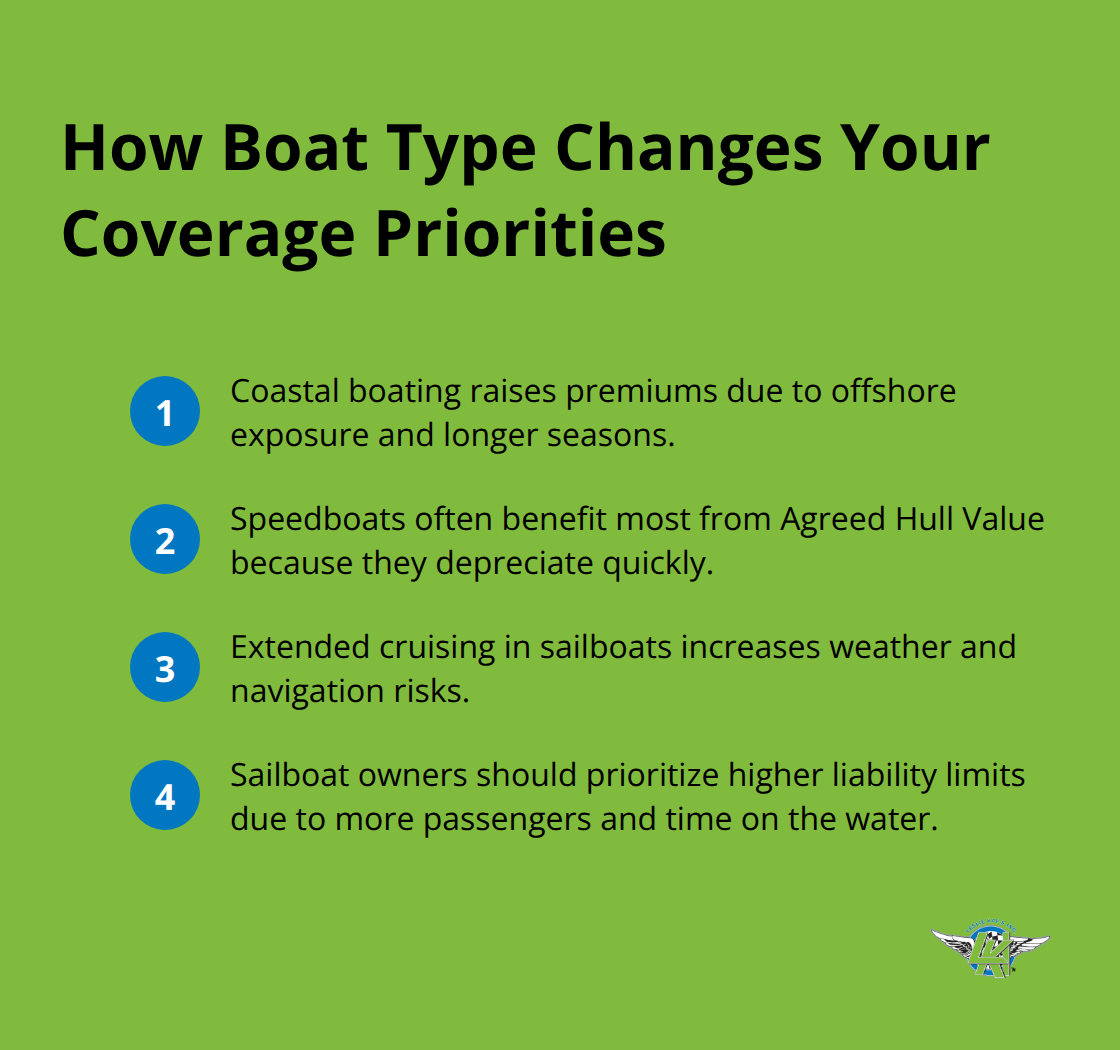
Coastal states see higher premiums because offshore boating and longer seasons increase accident exposure. Speedboat owners benefit most from Agreed Hull Value coverage since these vessels depreciate rapidly and replacement costs spike after damage. Sailboats and cruising boats present their own coverage challenges since extended cruising exposes you to weather, navigation hazards, and longer distances from help. Sailboat owners should prioritize higher liability limits because cruising trips involve more passengers and longer time on the water, increasing injury risk.
Specialized Coverage for Sailboats and Cruisers
Cruising sailboats also benefit from ice and freezing coverage if you winter in northern climates, protecting against damage when the boat sits idle in cold weather. This add-on becomes especially valuable for owners who store their vessels in regions where freezing temperatures cause structural stress. Extended time away from shore means you face weather exposure that stationary boats never encounter, making comprehensive coverage a practical investment rather than an optional extra.
Fishing Boats and Pontoons: Different Risks Entirely
Fishing boats require fishing equipment coverage because your tackle, rods, and electronics represent substantial value beyond the hull itself. Progressive covers fishing gear up to $10,000 and personal items up to $5,000, protecting equipment that standard hull coverage excludes. Pontoon boats used for entertaining passengers need robust liability limits and medical payments coverage since you carry more people in a stationary platform that amplifies injury risk during falls or accidents. Pontoon owners should consider Fishing Guide Coverage if they occasionally take paying passengers, with limits up to six passengers plus captain.
Age, Safety Training, and Your Bottom Line
Newer boats cost more to insure regardless of type because replacement value drives premiums higher. A 2023 fishing boat costs substantially more than a 2010 model even with identical features. Completing a boating safety course lowers your rate across most carriers, making this a practical step before purchasing any policy. Your boat type directly determines which optional add-ons matter most and which core coverages deserve the highest limits in your policy-a reality that becomes clear only when you compare quotes across multiple insurers with different pricing models and coverage options.
How to Choose the Right Boat Insurance Policy
Start With Your Boat’s Real Value Today
Your boat’s actual replacement cost matters far more than what you paid for it years ago. Pull recent sales data from sites like NADA Guides or MarketWatch to establish what your specific boat sells for in your region right now. This number determines whether Agreed Hull Value or Actual Cash Value makes financial sense for your situation.
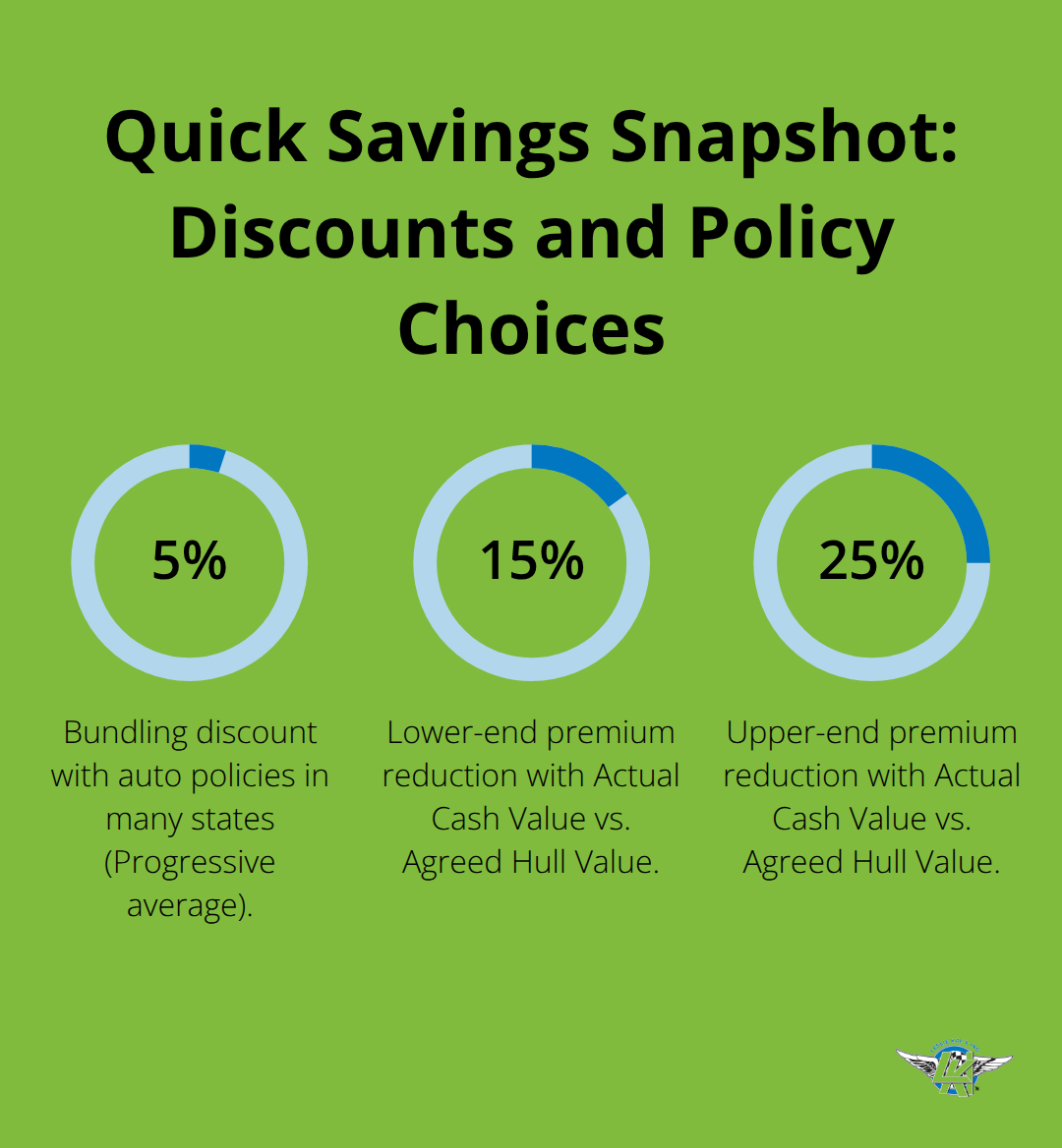
Agreed Hull Value locks in a replacement amount and costs more upfront but pays the full agreed amount if your boat is totaled, eliminating depreciation arguments after a loss. Actual Cash Value pays current market value, reducing your premium by 15-25% depending on the boat’s age, but you receive less in a total loss claim. For boats financed through a lender, the lender typically requires Agreed Hull Value anyway, removing the choice entirely.
Assess Your Actual Boating Patterns
How you use your boat directly shapes which coverages protect you best. A fishing boat you trailer to lakes three weekends monthly faces different risks than a pontoon you dock year-round at a marina. Seasonal boaters in northern states benefit from lower premiums since shorter boating seasons mean fewer exposure days, which explains why Wisconsin averages $274.42 annually compared to Florida’s $867.86 according to Progressive’s 2024-2025 data.
Document your typical boating patterns, passenger counts, and whether you operate in coastal or inland waters. This information directly impacts which coverage limits make sense and which optional add-ons actually protect your specific situation rather than theoretical risks.
Compare Quotes From Multiple Carriers
Shopping multiple carriers reveals massive premium differences that single quotes completely hide. Progressive, BoatUS through GEICO Marine, and independent agents each price boat insurance differently based on their underwriting models, available discounts, and deductible amounts to create an apples-to-apples comparison.
Progressive offers bundling discounts averaging 5% when combined with auto policies in many states, while BoatUS emphasizes their TowBoatUS partnership starting at $3 monthly for towing coverage. Deductibles dramatically affect your bottom line, typically ranging from $250 to $2,500 per claim. Raising your deductible from $500 to $1,500 often reduces annual premiums by $150-300, a meaningful savings if you have emergency funds available for smaller claims. Conversely, keeping deductibles low makes sense if your boat is financed or if you cannot comfortably cover a $1,500 out-of-pocket expense after an accident.
Identify Hidden Cost Differences in Coverage Details
Compare total annual costs across different deductible levels, not just the lowest premium quote. Some carriers include wreckage removal and fuel spill coverage automatically while others charge extra, creating hidden cost differences that appear only when you read policy details carefully. Verify which optional add-ons each carrier includes standard, especially Propulsion Plus for engine protection, medical payments coverage, and fishing equipment protection (up to $10,000 for fishing gear and $5,000 for personal items like phones or tablets). These inclusions can easily save $300-500 annually compared to carriers charging à la carte for every protection layer.
Final Thoughts
Recreational boat insurance protects three core elements that matter most: your boat’s physical structure through hull coverage, your personal assets through liability protection, and your passengers through uninsured boater and medical payments coverage. These foundational protections work together to eliminate the financial devastation that follows a single accident on the water. Beyond these essentials, optional add-ons like Propulsion Plus, Sign & Glide towing, and fishing equipment coverage address the specific risks your boating style creates.
Shopping multiple carriers reveals premium differences that single quotes completely hide. Progressive, BoatUS, and independent agents price boat insurance using different underwriting models, discount structures, and deductible options that create vastly different annual costs for identical coverage. A $500 deductible versus a $1,500 deductible can shift your annual premium by $150–300, while bundling discounts with auto policies average 5% savings in many states.
Start with your boat’s current market value, document your typical boating patterns, and gather quotes from at least two carriers using identical coverage parameters. We at Leslie Kay’s, Inc. specialize in watercraft coverage and shop multiple carriers to deliver customized policies at competitive prices, with hands-on claims support and seven-day-a-week service. Visit Leslie Kay’s, Inc. to explore how an independent agency approach protects your boating adventures across multiple states.
The information provided in this blog is for general informational purposes only and does not constitute legal, financial, or insurance advice. Coverage options, terms, and availability may vary. Please consult with a licensed professional for advice specific to your situation.
Artificial intelligence may have been used to generate text and images in some blog articles.