

RV ownership opens up freedom on the road, but insurance costs can quickly eat into your budget. We at Leslie Kay’s, Inc. know that finding affordable RV insurance in 2026 doesn’t mean sacrificing the protection you need.
This guide walks you through real premium costs, coverage options that actually matter, and proven strategies to lower your rates without cutting corners.
RV Insurance Costs in 2026
Travel trailers run about $594 annually according to Progressive’s 2024 data, while motorhomes average $1,052 per year. These numbers matter because they show you what baseline affordability looks like. However, your actual premium depends heavily on the specific RV you own. A Class A motorhome typically costs $1,000 to $4,000 per year to insure, Class B vans run $500 to $1,500, Class C models land between $800 and $2,500, and fifth wheels range from $500 to $2,500. If you own an older RV outright and only need liability coverage, you can drop costs to around $125 annually. Newer RVs cost significantly more to insure because repair costs are higher and the vehicle value is greater. An RV aged five to ten years old typically offers the sweet spot for affordability without sacrificing reliability.
Your Driving Record and Location Shape Your Rate
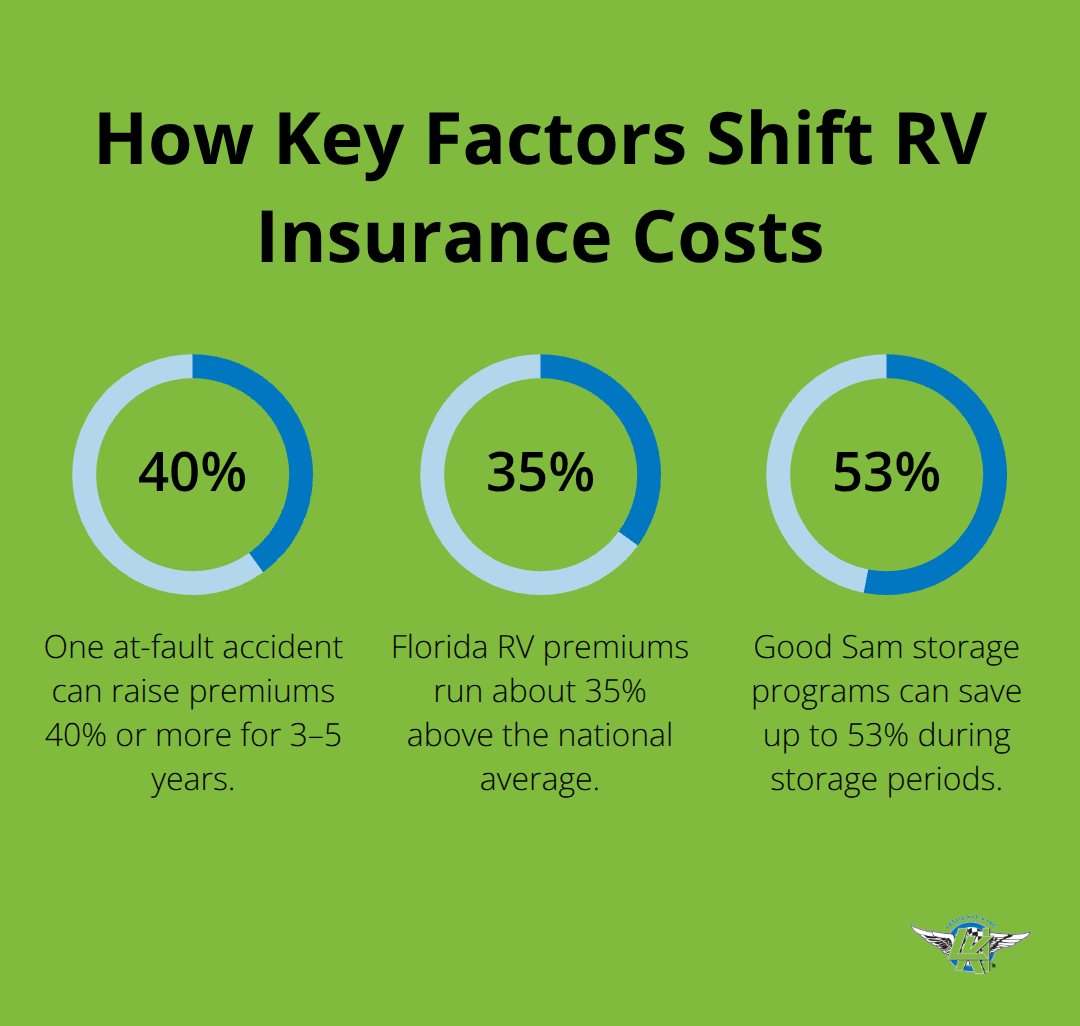
Your driving record shapes your rate more than most people realize. A clean record with no at-fault accidents keeps premiums low, but a single at-fault accident can increase your costs by 40 percent or more for three to five years. Where you park your RV matters too-Florida premiums run about 35 percent above the national average due to weather and theft risk, while coastal areas cost more than rural Midwest locations.
Storage decisions directly impact your wallet. An RV stored in an enclosed facility or secured at home with locks and alarms can cut premiums by 10 to 25 percent compared to open-air storage.
Mileage, Credit, and Other Cost Factors
Annual mileage also plays a role in your premium calculation. RVers who travel under 5,000 miles yearly pay the lowest rates, while those who hit 15,000 miles or more face significantly higher premiums. Your credit score influences pricing in most states as well, though California, Hawaii, and Massachusetts restrict credit-based pricing. These factors combine to create your unique rate, which is why two RVers with identical RVs can pay vastly different premiums.
How to Shop Quotes Effectively
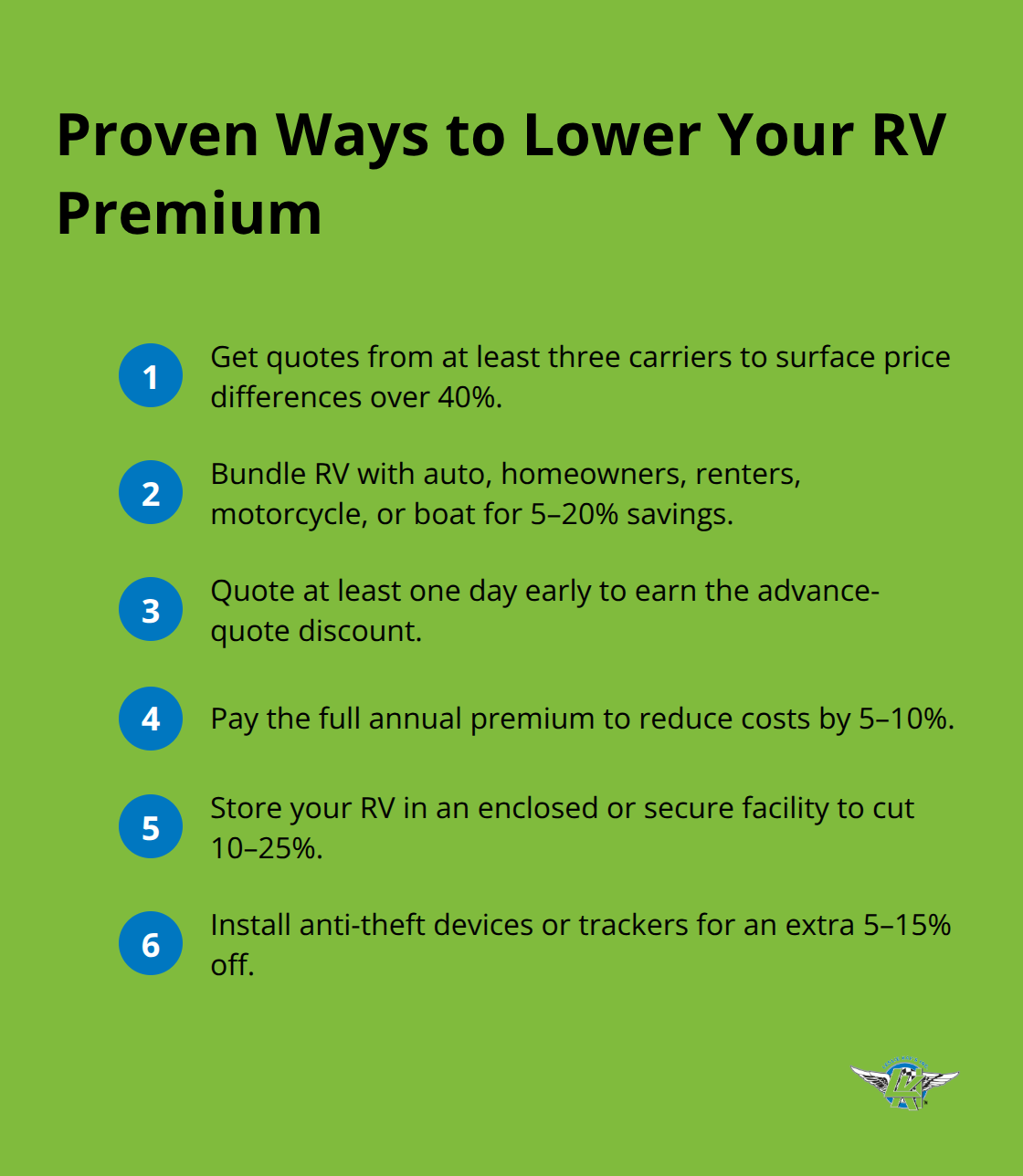
Shopping quotes from multiple carriers reveals price differences that can exceed 40 percent for identical coverage. Start with your RV’s make, model, year, and current condition, then request quotes from at least three carriers. Progressive, Auto-Owners Insurance, Nationwide, and Good Sam Insurance Agency each offer different strengths. Progressive leads with the broadest RV catalog and features like diminishing deductibles. Auto-Owners excels in customer satisfaction ratings. Nationwide delivers the most aggressive discount slate. Good Sam simplifies comparing multiple providers in one place.
When you quote online or by phone, discounts apply automatically, so the price you see is real. Quote at least one day before your policy starts to unlock the advance-quote discount. Bundling an RV policy with auto, homeowners, or renters insurance typically saves 5 to 20 percent depending on the carrier. Paying your premium in full rather than monthly also reduces your total cost. Once you understand what drives your rate and how to compare quotes effectively, you can move forward with selecting the right coverage types for your situation.
Coverage Types That Protect Your RV Without Breaking the Bank
Michigan law requires RV owners to carry minimum liability coverage of $50,000 per person and $100,000 per accident for bodily injury, plus $25,000 per accident for property damage. Liability coverage protects you when you’re at fault for injuring someone or damaging their property, but it does not protect your RV itself. Most RV owners make a critical mistake here: they assume liability alone is enough. It isn’t. If you financed or leased your RV, your lender requires comprehensive and collision coverage. If you own outright, these are optional but absolutely worth the investment.
Comprehensive coverage protects against theft, vandalism, fire, weather damage, and hitting animals. Collision coverage handles damage from accidents with other vehicles, trees, or structures. Progressive’s 2024 data shows travel trailer premiums average $594 annually with full coverage, and motorhomes run about $1,052 per year. These figures assume you’ve selected smart coverage limits without overpaying for unnecessary add-ons.
Full-Time RV Living Requires Different Protection
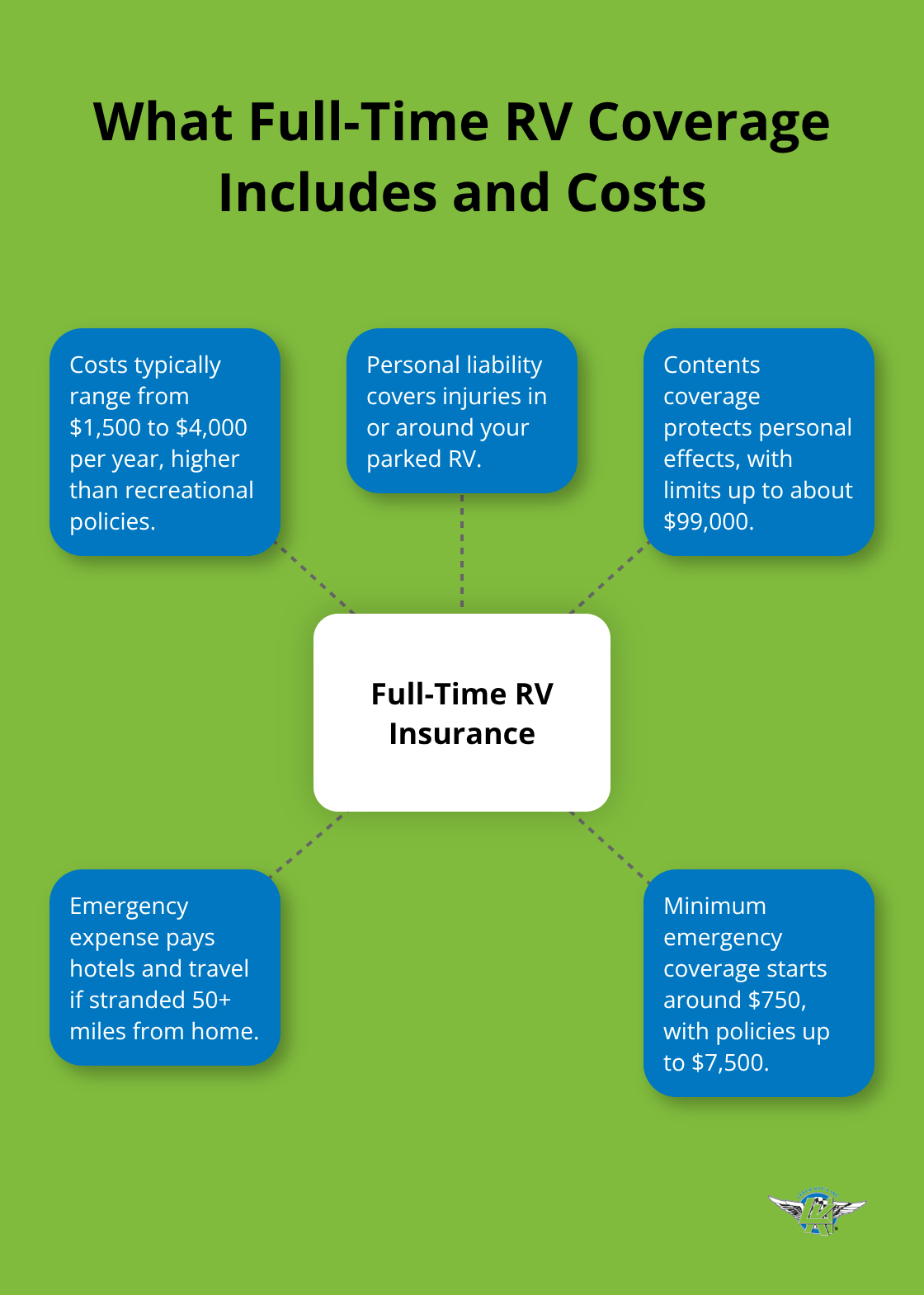
Full-time RV insurance treats your RV as a primary residence and costs significantly more than recreational policies, typically running $1,500 to $4,000 annually. This coverage includes personal liability protection when someone is injured in or around your parked RV, contents coverage for your belongings up to specified limits like $99,000 for personal effects, and emergency expense allowance covering hotel and travel costs if your RV breaks down more than 50 miles from home. Minimum emergency coverage starts at $750, though full-time policies may cover up to $7,500.
Optional Coverages Worth Your Investment
Total loss replacement coverage is worth considering if your RV is less than five years old, since it pays for a brand-new replacement if yours is totaled, protecting you from depreciation gaps. Pet injury coverage pays veterinary bills up to $1,000 with no deductible if a pet is injured in an accident. Pest damage protection covers wild animal damage up to a defined amount, and roof protection plus helps repair or replace roofs damaged by wear and tear.
Vacation Liability and Roadside Protection
For weekenders who occasionally park overnight, vacation liability coverage starting around $10,000 protects you when someone is injured around your RV, with options to raise limits to $100,000 for additional cost. Roadside assistance is practical coverage that handles towing and breakdowns like dead batteries or flat tires when you’re far from home. These optional coverages fill gaps that standard policies leave open, and they cost far less than the damage they prevent.
Understanding which coverages apply to your specific situation-whether you’re a weekend traveler or full-time resident-sets you up to make smart decisions about what protection actually matters for your budget and lifestyle. The next section reveals the money-saving strategies that lower your premiums without stripping away the coverage you need.
Money-Saving Strategies for RV Insurance
Stack Discounts Through Policy Bundling
Bundling your RV policy with auto, homeowners, renters, motorcycle, or boat coverage typically saves 5 to 20 percent depending on the carrier, with some providers offering even steeper reductions. Nationwide stands out with an aggressive discount slate that includes RV-specific savings for safety courses and RV club memberships, though you’ll need to request a quote to see all available discounts since not every option shows online. Progressive offers multi-policy, advance quote, association, original owner, and transfer discounts that stack together. The key is requesting quotes from at least three carriers and asking which discounts apply to your specific situation-many RVers miss savings simply because they don’t ask.
Paying your full annual premium upfront rather than splitting it into monthly payments also reduces your total cost, making this a straightforward way to shave another 5 to 10 percent off your bill. If you own multiple vehicles, mention all of them when you quote, as carriers often reward customers who consolidate their entire insurance portfolio.
Leverage Storage and Mileage Discounts
An RV stored in an enclosed or secure facility cuts premiums by 10 to 25 percent compared to open-air storage. If you park your RV in a garage or covered structure during off-season months, contact your insurer to lower your rate accordingly. Good Sam Insurance Agency emphasizes this discount heavily and can save full-time storage members up to 53 percent during storage periods, though this requires documenting that your RV sits stationary and unused.
Your annual mileage also determines your rate-RVers traveling under 5,000 miles yearly qualify for the lowest premiums, while those exceeding 15,000 miles annually face significantly higher costs. If you’re a weekender who uses your RV fewer than 30 days per year, mention this explicitly when quoting, as many carriers offer usage-based discounts for recreational rather than full-time travel.
Install Safety Devices for Additional Savings
Some insurers provide discounts for safety devices like GPS trackers, anti-theft alarms, or upgraded locks, which can reduce your premium by an additional 5 to 15 percent depending on the system you install. These tangible savings add up quickly-a combination of bundling, paid-in-full payment, storage discounts, and safety device credits can easily reduce your annual premium by 30 to 40 percent compared to the baseline rate.
Final Thoughts
Affordable RV insurance in 2026 requires three straightforward actions: identify your actual coverage needs, request quotes from at least three carriers, and stack every discount available to your situation. Travel trailers cost as little as $594 annually with full coverage, motorhomes run around $1,052, and liability-only policies start under $125 per year. Your specific rate depends on your RV type, driving record, location, storage method, and annual mileage-but these same factors create real opportunities to lower your premium significantly.
Comparing quotes from Progressive, Auto-Owners, Nationwide, and Good Sam reveals price differences that often exceed 40 percent for identical coverage. Layer on discounts aggressively: bundling with auto or homeowners policies saves 5 to 20 percent, paying your premium in full cuts another 5 to 10 percent, and storing your RV in an enclosed facility reduces costs by 10 to 25 percent. Safety devices and defensive driving courses unlock additional savings that compound quickly across your policy term.
We at Leslie Kay’s, Inc. shop multiple carriers to find you customized, competitively priced policies tailored to how you actually use your RV. Our team handles the comparison work and claims support so you focus on the road ahead. Contact Leslie Kay’s, Inc. today to get quotes that reflect your specific situation and uncover savings you might otherwise miss.
The information provided in this blog is for general informational purposes only and does not constitute legal, financial, or insurance advice. Coverage options, terms, and availability may vary. Please consult with a licensed professional for advice specific to your situation.
Artificial intelligence may have been used to generate text and images in some blog articles.