
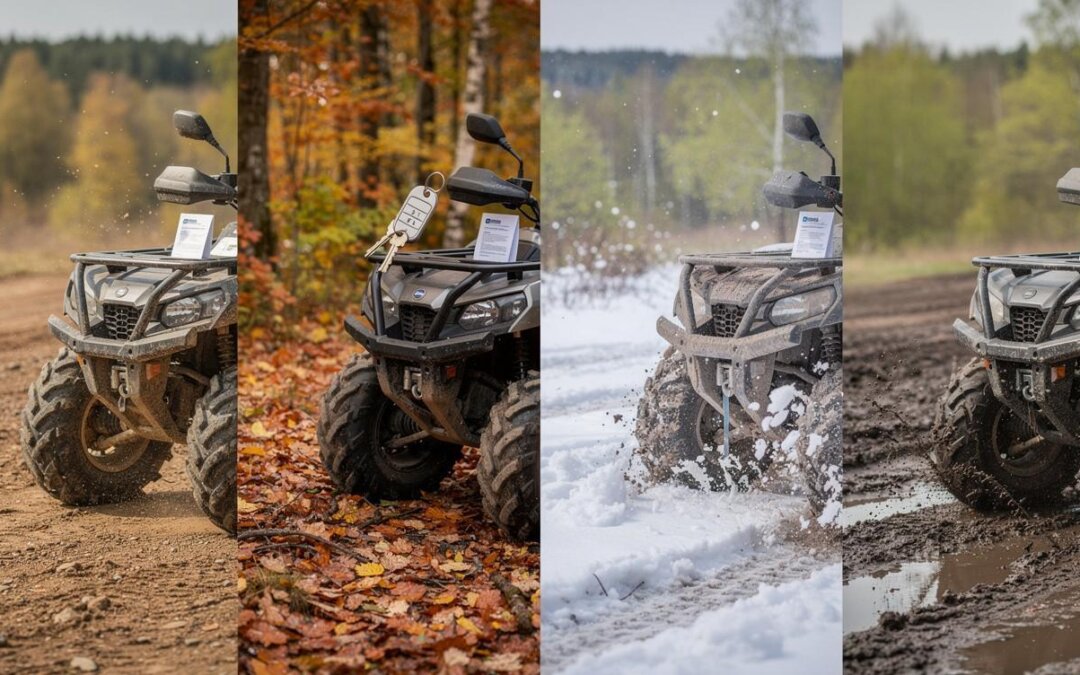
Your ATV insurance needs shift dramatically with the seasons. Winter brings icy trails and reduced visibility, while summer peaks with high-mileage riding and trail exposure.
At Leslie Kay’s, Inc., we’ve seen riders face coverage gaps when they adjust their riding patterns throughout the year. This guide walks you through ATV insurance across seasons so you stay protected no matter the weather or terrain.
What Changes About ATV Coverage When Seasons Shift
Winter Riding Demands Collision and Comprehensive Protection
Winter riding exposes you to hazards that summer trails don’t. Snow and ice reduce traction, and shorter daylight hours limit visibility. These conditions spike accident risk and weather-related damage.
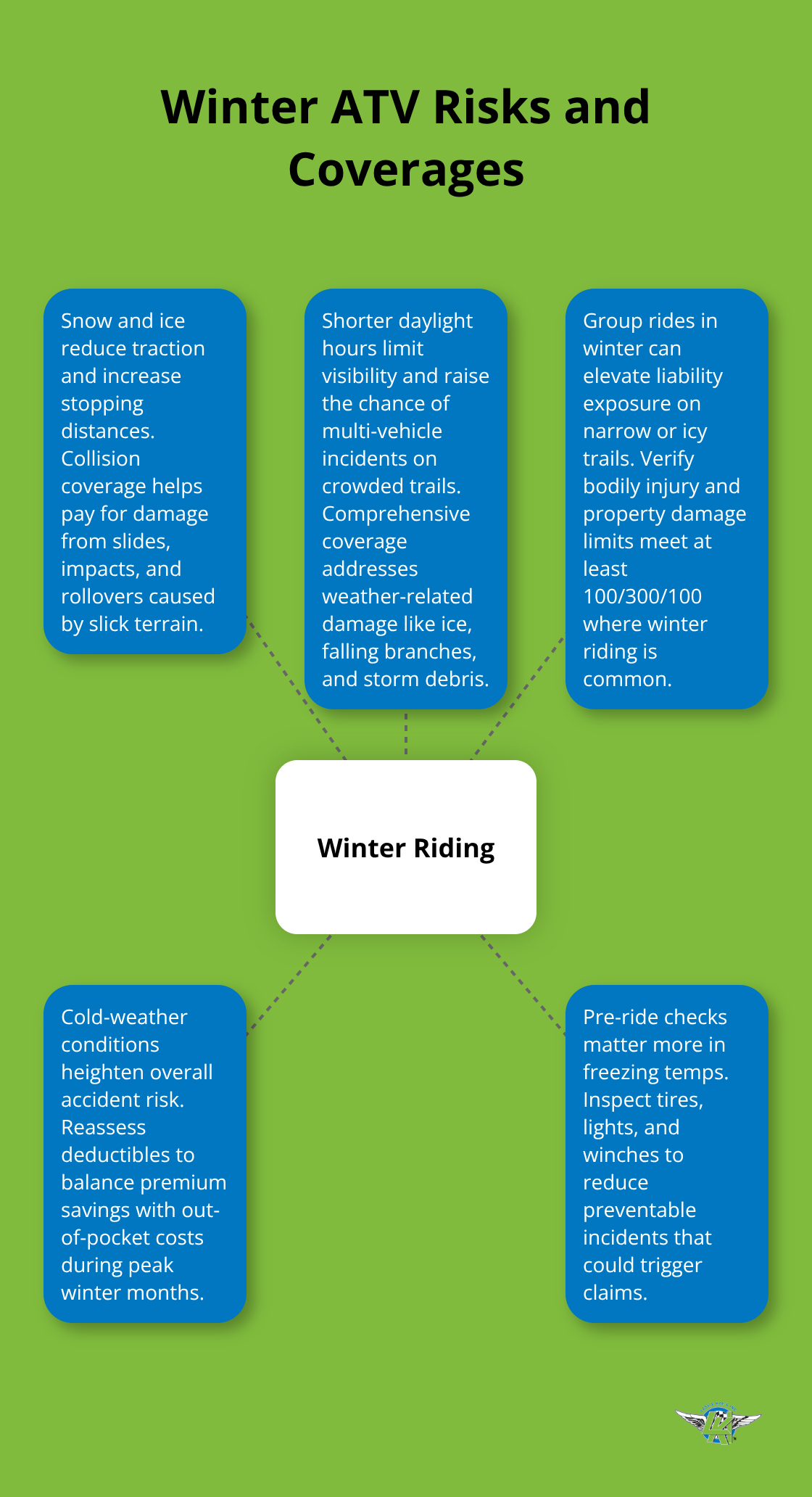
Collision and comprehensive coverage become essential during winter months because they protect against the specific threats cold weather creates. Winter riders also face higher liability exposure when riding in groups on crowded trails. We recommend verifying your bodily injury and property damage limits reach at least 100/300/100 in states where winter riding is common.
Spring Trail Conditions Increase Collision and Liability Needs
Spring brings unpredictable trail conditions that collision coverage must address. Mud, standing water, and washouts from snowmelt create hazards across riding areas. Spring also marks the start of group rides and organized events, which increases your exposure to third-party injury claims. Many riders add temporary event liability or verify their homeowner’s policy covers ATV-related incidents before spring trail season begins.
Summer Peak Season Requires Comprehensive and Equipment Coverage
Summer represents peak riding season with the highest mileage and longest exposure hours. This concentration demands comprehensive protection because you face more opportunities for accidents, theft, and weather damage during travel to distant riding locations. High-mileage summer riders should review their annual mileage estimates with their agent-many policies assume 2,500 to 5,000 miles yearly, and underreporting mileage can void claims.
Summer also brings equipment additions like new tires, winches, or upgraded suspension. Standard policies typically cover factory equipment only, so custom modifications require endorsements or scheduled equipment coverage. We recommend updating your policy before adding any aftermarket gear rather than discovering gaps when filing a claim.
Timing Your Policy Reviews Prevents Coverage Gaps
Each season requires a conversation with your agent about what you actually plan to ride, where you’ll go, and what modifications you’ve made since your last policy review. These adjustments prevent the gaps that emerge when riders fail to communicate seasonal changes to their insurers. Your next step involves examining how your mileage and usage patterns shift throughout the year-and how those shifts affect your premium costs.
Adjusting Your ATV Insurance Policy Throughout the Year
Mileage Accuracy Prevents Claim Denials
Your annual mileage estimate forms the foundation of your ATV insurance premium, and most riders provide inaccurate numbers. Standard policies typically assume 2,500 to 5,000 miles yearly, but seasonal riders often exceed these estimates during peak months while sitting idle during winter. If you report 3,000 annual miles but actually ride 8,000 miles in summer alone, you’ve underreported your exposure, and insurers can deny claims or cancel your policy when they discover the discrepancy.
Honest conversation with your agent about actual riding patterns solves this problem. Winter riders should report only the months they actively ride and adjust their mileage downward for off-season storage. Summer peak-season riders need to calculate total riding days multiplied by average daily mileage-if you ride 40 days per summer at 50 miles per day, that’s 2,000 summer miles alone. Reporting accurate mileage might increase your premium temporarily, but it prevents claim denials that cost thousands more.
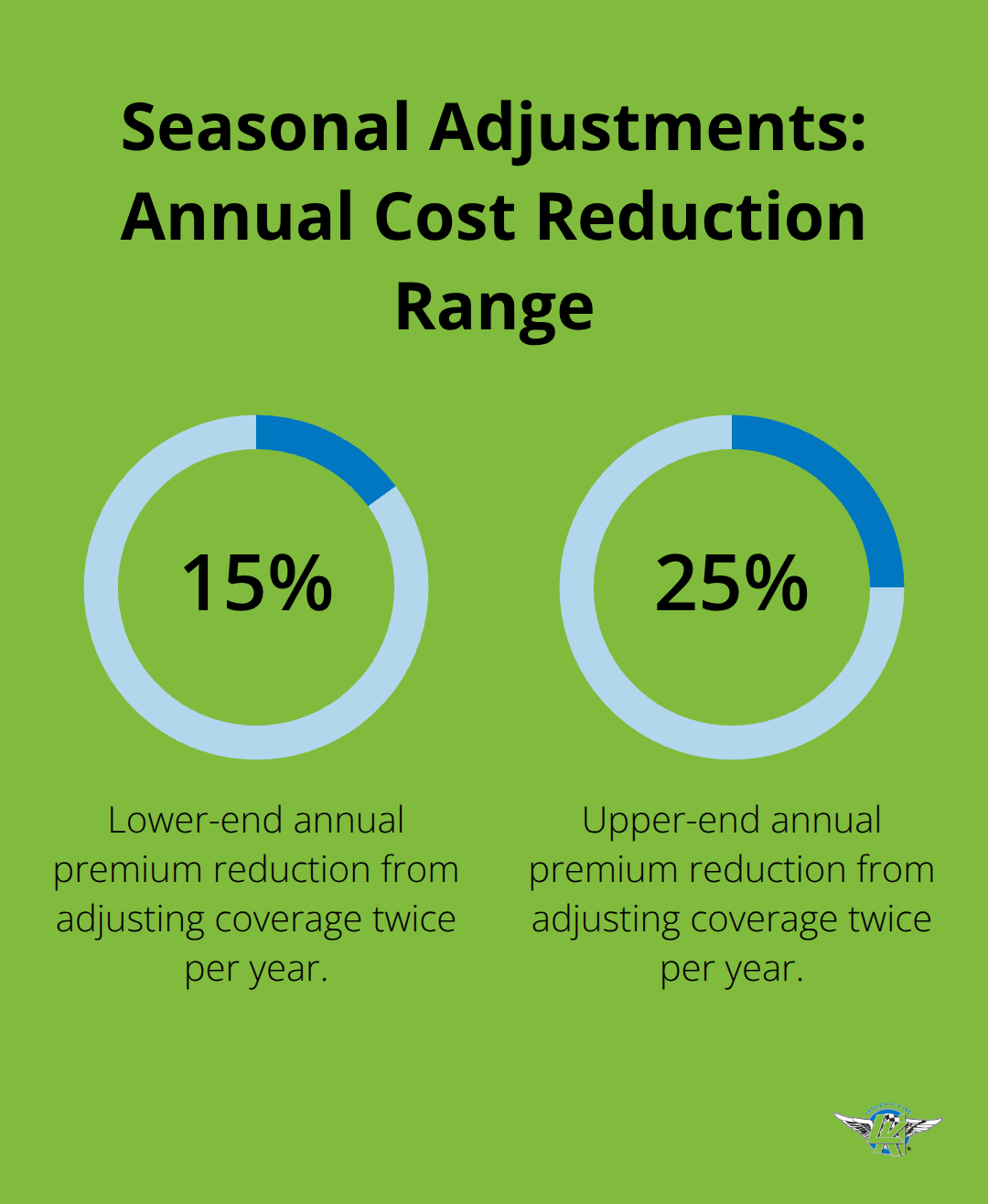
Many riders find that adjusting coverage twice yearly-adding comprehensive and collision for peak season, then removing unnecessary add-ons during storage months-reduces annual costs by 15 to 25 percent compared to maintaining full coverage year-round.
Equipment Endorsements Protect Custom Modifications
Aftermarket modifications represent another seasonal adjustment most riders overlook until disaster strikes. Factory ATVs carry standard equipment coverage under most policies, but winches, upgraded suspension systems, custom seats, and high-end tires fall outside standard protection. You must contact your agent before installing modifications and request scheduled equipment endorsements that list specific upgrades with their replacement values.
Without these endorsements, standard policies deny claims for custom equipment damage or theft. The cost of adding equipment coverage typically runs 5 to 10 percent of the modification’s value annually, which costs far less than replacing a $2,000 winch or $1,500 suspension upgrade out of pocket. Seasonal riders who add summer equipment should remove these endorsements when storing the ATV for winter, reducing premiums during inactive months.
Photograph all modifications with close-up details and serial numbers, then provide these images to your agent when requesting endorsements. This documentation speeds claims processing if damage occurs and prevents disputes over equipment value.
Vehicle Changes Require Immediate Policy Updates
Adding a second ATV or upgrading to a larger model mid-season requires immediate policy notification. Most policies name specific ATVs by year, make, model, and VIN-a new purchase remains uninsured under your existing policy until your agent formally adds it with a new premium calculation. This gap typically lasts 24 to 48 hours after purchase, during which any accident leaves you personally liable for damages.
Schedule your agent conversation before taking possession of a new ATV, not after. Removing a vehicle from your policy when you sell it mid-season adjusts your premium retroactively, returning unused premium as a credit toward your next payment or renewal. Some riders delay these updates hoping to avoid premium increases, but this creates coverage gaps and potential claim denials.
The most cost-effective approach involves timing major vehicle purchases to your policy renewal date, allowing your agent to calculate new premiums across your entire fleet without multiple mid-year adjustments and associated administrative fees. These timing decisions set the stage for identifying coverage gaps that emerge during seasonal transitions-gaps that often go unnoticed until riders file claims.
Common ATV Insurance Gaps During Seasonal Transitions
Storage Periods Leave Your ATV Unprotected
Storage creates the most dangerous coverage gap we see. Riders assume their policy remains active while an ATV sits idle for months, but many standard policies reduce or eliminate coverage during extended storage periods. If you store your ATV from November through March and a theft occurs in January, your claim gets denied because your policy classified the vehicle as stored and inactive.
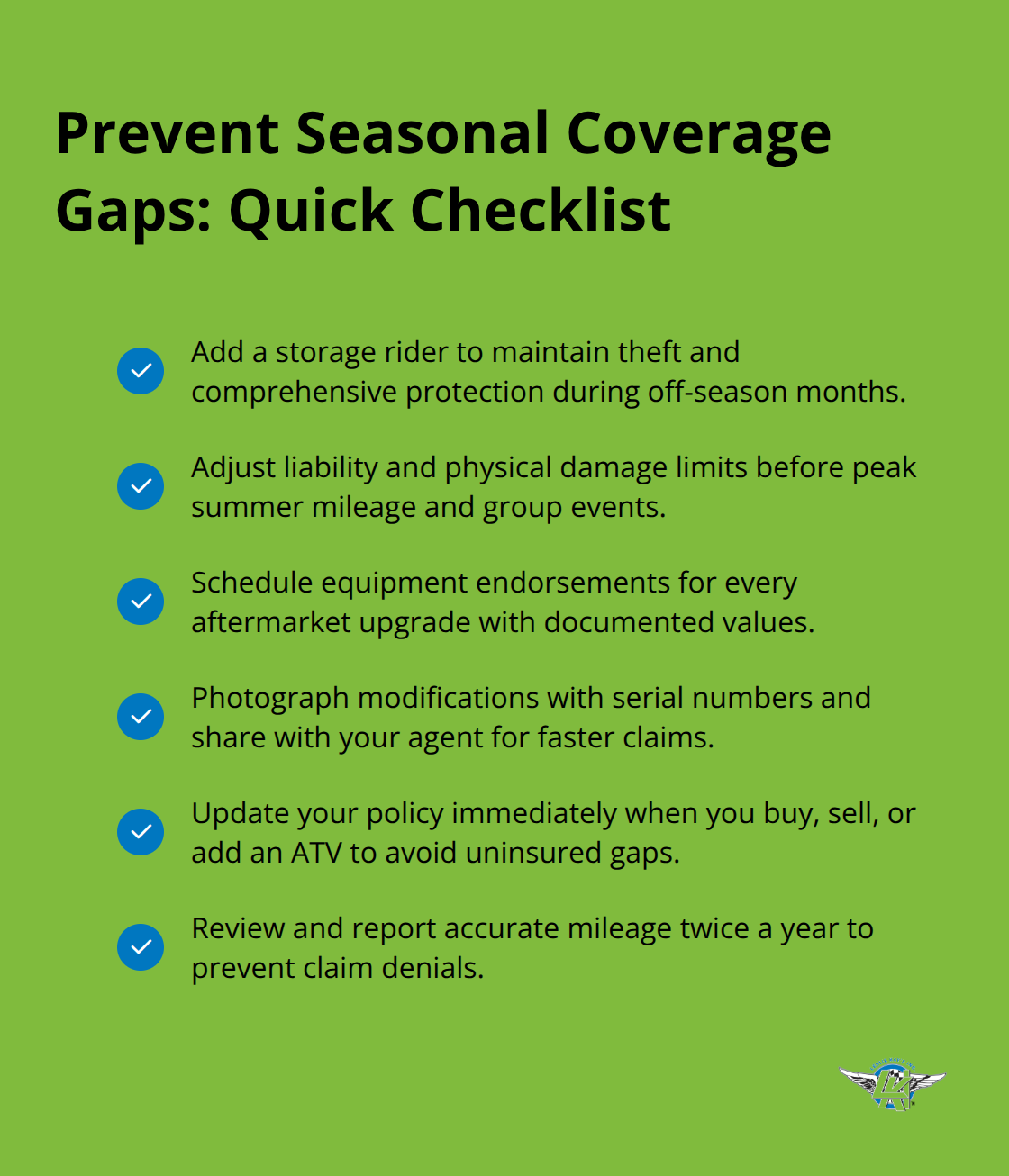
Confirm whether your policy maintains full coverage during off-season months before you park your ATV. Some carriers offer storage riders that maintain theft and comprehensive protection while your ATV remains parked. Without this endorsement, you’re financially responsible for any loss during storage, even if your policy technically remains active on paper.
High-Risk Months Demand Coverage Increases
Summer riders maintain standard coverage levels designed for casual use, then dramatically increase their exposure during peak season without adjusting their protection. If you ride 40 days in summer at 50 miles per day versus 5 days in winter, your summer exposure is eight times higher, but your insurance reflects neither this increase nor the extended travel distances that expose you to catastrophic liability scenarios.
Conversations with your agent should address actual summer riding plans-destination rides, group events, and daily mileage-then adjust coverage accordingly. Adding temporary event liability for organized trail rides or trail festivals protects you against third-party injury claims that standard policies may exclude.
Equipment Modifications Fall Outside Standard Protection
Equipment coverage gaps hurt seasonal riders most severely because modifications happen gradually throughout the year. A rider installs a winch in March, adds upgraded suspension in May, and upgrades tires in July-each modification falls outside standard factory equipment protection, yet the rider assumes the policy covers everything. When a winch gets damaged during a summer recovery operation, the claim gets denied because no scheduled equipment endorsement exists for that winch.
Photograph and document every modification immediately after installation, then send these photos to your agent with the equipment’s purchase price and serial number. This documentation prevents thousands in out-of-pocket replacement costs. Seasonal riders who remove equipment during winter storage should notify their agent so endorsements can be removed, reducing premiums during inactive months and simplifying spring policy updates when equipment gets reinstalled.
Final Thoughts
Seasonal riding demands seasonal insurance adjustments. Winter’s icy trails, spring’s unpredictable conditions, and summer’s peak mileage each require different coverage levels and protection strategies. Riders who ignore these shifts face claim denials, coverage gaps, and thousands in out-of-pocket losses when accidents happen during high-risk months.
Your ATV insurance across seasons works only when you communicate honestly with your agent about actual riding patterns, equipment modifications, and mileage changes. Accurate mileage reporting prevents claim denials, equipment endorsements protect custom modifications, vehicle updates maintain continuous coverage, and storage riders protect parked ATVs during off-season months. These adjustments take minutes but prevent catastrophic financial exposure.
Contact Leslie Kay’s to review your current policy against the seasonal hazards outlined in this guide and identify coverage gaps specific to your riding patterns. We shop multiple carriers to find policies that match your seasonal needs without forcing you to pay for coverage you don’t use during inactive months, and our seven-day-a-week service means you can adjust your policy when you need it.
The information provided in this blog is for general informational purposes only and does not constitute legal, financial, or insurance advice. Coverage options, terms, and availability may vary. Please consult with a licensed professional for advice specific to your situation.
Artificial intelligence may have been used to generate text and images in some blog articles.