
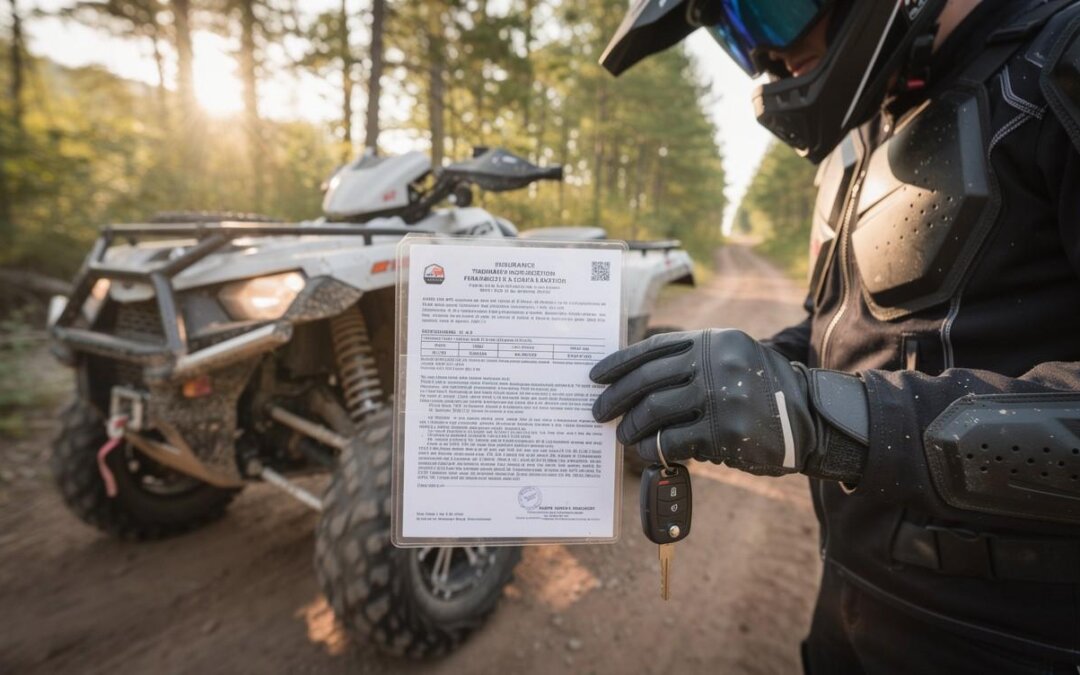
ATV insurance for trails isn’t optional-it’s your financial lifeline when something goes wrong on the dirt. Most riders either carry the wrong coverage or skip protections entirely, leaving themselves exposed to serious liability and medical costs.
We at Leslie Kay’s, Inc. have seen too many trail accidents turn into financial disasters because riders didn’t understand their policy limits or what their standard auto insurance actually covers. This guide breaks down exactly what you need, what mistakes to avoid, and how state regulations affect your coverage.
What Coverage Actually Protects You on the Trail
Liability Coverage Stops Financial Ruin
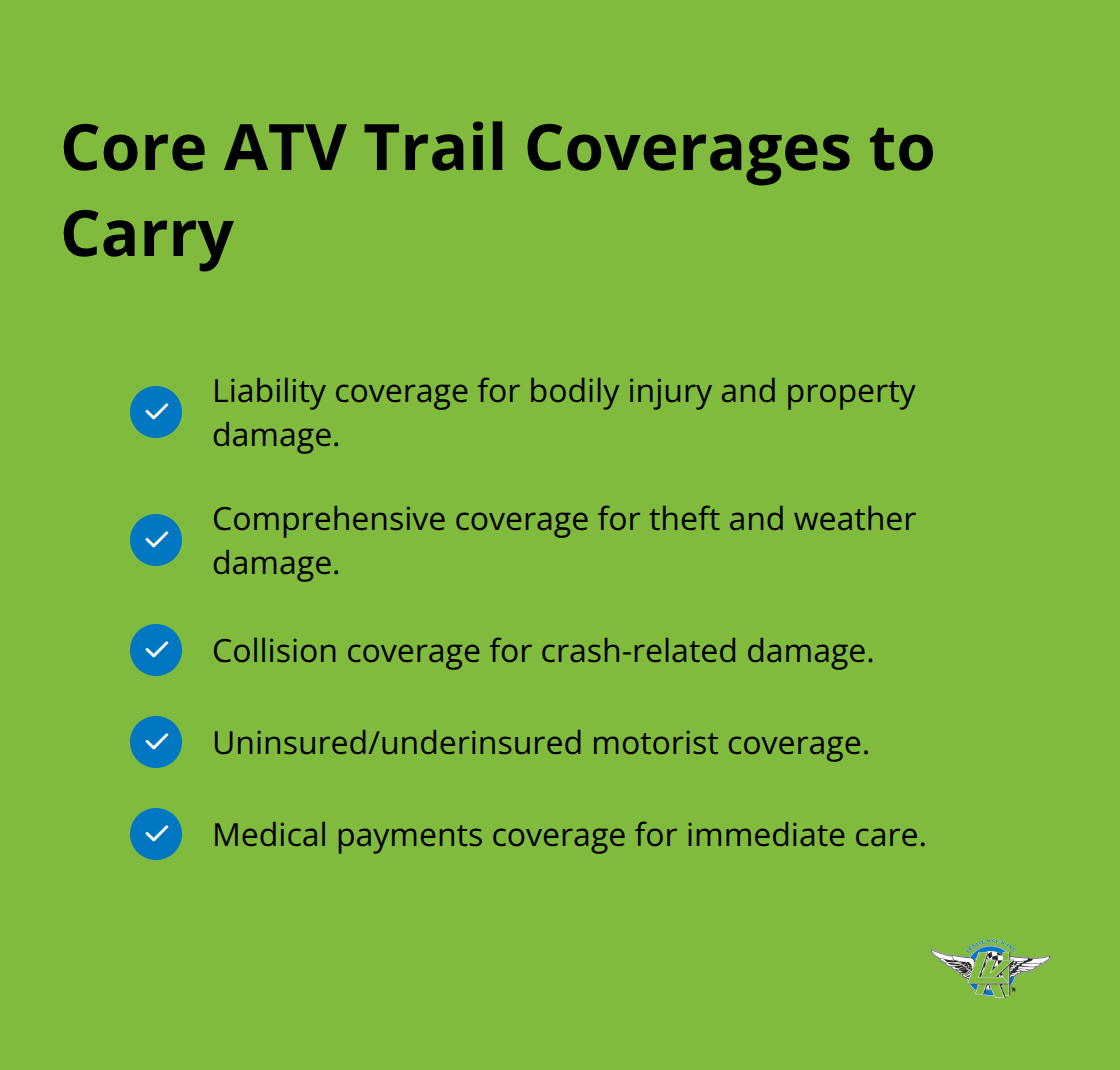
Liability coverage for bodily injury and property damage is non-negotiable if you ride on public trails. Pennsylvania law does not require liability insurance for ATVs and UTVs operated exclusively on private property or designated trails. However, most states require minimum liability limits for public trail riding, but those minimums are dangerously low. Many states set bodily injury minimums at $15,000 per person and $30,000 per accident, which won’t cover a serious injury claim. We recommend carrying at least $100,000 in bodily injury coverage and $300,000 in property damage limits. If you hit another rider and cause permanent injuries, medical costs can easily exceed $500,000. One accident on a crowded trail where you injure multiple riders can wipe out your personal assets if your liability limits are too low.
Comprehensive and Collision Protection for Your ATV
Comprehensive and collision coverage protects your actual ATV from theft, vandalism, weather damage, and accidents with objects or other vehicles. Comprehensive covers events outside your control like theft or falling tree branches, while collision covers damage from impacts.
If your ATV costs $8,000 and you ride regularly on public trails, skipping these coverages means you self-insure that entire amount. Most ATV riders underestimate how quickly repair costs add up. A single accident requiring frame work costs $3,000 to $5,000, and total loss situations happen more often than riders expect.
Uninsured Riders Create Real Financial Exposure
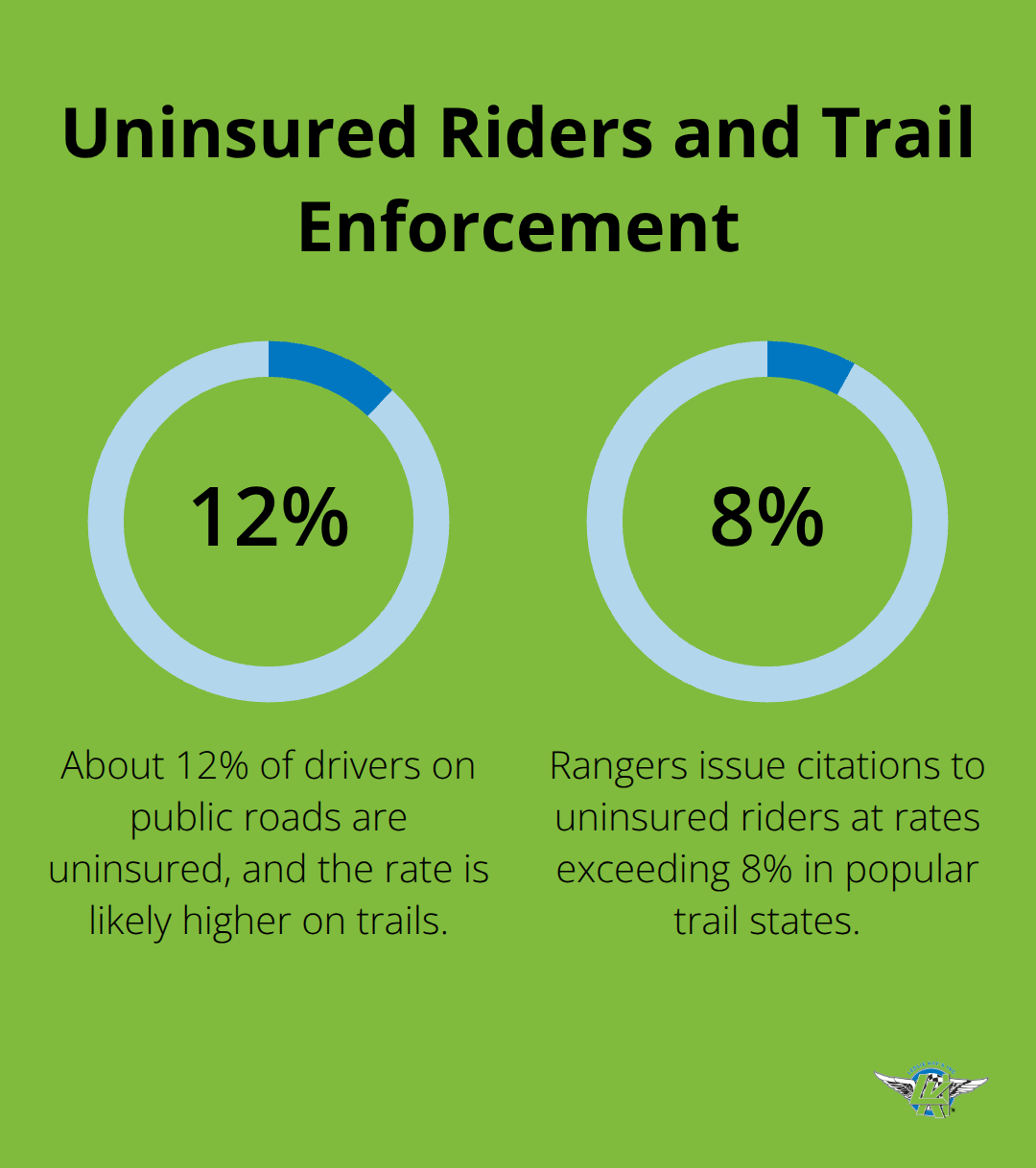
Uninsured motorist coverage protects you when another ATV rider causes an accident but carries no insurance. This happens frequently on public trails where enforcement is minimal. According to data from the Insurance Information Institute, roughly 12 percent of drivers on public roads are uninsured, and the percentage is likely higher on trails where regulations are looser. If an uninsured rider hits you and causes $20,000 in injuries, your uninsured motorist coverage pays your medical bills and lost income instead of forcing you to sue. This coverage also applies to hit-and-run accidents where the other rider flees.
Medical Payments Coverage Handles Immediate Costs
Medical payments coverage covers your immediate medical expenses after an accident, regardless of fault. This coverage pays hospital bills, ambulance costs, and emergency care up to your selected limit, typically ranging from $1,000 to $10,000. Trail emergencies often require helicopter evacuation in remote areas, which can cost $15,000 to $50,000 depending on distance and terrain. Medical payments coverage won’t cover helicopter transport, but it handles ground ambulance and initial hospital care. Many riders skip this coverage thinking their health insurance will handle everything, but health insurance often has high deductibles and won’t cover all trail-related injuries immediately.
Your coverage decisions today determine whether an accident becomes a manageable claim or a financial catastrophe. State regulations and trail types create different insurance requirements that directly affect what you actually need to carry.
Common ATV Insurance Mistakes That Cost Riders Thousands
Your Auto Policy Won’t Cover Trail Riding
Your standard auto insurance policy will reject your claim the moment you mention off-road riding. Most personal auto policies explicitly exclude ATV use, even if you own the vehicle outright and pay premiums faithfully. Insurance companies categorize ATVs as recreational vehicles with fundamentally different risk profiles than street-legal cars. When you file a claim after a trail accident, the insurer will deny coverage based on the exclusion clause buried in your policy documents. The gap between what riders think they’re covered for and what they actually are covered for creates massive financial exposure. You need a dedicated ATV policy or a comprehensive recreational vehicle policy that explicitly includes off-road coverage. Your auto insurer won’t fight you on this-they’ll simply deny the claim and leave you paying out of pocket.
Inadequate Coverage Limits Leave You Exposed
Coverage limits matter far more than most riders realize, and the minimums required by law are dangerously inadequate. If you ride public trails where other riders congregate, you’re statistically more likely to collide with someone or cause property damage to their equipment. A serious spinal injury claim can exceed $1 million in lifetime medical costs, and $15,000 in bodily injury coverage disappears instantly. Many states allow riders to carry just $15,000 per person for bodily injury liability, which sounds reasonable until you’re actually defending a lawsuit. Try carrying at least $100,000 in bodily injury limits for public trail riding, and $300,000 if you frequently ride in high-traffic trail areas.
Medical Payments Coverage Prevents Out-of-Pocket Disasters
Medical payments coverage gets skipped by riders who assume their health insurance handles everything, but health insurance won’t pay for trail-specific emergency response or cover gaps in immediate care. Remote trail accidents requiring helicopter evacuation cost $15,000 to $50,000, and standard health insurance often requires substantial deductibles before coverage kicks in. Adding $5,000 to $10,000 in medical payments coverage costs roughly $15 to $30 annually but prevents you from absorbing those emergency costs yourself when minutes matter more than insurance paperwork. This coverage activates immediately after an accident, covering ambulance transport and initial hospital care without waiting for fault determination or insurance company approval.
These mistakes compound when riders operate on public trails where state regulations impose specific requirements. Understanding what your state actually mandates-and why those mandates often fall short of real protection-separates riders who stay financially safe from those who face catastrophic losses.
What Your State Actually Requires You to Carry
Public trail riding triggers mandatory insurance requirements that vary dramatically by state, and most riders carry less coverage than their state actually demands. Pennsylvania requires no liability insurance for ATVs operated exclusively on private property, but the moment you ride on public trails or designated riding areas, you need minimum coverage. Most states impose bodily injury minimums between $15,000 and $25,000 per person, with property damage minimums ranging from $10,000 to $20,000. However, these state minimums represent the bare legal floor, not adequate protection.
Enforcement Is Tightening Across Popular Trail States
In states like Colorado and Utah where trail riding is extremely popular, enforcement on public lands has increased significantly over the past three years. Rangers now issue citations to uninsured riders at rates exceeding 8 percent of stopped riders according to state wildlife agency reports.
Getting caught riding without required coverage results in fines between $500 and $2,000, plus potential liability for any accidents. A single claim exceeding $30,000 in medical costs forces you to pay everything above your minimum limits personally, which is why carrying at least double your state’s minimum requirement makes financial sense.
Private Property Riding Creates Hidden Coverage Gaps
Private property riding operates under completely different rules that most riders misunderstand. If you own the land or have explicit written permission from the property owner, you can operate an ATV with minimal or no insurance in most states.
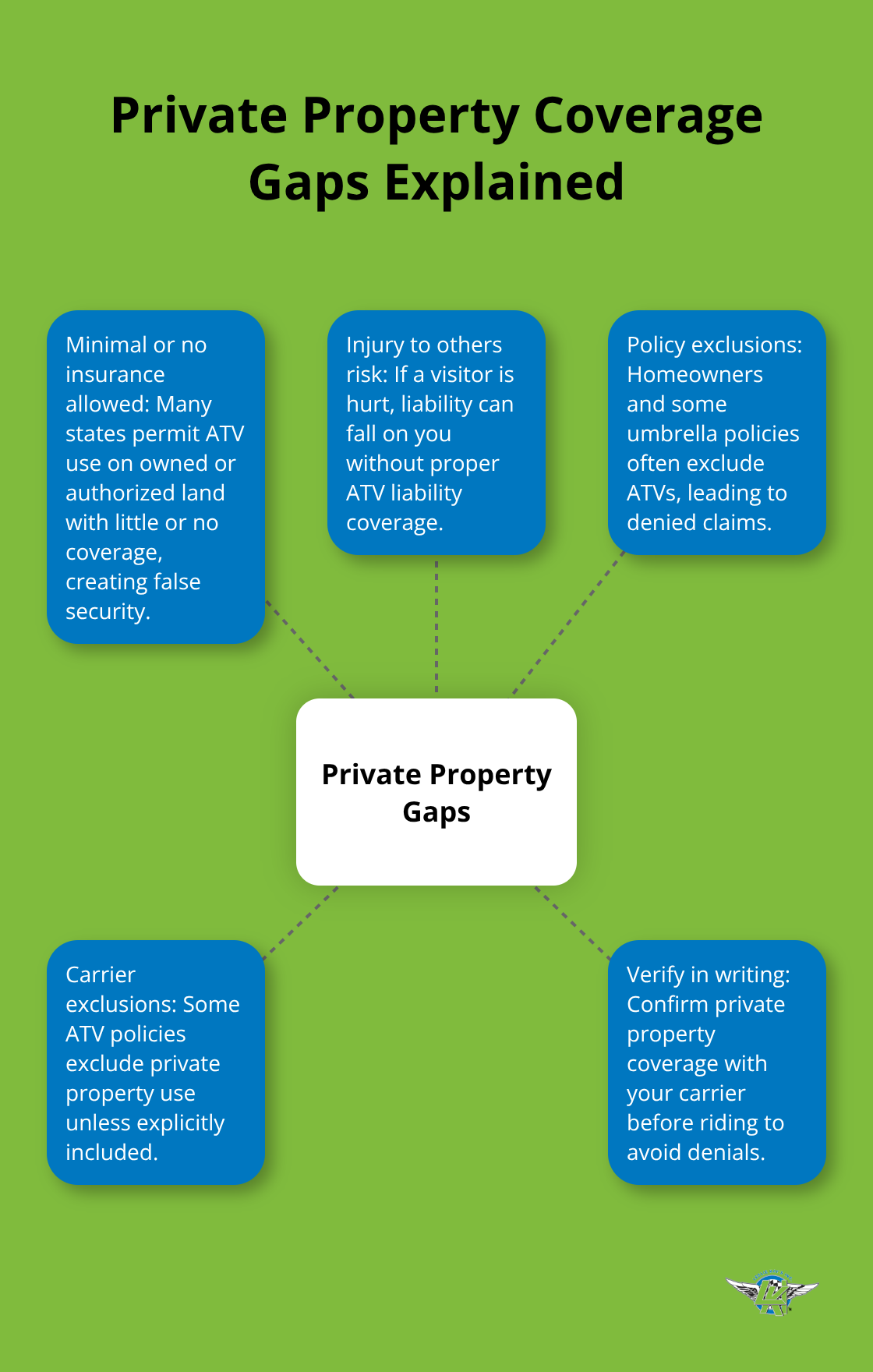
However, the moment someone else gets injured on that private property, your homeowner’s or umbrella policy may refuse coverage because ATVs fall outside standard residential protection.
Many property owners require visitors to carry their own liability insurance before allowing trail access, which means your ATV policy must explicitly cover private property riding. Some carriers exclude private property riding entirely, leaving you uninsured even though you thought you were protected. Check your policy documents specifically for private property coverage language, because the distinction between public trail coverage and private property coverage determines whether your claim gets approved or denied. Verify coverage on private property explicitly with your carrier before riding, rather than discovering gaps after an accident occurs on someone else’s land.
Final Thoughts
ATV insurance for trails protects far more than your vehicle-it protects your financial future when accidents happen. The coverage mistakes outlined in this guide cost riders thousands annually, from denied claims on standard auto policies to catastrophic medical bills that exceed inadequate liability limits. Carrying liability coverage, comprehensive and collision protection, uninsured motorist coverage, and medical payments coverage represents the difference between a manageable claim and personal bankruptcy after a serious trail accident.
State regulations create a legal floor that’s dangerously low, and enforcement tightens across popular riding states. Relying on minimum coverage limits leaves you personally responsible for any claim amounts exceeding those minimums, which happens frequently in serious injury cases. Private property riding introduces additional coverage gaps that most riders don’t discover until after an accident occurs on someone else’s land.
We at Leslie Kay’s, Inc. understand the specific protection gaps that trail riders face and shop multiple carriers to find policies that actually cover your riding habits. Contact Leslie Kay’s, Inc. to discuss your specific riding patterns and get a customized ATV insurance for trails policy that covers what you actually do on the dirt, not just what the law minimally requires.
The information provided in this blog is for general informational purposes only and does not constitute legal, financial, or insurance advice. Coverage options, terms, and availability may vary. Please consult with a licensed professional for advice specific to your situation.
Artificial intelligence may have been used to generate text and images in some blog articles.