
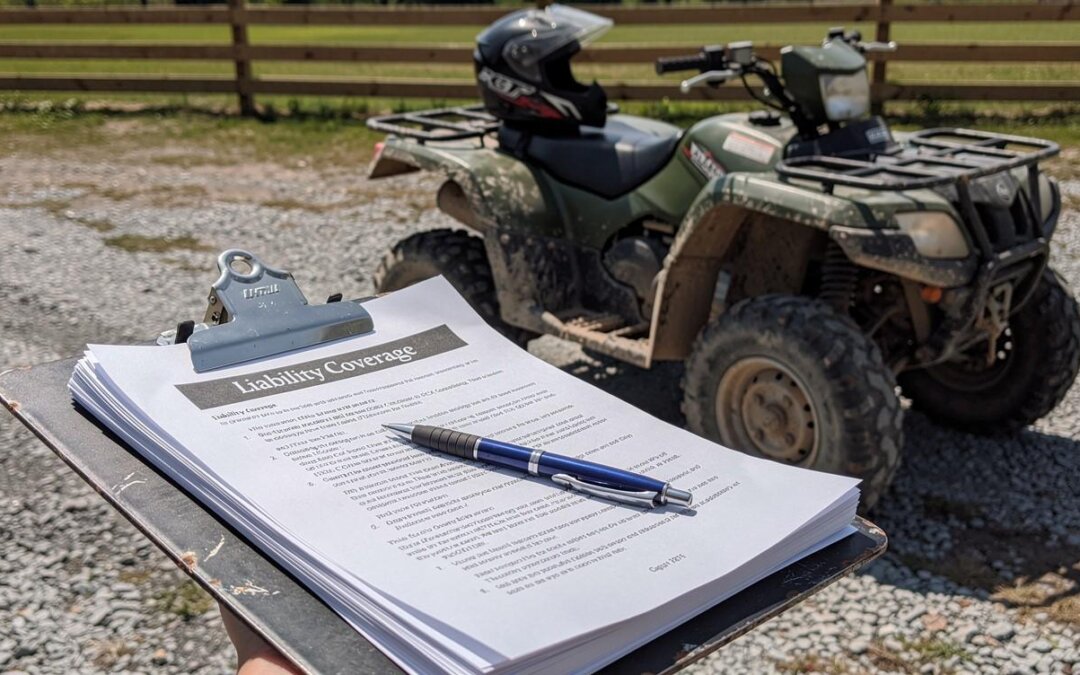
Most ATV riders don’t realize how exposed they are financially until something goes wrong. A single accident can result in medical bills, property damage claims, and legal fees that quickly spiral into hundreds of thousands of dollars.
At Leslie Kay’s, Inc., we’ve seen firsthand how gaps in ATV liability coverage leave riders vulnerable. Understanding the specifics of your policy-what’s actually covered and what isn’t-is the difference between protection and financial disaster.
What Your ATV Liability Policy Actually Covers
Bodily Injury Liability Protects You When You Hurt Someone
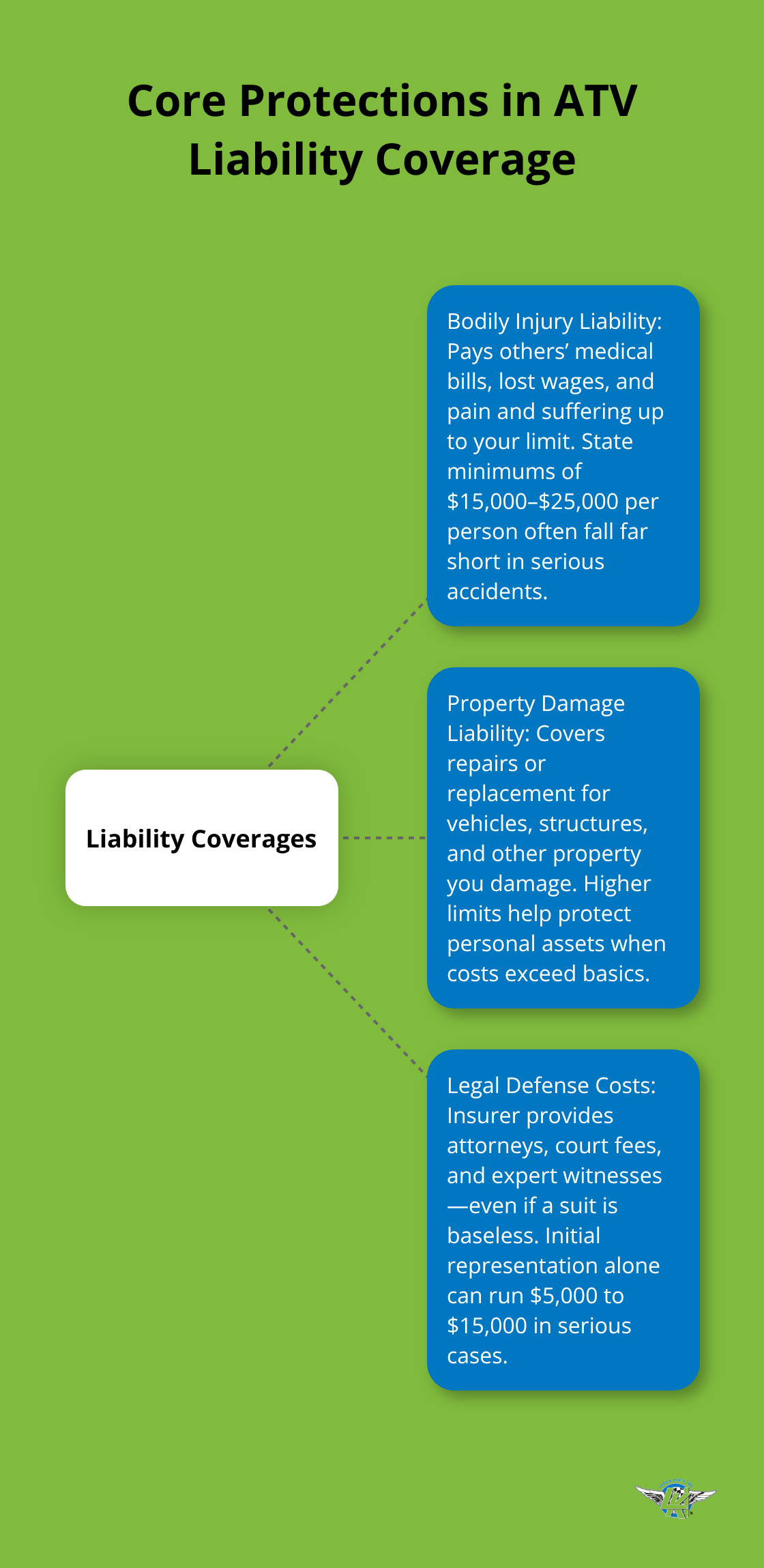
Bodily injury liability forms the backbone of ATV coverage. It protects you when you injure another rider, a passenger, or a bystander. Your policy pays their medical bills, lost wages, and pain and suffering claims up to your policy limit. Most states require minimum bodily injury limits between $15,000 and $25,000 per person, but these minimums fall far short of actual costs. Serious injuries can result in healthcare costs exceeding $6.5 million USD.
State minimums leave you exposed to massive personal liability. We recommend carrying at least $100,000 per person and $300,000 per accident because one catastrophic injury can wipe out inadequate coverage in seconds. Judges and juries in personal injury cases regularly award damages far exceeding state requirements, and if you’re found liable, creditors can garnish your wages and seize assets for years.
Property Damage Liability Covers What You Break
Property damage liability covers the cost of damaging someone else’s vehicle, equipment, or property during an ATV accident. This includes hitting another ATV, a car, a house, or even a fence. State minimums typically range from $10,000 to $25,000, but property damage claims add up fast, especially if you hit a parked vehicle or cause structural damage. Your policy pays for repairs or replacement up to your limit, but anything beyond that comes straight from your personal assets.
Legal Defense Costs Protect You in Court
Legal defense costs are often overlooked but absolutely necessary. If someone sues you after an accident, your insurance company pays for attorneys, court fees, and expert witnesses to defend your case. This coverage applies even if the lawsuit is frivolous or baseless, meaning your insurer covers defense costs before determining fault. Without this protection, you’d pay legal bills out of pocket while waiting for resolution, which can run $5,000 to $15,000 just for initial representation in a serious case.
Know What Your Policy Excludes
Your policy typically excludes coverage for intentional acts, racing, or commercial use. Your coverage limits should reflect your actual risk, not just state minimums. If you ride on shared trails with other riders or near populated areas, higher limits are essential because exposure to injury claims increases significantly. Most riders discover gaps in their coverage only after an accident, when it’s far too late to add protection-which is why understanding what your policy excludes matters before you ride.
Why ATV Liability Coverage Matters
Emergency Room Visits and Real Injury Costs Tell the Story
ATV accident claims have surged dramatically over the past decade. The Consumer Product Safety Commission reported that 94,700 injuries associated with OHVs were treated in U.S. hospital emergency departments in 2022, with costs per serious injury often reaching six figures or more. These aren’t theoretical numbers-they represent real riders facing bankruptcy after a single mistake. One catastrophic accident can destroy your financial future if your liability coverage falls short.
State Minimums Leave You Dangerously Exposed
Most states mandate between $15,000 and $25,000 in bodily injury liability per person, but actual jury awards in serious injury cases regularly exceed $100,000, $250,000, or even $500,000. If you cause an accident that injures multiple riders or bystanders, those minimums evaporate instantly. Your personal assets become fair game for creditors when judgments exceed your policy limits. Riders who carry only state minimums are gambling with everything they own.
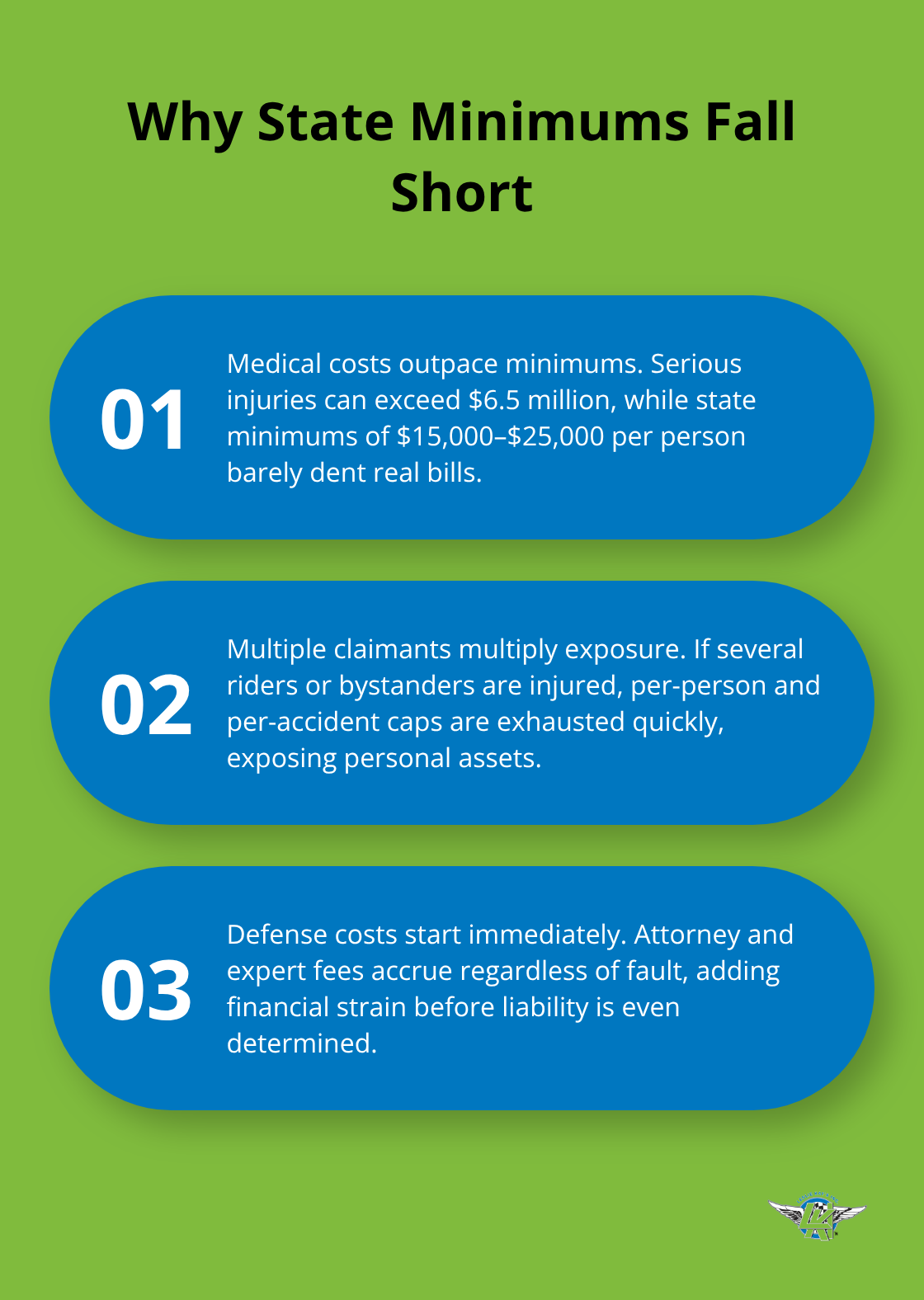
The financial reality is stark: state minimums exist as legal requirements, not as adequate protection. Judges and juries award damages far beyond what most riders carry in coverage. Creditors can garnish your wages or seize assets for years after a judgment. Your coverage should match your actual riding environment and risk profile, not just meet whatever legal minimum your state requires.
Why Higher Limits Cost Less Than You Think
We recommend carrying at least $100,000 per person and $300,000 per accident-these limits cost surprisingly little more than minimums but provide genuine protection against life-altering liability. Property damage claims add another layer of risk, especially if you ride near homes, vehicles, or expensive equipment. Legal defense costs compound the problem further, since your attorney fees begin immediately after an accident, regardless of fault determination.
Your Riding Environment Determines Your Real Risk
Riders operating on public lands, shared trails, or near populated areas face significantly higher exposure to injury claims than those riding in remote locations. A single mistake near a populated area can result in multiple injury claims that quickly exceed standard coverage limits. Your policy limits should reflect whether you ride solo in backcountry terrain or share trails with other riders and bystanders.
Understanding what your liability coverage actually protects-and what gaps exist in your policy-becomes critical before you identify which specific exclusions could leave you vulnerable.
Common Gaps in ATV Liability Policies
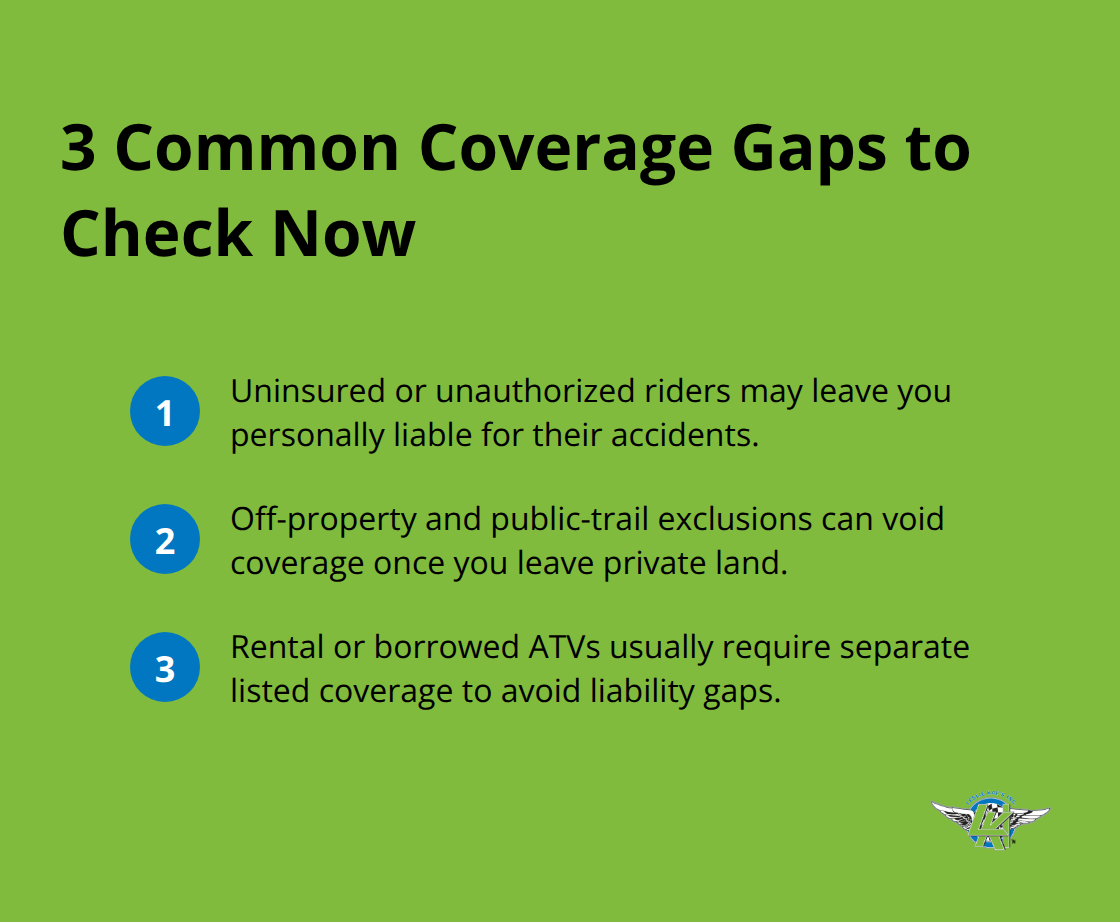
Most riders assume their ATV liability policy covers everything they do on an ATV, but the reality is far messier. Insurance companies design policies with specific riding scenarios in mind, and when you fall outside those parameters, you’re on your own financially. The three most common gaps in ATV liability policies expose riders to catastrophic financial risk, and most don’t know about them until it’s too late.
Uninsured Rider Coverage Creates Personal Liability
Uninsured rider coverage creates a massive blind spot for many ATV owners. If someone else rides your ATV without your permission or rides an uninsured ATV and causes damage, your liability coverage may not protect you in every situation. Some policies explicitly exclude coverage when an unauthorized rider operates your vehicle, leaving you personally liable for their actions even though you weren’t riding.
If a friend borrows your ATV and injures someone, your insurer might deny the claim if your policy restricts coverage to named riders only. This gap is especially dangerous because riders frequently let friends and family members ride their machines without realizing the coverage implications. You remain financially responsible for accidents caused by riders your policy doesn’t cover.
Off-Property Riding Exclusions Eliminate Coverage on Public Trails
Off-property riding exclusions represent another critical vulnerability that many riders miss entirely. Some policies limit coverage to specific properties or exclude trails and public lands where most recreational riding actually happens. If your policy restricts coverage to private property and you ride on state or federal lands, your liability protection vanishes the moment you leave that property.
Many riders don’t discover this exclusion until after an accident occurs on public trails-exactly where they ride most frequently. Your policy may provide full protection on your own land but offer nothing the instant you venture onto shared terrain. This mismatch between where riders actually spend time and where their coverage applies creates enormous exposure.
Rental and Borrowed ATV Restrictions Leave You Unprotected
Rental and borrowed ATV restrictions add yet another layer of exposure. If you rent an ATV for a weekend trip or borrow a friend’s machine, your personal policy typically won’t cover liability you cause while operating that vehicle. Rental companies usually require you to purchase their liability coverage at inflated rates, yet many riders skip this protection to save money.
When you cause an accident on a borrowed or rented ATV without adequate coverage, you face personal liability that can reach hundreds of thousands of dollars. These gaps exist because insurance companies categorize different riding scenarios as separate risk levels, and standard policies don’t automatically cover all of them. Your coverage stops the moment you operate a vehicle that isn’t specifically listed on your policy.
Final Thoughts
ATV liability coverage specifics matter far more than most riders realize, and the gap between what you think you’re covered for and what your policy actually protects can cost you everything. State minimums exist as legal requirements, not as financial protection, so carrying at least $100,000 per person and $300,000 per accident shields you from the catastrophic judgments that regularly exceed standard limits. Your riding environment determines your actual risk, so your coverage should reflect whether you ride solo in remote terrain or share trails with other riders and bystanders.
Review your current policy immediately and identify the three critical gaps that plague most ATV riders: uninsured rider restrictions, off-property exclusions, and rental or borrowed ATV limitations. Call your insurance agent and ask specific questions about where your coverage applies, who can ride your machine, and what scenarios your policy excludes. Most riders discover gaps only after an accident destroys their financial security, so don’t wait until then to verify your protection.
We at Leslie Kay’s, Inc. specialize in customized ATV coverage that matches your riding habits and risk profile. As an independent agency, we shop multiple carriers to find policies that close the gaps most standard plans leave open, and we provide hands-on support seven days a week. Contact Leslie Kay’s, Inc. today to review your current coverage and ensure your liability protection reflects your actual riding environment.
The information provided in this blog is for general informational purposes only and does not constitute legal, financial, or insurance advice. Coverage options, terms, and availability may vary. Please consult with a licensed professional for advice specific to your situation.
Artificial intelligence may have been used to generate text and images in some blog articles.