
One-size-fits-all ATV insurance doesn’t work. Your riding habits, risk tolerance, and equipment needs are unique, which is why ATV policy customization options matter so much.
At Leslie Kay’s, Inc., we’ve helped thousands of riders build coverage that actually fits their lifestyle. This guide walks you through the types of coverage available, how to adjust your policy to match your riding style, and how to find the right insurance provider for your needs.
ATV Coverage Types and What They Protect
Liability coverage is non-negotiable, and most states legally require it. This coverage pays for injuries or property damage you cause to someone else while riding. The average auto liability claim for bodily injury was $28,278, which is why you should carry at least $100,000 in bodily injury coverage and $50,000 in property damage protection. Many riders mistakenly assume their homeowners insurance covers ATV incidents, but it typically doesn’t. Your personal auto policy won’t cover it either. You need dedicated ATV liability coverage, and frankly, underestimating your limits is a financial mistake that can haunt you for years if a serious accident happens.
Collision and Comprehensive Protection Match Your Riding Environment
Collision coverage handles damage from crashes, while comprehensive covers theft, weather, and vandalism. If you finance or lease your ATV, your lender will require both. The choice becomes more interesting when you own the machine outright. Riders who trail ride in remote areas with rocks, fallen trees, and water crossings face genuine collision risks that justify lower deductibles, typically $250 to $500. Desert riders and those in open terrain can often afford $1,000 deductibles since collision frequency drops significantly. Comprehensive matters more if you store your ATV outdoors or in areas with high theft rates. Powersports theft claims have increased significantly in recent years, particularly in urban and suburban regions.
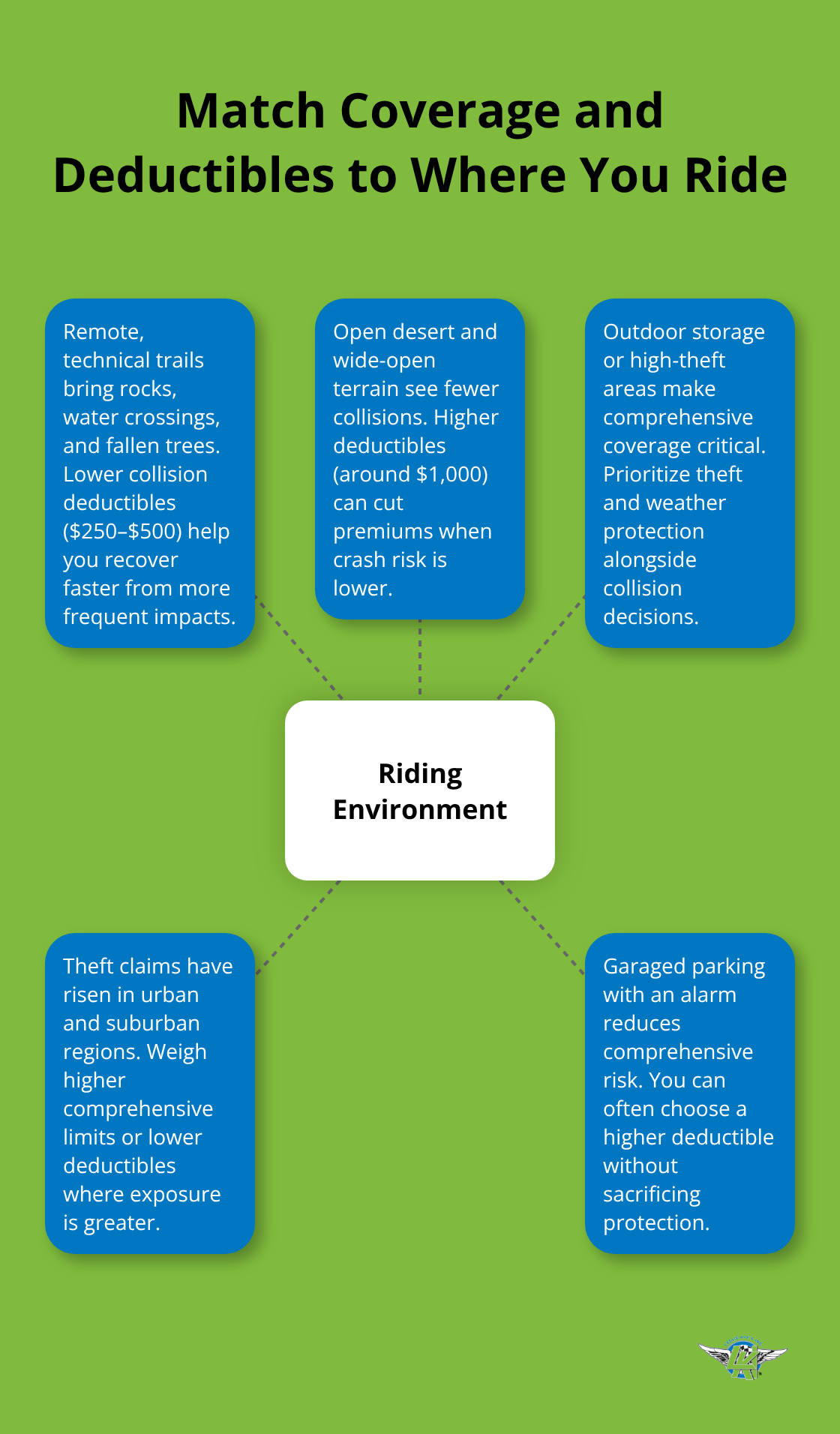
If you park in a garage with an alarm system, you already reduce comprehensive risk substantially. Your deductible choice should reflect your actual storage conditions and riding location, not generic industry defaults.
Uninsured and Underinsured Motorist Coverage Protects Against Others’ Mistakes
This coverage handles injuries you suffer when another rider or driver causes an accident and lacks adequate insurance. Many ATV riders operate without proper coverage or carry minimal limits. If an uninsured rider hits you and causes $50,000 in medical bills, you pay out of pocket unless you have uninsured motorist protection. Most states don’t legally mandate this coverage for ATVs, which is precisely why you should add it. Underinsured motorist coverage fills the gap when the at-fault party’s insurance maxes out below your actual damages. The cost to add both uninsured and underinsured motorist protection typically runs $15 to $30 annually and represents genuine financial protection against a real scenario. If you ride on public trails where other riders operate, this coverage is essential, not optional.
Finding Your Coverage Sweet Spot
The coverage you select today directly impacts what happens after an accident. Standard policies leave gaps that catch riders off guard, but customization addresses your specific riding patterns and risk exposure. Your next step involves matching these coverage types to your actual riding style-something that requires honest assessment of how and where you ride.
Customizing Your ATV Policy to Match Your Riding Style
Adjust Deductibles Based on Your Actual Risk Exposure
Your deductible choice reveals your real risk tolerance, not what insurance companies suggest. A rider who trails in technical terrain weekly faces collision risk that justifies a $250 or $500 deductible, accepting higher premiums to recover faster after inevitable crashes. A weekend desert rider hitting open ground might comfortably absorb a $1,000 deductible since collision happens rarely. Most riders treat deductibles as one-time decisions rather than annual adjustments tied to changing circumstances. If you purchased your ATV two years ago with a $1,000 deductible and now ride trails twice monthly instead of twice yearly, your risk profile shifted downward, and your deductible should follow.
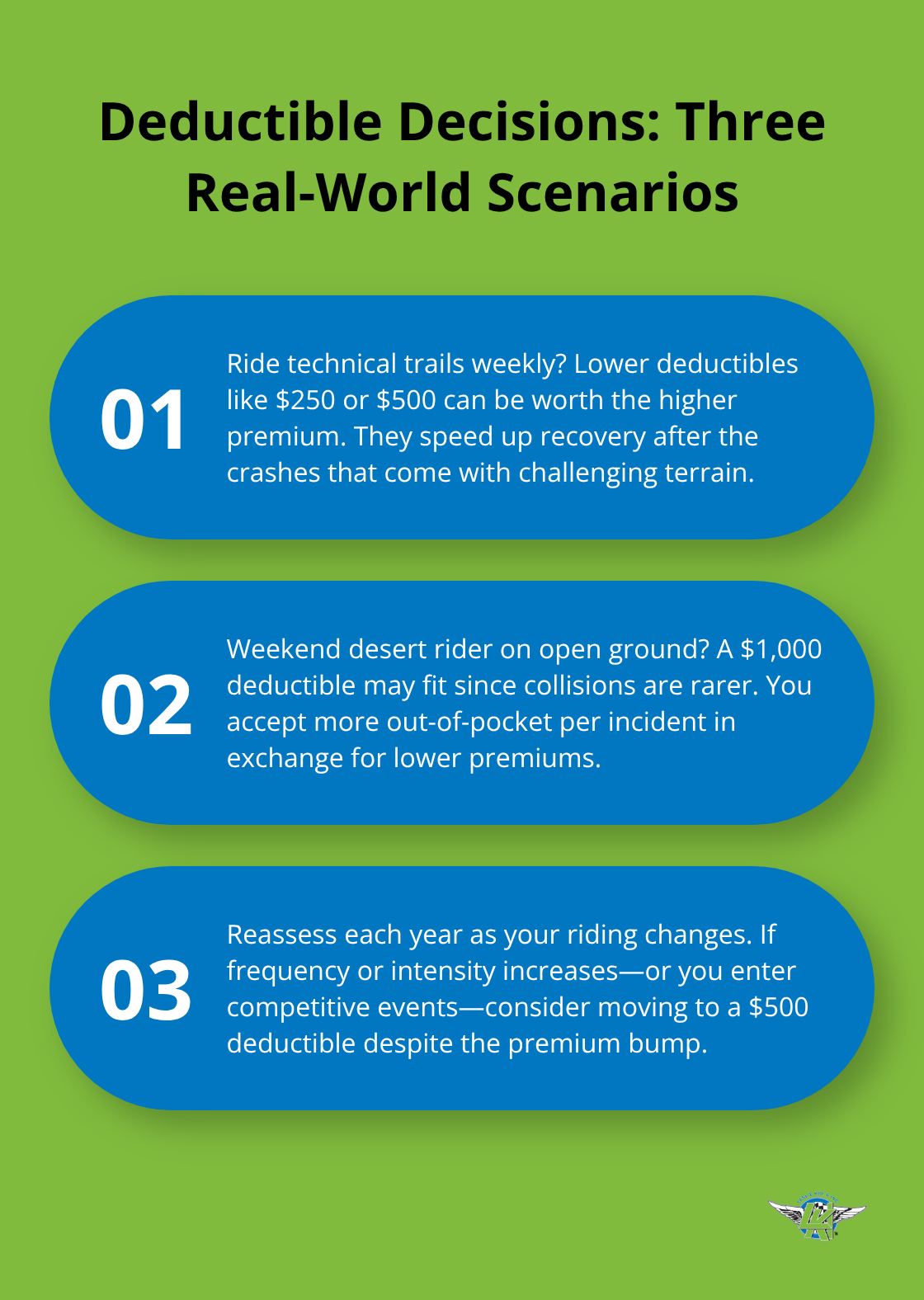
Conversely, if you upgraded from casual riding to competitive trail events, moving to a $500 deductible makes financial sense despite the premium increase.
Add Accessory and Equipment Coverage for Custom Investments
Accessory and equipment coverage separates riders who protect their investment from those who accept replacement losses. A stock ATV with basic tires and stock plastics requires minimal accessory coverage, but adding a $2,000 winch, custom suspension, aftermarket exhaust, or upgraded lighting dramatically changes the math. Standard collision and comprehensive policies cap payouts at your ATV’s actual cash value, typically $3,000 to $5,000 for used machines. Your $2,000 winch isn’t separately covered, meaning the insurer reduces your payout by depreciation rates applied to the entire vehicle. Accessory coverage removes that depreciation penalty and covers additions at replacement cost. This protection matters most when you’ve invested significantly in upgrades that increase your ATV’s functionality or performance beyond factory specifications.
Adjust Coverage for Seasonal Riding Patterns
Seasonal riders face distinct customization needs that most riders ignore entirely. If you trail ride March through October but store your ATV unheated November through February, comprehensive coverage during storage months protects against frozen fuel lines, rodent damage, and battery degradation that stationary machines experience. Many carriers allow seasonal adjustments that temporarily reduce coverage during off-months, lowering your annual premium without leaving gaps during active riding periods. A rider storing an ATV for five months pays unnecessary premiums unless the policy reflects that dormancy. Requesting a coverage pause or reduction during known off-seasons costs nothing to arrange and returns real savings. This flexibility transforms your policy from a static contract into a tool that adapts to your actual riding calendar.
Finding the right provider to implement these customizations requires more than comparing prices alone. Customized coverage ensures your policy matches your riding demands.
How to Choose the Right ATV Insurance Provider
Most riders shop for ATV insurance the wrong way. They grab three quotes, pick the cheapest one, and wonder why their claim gets denied two years later. Price alone tells you almost nothing about whether a carrier will support you when you need it most. The right provider combines competitive pricing with genuine expertise in powersports coverage and reliable claims handling.
This matters because standard auto insurers often treat ATV claims as edge cases, applying rules designed for cars rather than understanding how ATVs actually get damaged and what riders truly need covered.
Request Quotes from Powersports Specialists
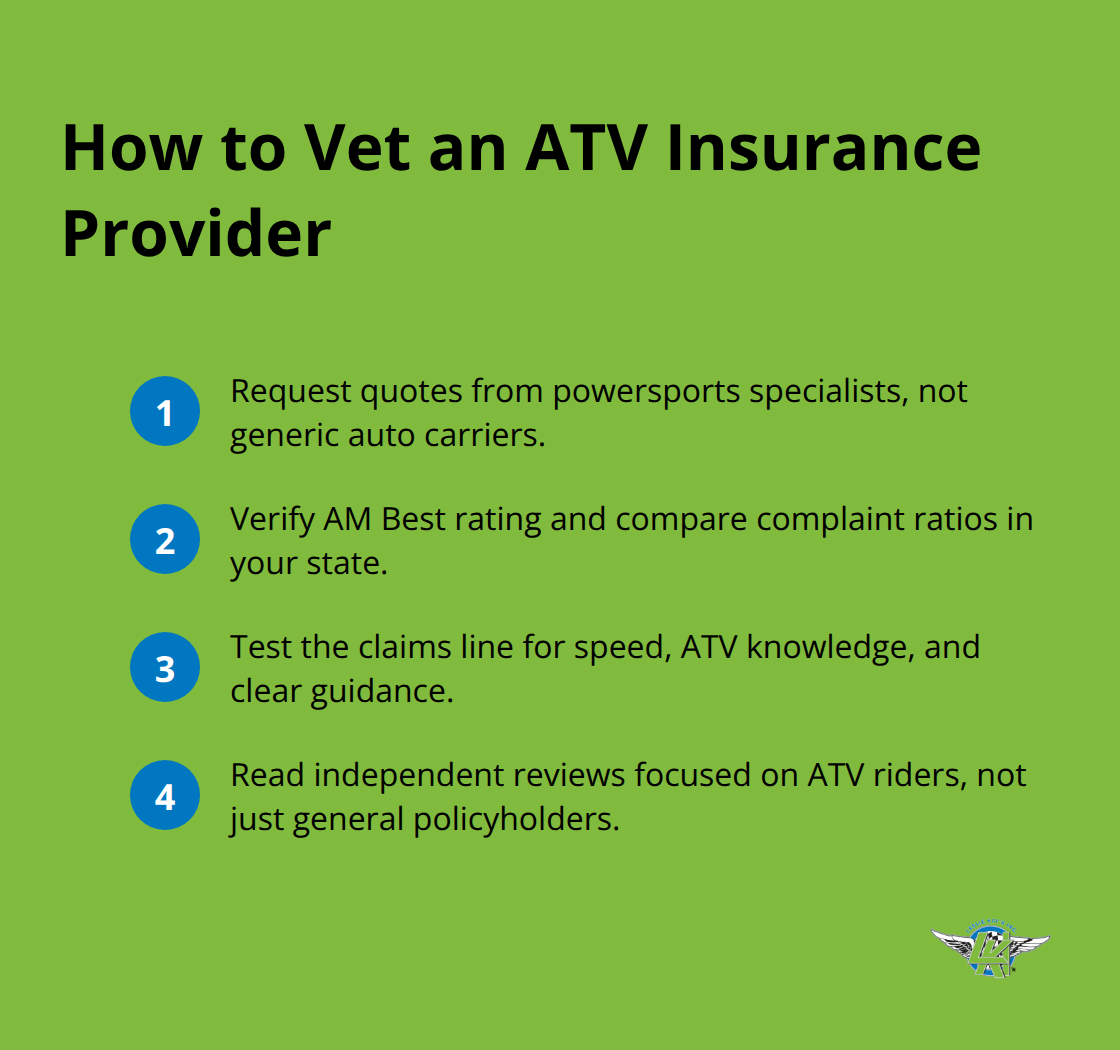
Request quotes from carriers that specialize in powersports rather than treating ATVs as afterthoughts. Progressive, GEICO, and State Farm write ATV policies, but they lack the depth that dedicated powersports insurers bring to customization. When you contact multiple carriers, ask specific questions about their deductible flexibility, accessory coverage limits, and whether they adjust policies for seasonal riding. A carrier that hesitates or gives generic responses isn’t equipped to handle your customization needs.
Verify Financial Stability and Complaint Records
Verify financial stability through AM Best ratings, which publishes insurer strength assessments on their website. An A or A+ rating means the company can actually pay your claims without financial stress. Check your state’s insurance commissioner database for complaint ratios, comparing how many complaints each carrier receives per policy written. A carrier with 0.5 complaints per 1,000 policies operates differently than one with 3 complaints per 1,000 policies.
Test Claims Support Before You Buy
Claims support quality matters more than premium savings because you’ll interact with claims handlers only when something goes wrong. Call the carrier’s claims line as a test before purchasing. Time how long you wait, assess whether they answer powersports questions knowledgeably, and note whether they explain your options or just push you toward the fastest resolution. A carrier that answers the phone in under two minutes and understands ATV-specific damage assessment deserves serious consideration. Ask whether they offer 24/7 claims reporting and if they use local adjusters who understand trail riding accidents versus carriers that route everything through national call centers staffed by people unfamiliar with ATVs.
Read Independent Customer Reviews
Read actual customer reviews on independent sites like Trustpilot and the National Association of Insurance Commissioners database, focusing on comments from ATV riders specifically. Look for patterns in what people praise or criticize rather than treating individual reviews as definitive. Dedicated powersports insurers often demonstrate stronger ATV expertise than mainstream carriers, though you should still verify their specific ratings and customer feedback before committing.
Final Thoughts
ATV policy customization options give you control over protection that matches your riding reality rather than forcing you into generic coverage that misses your actual needs. Your deductible choice, accessory protection, and seasonal adjustments should reflect how you ride, not industry defaults, and this personalization costs nothing to arrange but delivers genuine financial protection. Specialized ATV insurers understand these nuances in ways mainstream carriers simply don’t-they recognize that trail riding damage differs from desert riding, that custom equipment needs separate protection, and that seasonal riders benefit from flexible coverage adjustments.
We at Leslie Kay’s, Inc. shop multiple carriers to find policies that fit your riding style and budget, handling claims support across multiple states with adjusters who actually understand ATV-specific damage. Rather than accepting whatever a standard auto insurer offers, you can work with an independent powersports specialist who reviews your current coverage, identifies gaps, and builds customized protection around your actual riding patterns. Contact Leslie Kay’s, Inc. to explore your ATV insurance options and get quotes that reflect your riding reality.
The information provided in this blog is for general informational purposes only and does not constitute legal, financial, or insurance advice. Coverage options, terms, and availability may vary. Please consult with a licensed professional for advice specific to your situation.
Artificial intelligence may have been used to generate text and images in some blog articles.