
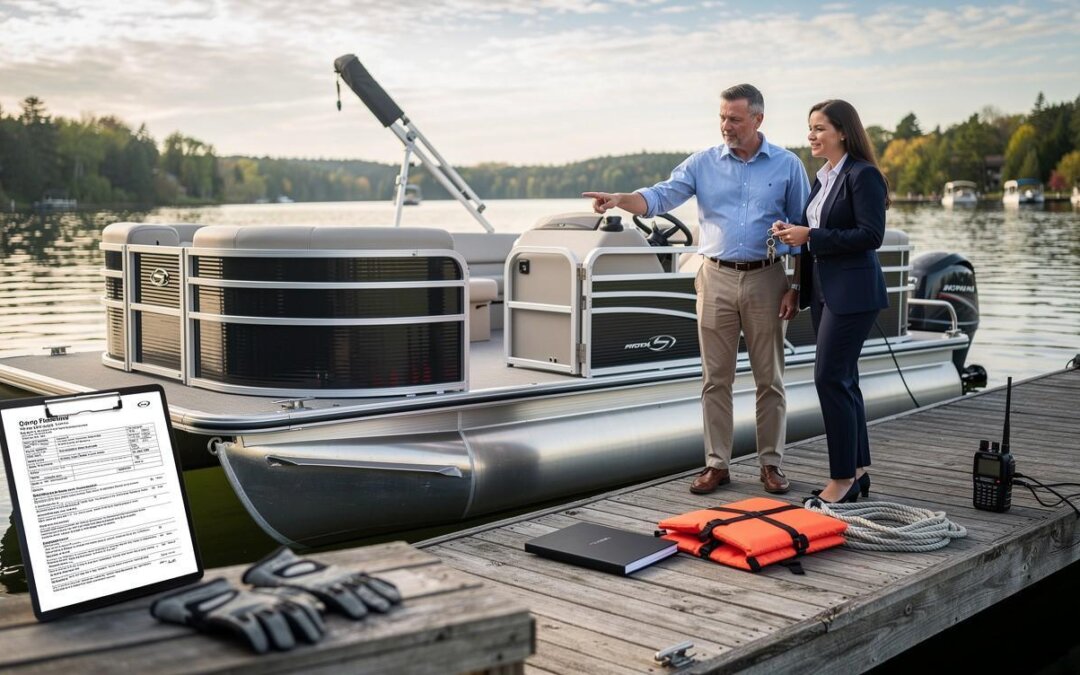
Pontoon boats offer unmatched relaxation on the water, but standard insurance policies leave you exposed to serious gaps in coverage. Boat insurance for pontoons is fundamentally different from homeowners or auto policies because watercraft face unique risks that traditional insurers simply don’t account for.
At Leslie Kay’s, Inc., we’ve seen too many pontoon owners discover coverage holes only after an accident or theft occurs. The right policy protects your investment and shields you from liability claims that could devastate your finances.
Why Pontoons Need Coverage Standard Policies Won’t Provide
Water Exposure Creates Risks Standard Policies Ignore
Pontoon boats operate in an environment that standard homeowners and auto insurance policies simply don’t account for. Water exposure creates corrosion risks that affect engines, electrical systems, and structural components at rates homeowners policies never contemplate. A pontoon sitting in freshwater or saltwater faces constant degradation that happens faster than most property damage scenarios insurers typically evaluate.
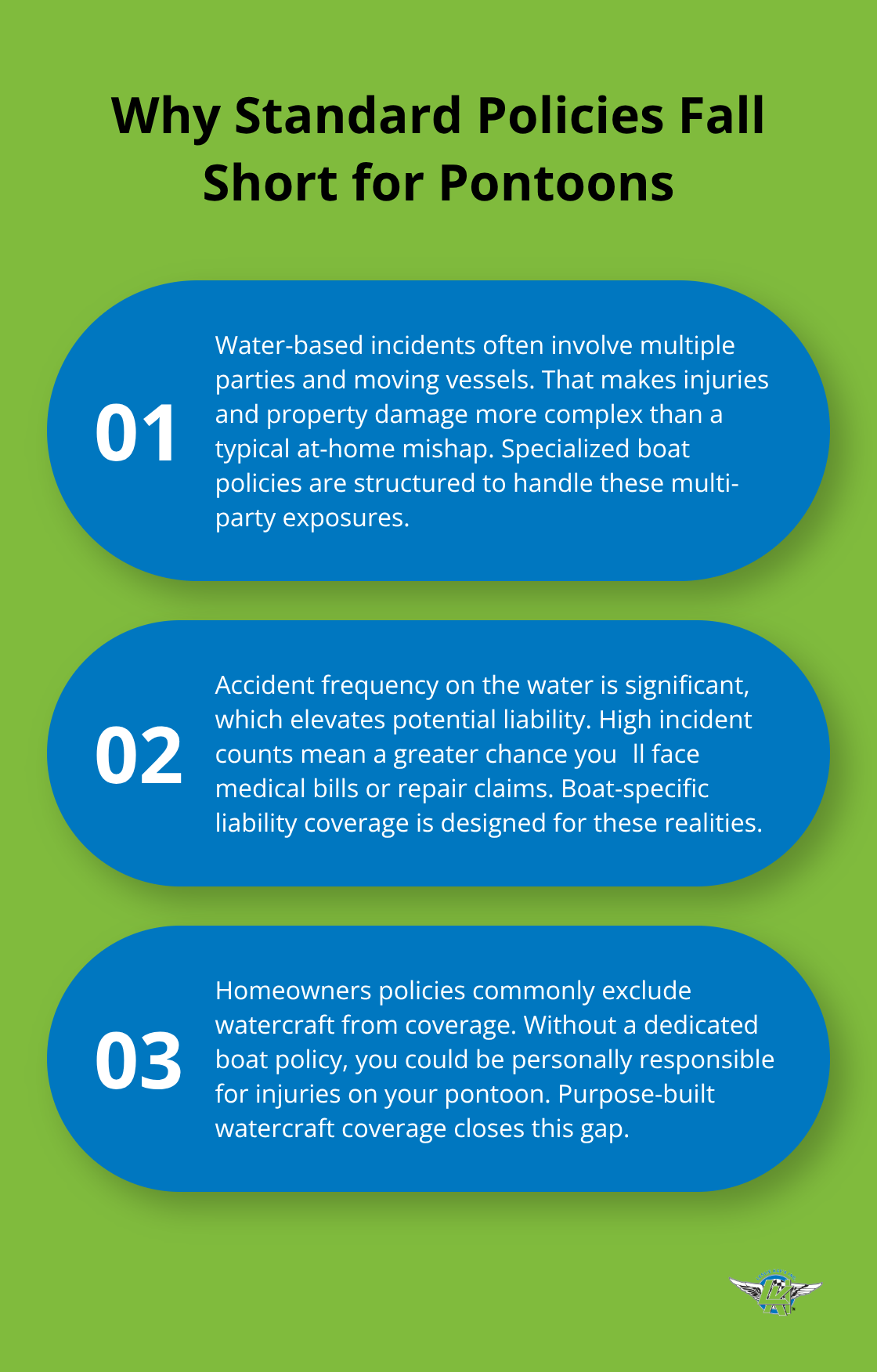
Pontoon owners also face liability exposure that exceeds what auto policies cover because water-based accidents often involve multiple vessels, swimmers, or waterfront property. The Coast Guard reported over 4,100 recreational boating accidents in 2023, with drowning and collision injuries representing the leading causes. Standard homeowners policies explicitly exclude watercraft in their coverage terms, leaving you personally liable for medical bills if someone gets injured on your boat.
Why Auto and Homeowners Policies Fall Short
Auto insurance won’t protect your pontoon because boats operate under different regulations and risk profiles than vehicles. Homeowners policies cap personal property coverage at amounts far below what your pontoon and its components actually cost. These policies simply weren’t designed to handle the unique marine environment your boat faces every season.
Theft and Damage Patterns Require Specialized Coverage
Pontoons attract specific theft and damage patterns that traditional insurers don’t specialize in covering. Copper wiring, marine batteries, and outboard motors represent high-value targets for thieves, particularly during off-season storage when boats sit unattended for months. Comprehensive coverage through a dedicated boat policy addresses these exposures with limits and deductibles structured for marine equipment.
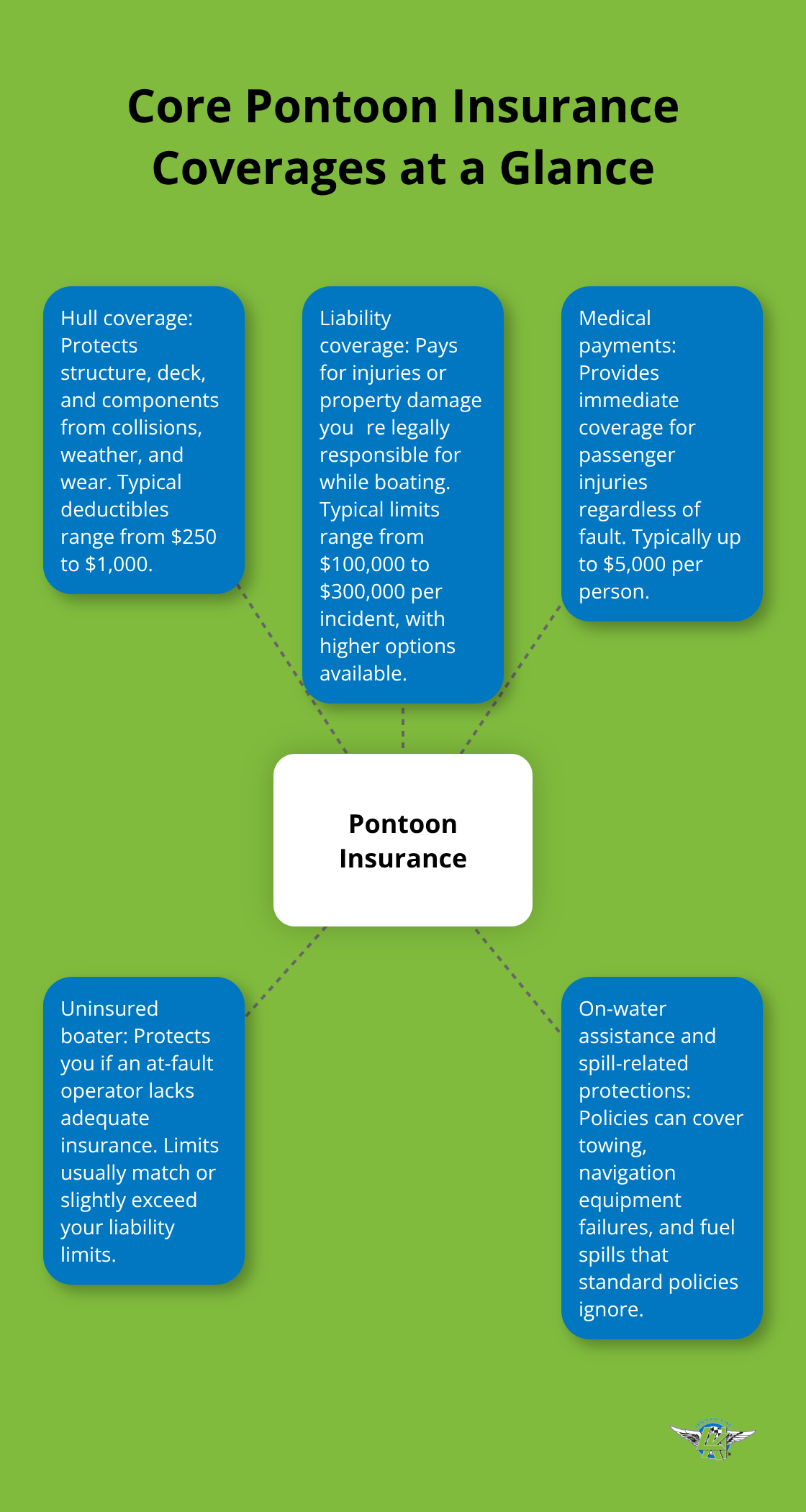
A pontoon investment requires protection that recognizes the unique needs water presents, not generic coverage designed for stationary residential property. Watercraft policies include coverage for fuel spills, navigation equipment failure, and towing costs that emerge from water-based emergencies (situations homeowners and auto policies simply ignore). This specialized approach means you actually have the right protection when problems occur.
Finding the Right Coverage Structure
Selecting a pontoon policy means working with specialists who understand how water-based risks differ from traditional property insurance. Carriers that focus on watercraft policies structure their coverage limits and deductibles specifically for marine equipment and scenarios. Your next step involves comparing what different boat insurance carriers actually offer for pontoon protection.
What Your Pontoon Insurance Actually Covers
Hull Coverage Protects Your Boat’s Structure
Hull coverage forms the foundation of any pontoon policy, protecting the boat’s structure, deck, and components against physical damage from collisions, weather, and wear. This coverage applies whether your pontoon hits a dock, encounters rough water conditions, or suffers damage while docked during storms. Most carriers offer hull coverage with deductibles ranging from $250 to $1,000, and your premium typically reflects the boat’s age, construction materials, and replacement cost. A newer pontoon with a replacement value of $45,000 will cost significantly more to insure than a ten-year-old model valued at $18,000, so obtaining an accurate valuation matters before comparing quotes.
Liability Protection Covers Claims from Other People
Liability protection represents the second critical component, covering damages or injuries you’re liable for while boating, up to specified limits. If a passenger falls overboard and requires hospitalization, or your pontoon collides with someone else’s boat causing $25,000 in damage, liability coverage handles those costs up to your policy limits. Most pontoon policies offer liability limits between $100,000 and $300,000 per incident, though higher limits remain available for owners who entertain frequently or operate in busy waterways.
Medical Payments and Uninsured Boater Coverage Fill Critical Gaps
Medical payments coverage operates independently from liability, providing immediate payment for injuries to passengers regardless of fault, covering costs like emergency room visits, X-rays, and hospitalization without requiring the injured person to file a liability claim. Medical payments typically cover up to $5,000 per person for injuries sustained on your boat, though higher limits exist for policies covering larger passenger counts or commercial charter operations. Uninsured boater coverage protects you financially when another vessel operator causes an accident but lacks adequate insurance, a scenario more common than many pontoon owners realize since not all boaters carry proper coverage. Uninsured boater limits usually match or slightly exceed your liability limits, creating consistent protection across different accident scenarios.
Matching Coverage to Your Water Usage Patterns
Your specific water usage patterns should guide your coverage limit selections because someone who operates their pontoon exclusively on calm lakes faces different risk profiles than owners who navigate rivers or coastal waterways where commercial traffic and weather create additional exposure. Consider whether your pontoon serves as a weekend recreational vessel or functions as a regular gathering spot for family and friends, since higher passenger counts increase the probability of injuries requiring medical coverage. These distinctions matter significantly when you compare policies from different carriers, as coverage limits and deductibles should align with how you actually use your boat rather than generic industry standards.
How to Choose the Right Pontoon Insurance Policy
Calculate Your Pontoon’s Actual Replacement Cost
Start with an accurate replacement cost for your pontoon, not the price you paid years ago. Pontoon values shift based on age, engine hours, upholstery condition, and equipment additions, so a ten-year-old model you purchased for $35,000 might now cost $18,000 to replace or $52,000 if you’ve upgraded engines and added premium seating. Contact three dealers who sell your exact pontoon model and year to obtain current pricing, then add 10-15 percent for recent upgrades you’ve made to deck components, electronics, or motors. This valuation directly impacts your premium costs-undervaluing your boat means inadequate coverage when damage occurs, while overvaluing it wastes money on unnecessary premiums. Insurance carriers verify replacement costs during the underwriting process, so providing accurate information from the start prevents delays and claim denials later.
Match Coverage Limits to Your Actual Boating Habits
Your usage patterns matter equally when selecting coverage limits because someone who operates their pontoon on calm lakes with occasional family outings faces substantially different risks than owners who frequently entertain large groups or navigate busier waterways with commercial traffic. Document your typical passenger count, annual operating hours, and whether you boat in saltwater or freshwater environments, since saltwater exposure increases corrosion risks and typically justifies higher hull coverage limits. These distinctions directly affect the liability and medical payments limits that make sense for your situation.
Compare Quotes Across Multiple Carriers
Comparing policies across multiple carriers reveals dramatic differences in what you actually pay for identical coverage. Request quotes from at least four different boat insurance providers using the same hull value, liability limits of $300,000, and medical payments coverage of $5,000 per person, then track the annual premium differences you receive. Deductible selections significantly affect your rates, so calculate whether you could comfortably pay a higher deductible if damage occurred.
Capture Safety Equipment and Training Discounts
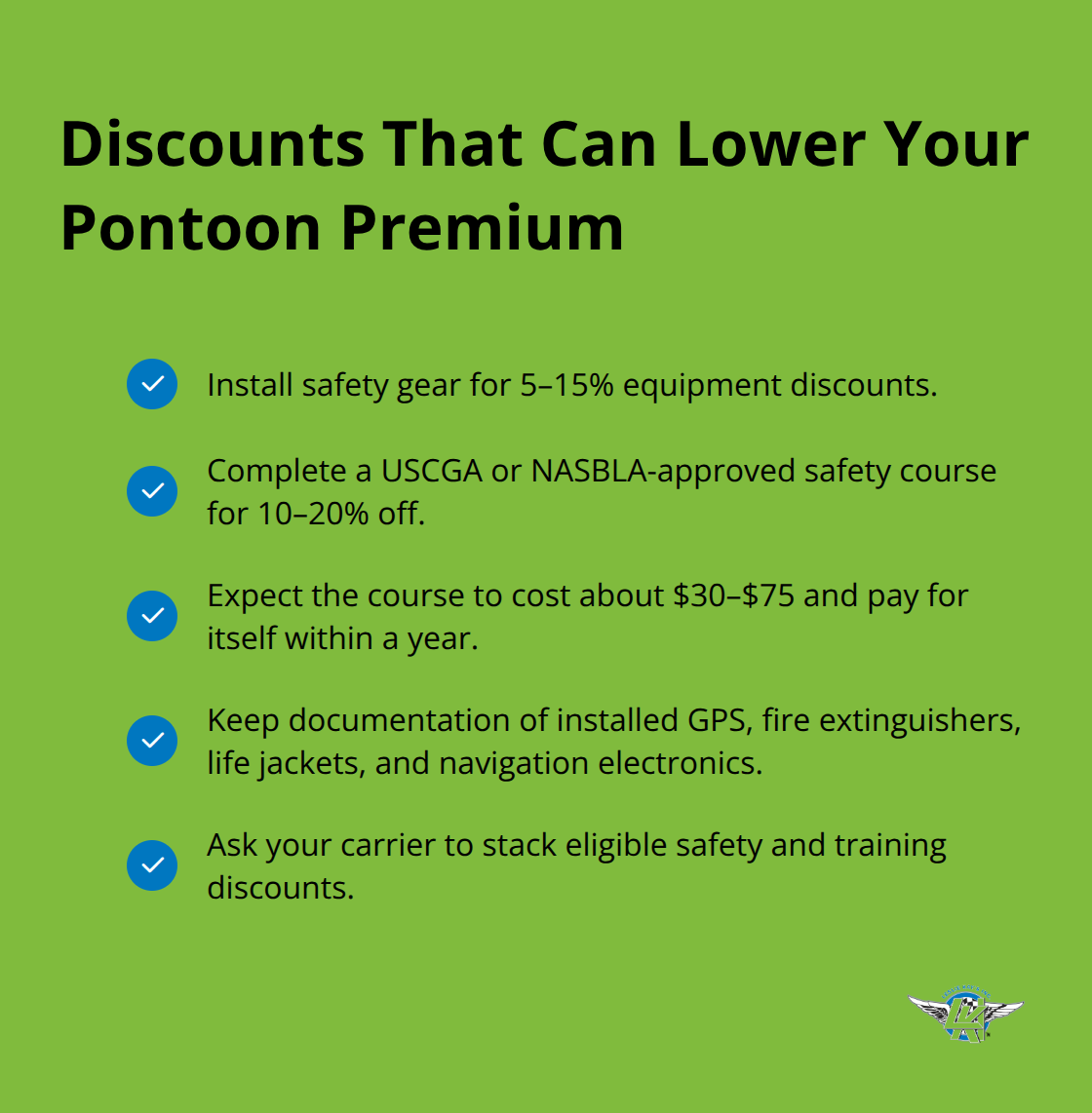
Safety equipment discounts represent real savings that many pontoon owners overlook, with carriers offering 5-15 percent reductions for installing GPS systems, fire extinguishers, life jackets stored properly on deck, and modern navigation electronics. Completing an accredited boating safety course through the U.S. Coast Guard Auxiliary or National Association of State Boating Law Administrators qualifies you for additional discounts ranging from 10-20 percent on many policies, and the course typically costs $30-75 while paying for itself within the first year through premium reductions.
Prioritize Watercraft Specialists Over General Insurers
Obtain quotes from carriers that specialize in watercraft coverage rather than general insurance companies, since specialists understand pontoon-specific risks and typically offer more competitive rates for the actual protection you need. Specialists structure their policies around how pontoon owners actually use their boats, not generic coverage template designed for all property types.
Final Thoughts
Your pontoon represents a significant investment that demands protection matching its actual value and how you use it. Boat insurance for pontoons fills coverage gaps that standard homeowners and auto policies simply ignore, protecting both your financial investment and your personal liability exposure when accidents happen on the water. The right policy combines hull coverage reflecting your boat’s replacement cost, liability limits appropriate for your passenger counts and boating environment, and medical payments coverage that handles injuries without requiring fault determinations.
Safety equipment and boating course certifications reduce your premiums while improving your actual protection, making these investments worthwhile before you finalize your policy. Watercraft specialists understand pontoon-specific risks in ways general insurers cannot match, structuring coverage limits and deductibles around how pontoon owners actually operate their boats rather than generic templates designed for all property types. This specialization means you get competitive rates for the protection you genuinely need rather than paying for unnecessary coverage or discovering gaps when claims arise.
Start by calculating your pontoon’s current replacement cost using dealer pricing, then document your typical usage patterns including passenger counts and water environments. Request quotes from at least four carriers using identical coverage specifications, comparing both premiums and deductible options. Contact Leslie Kay’s, Inc. to discuss your pontoon protection needs with specialists who understand watercraft coverage.
The information provided in this blog is for general informational purposes only and does not constitute legal, financial, or insurance advice. Coverage options, terms, and availability may vary. Please consult with a licensed professional for advice specific to your situation.
Artificial intelligence may have been used to generate text and images in some blog articles.