

Your RV represents freedom on the road, but one accident or unexpected event can turn that adventure into a financial nightmare. A full coverage RV policy protects your investment from collision damage, theft, weather events, and liability claims that could otherwise drain your savings.
At Leslie Kay’s, Inc., we’ve helped countless RV owners understand what true protection looks like. The right coverage gives you peace of mind so you can focus on the journey ahead.
What Full Coverage RV Insurance Actually Protects
Full coverage RV insurance combines three essential protection layers that work together to safeguard both your vehicle and your finances. Collision coverage handles damage from accidents with other vehicles or objects, while comprehensive coverage protects against theft, weather damage, animal strikes, and vandalism. These two components address physical damage to your RV itself. Liability protection covers bodily injury and property damage you cause to others, with limits often set at $250,000 per person and $500,000 total per accident in serious incidents.
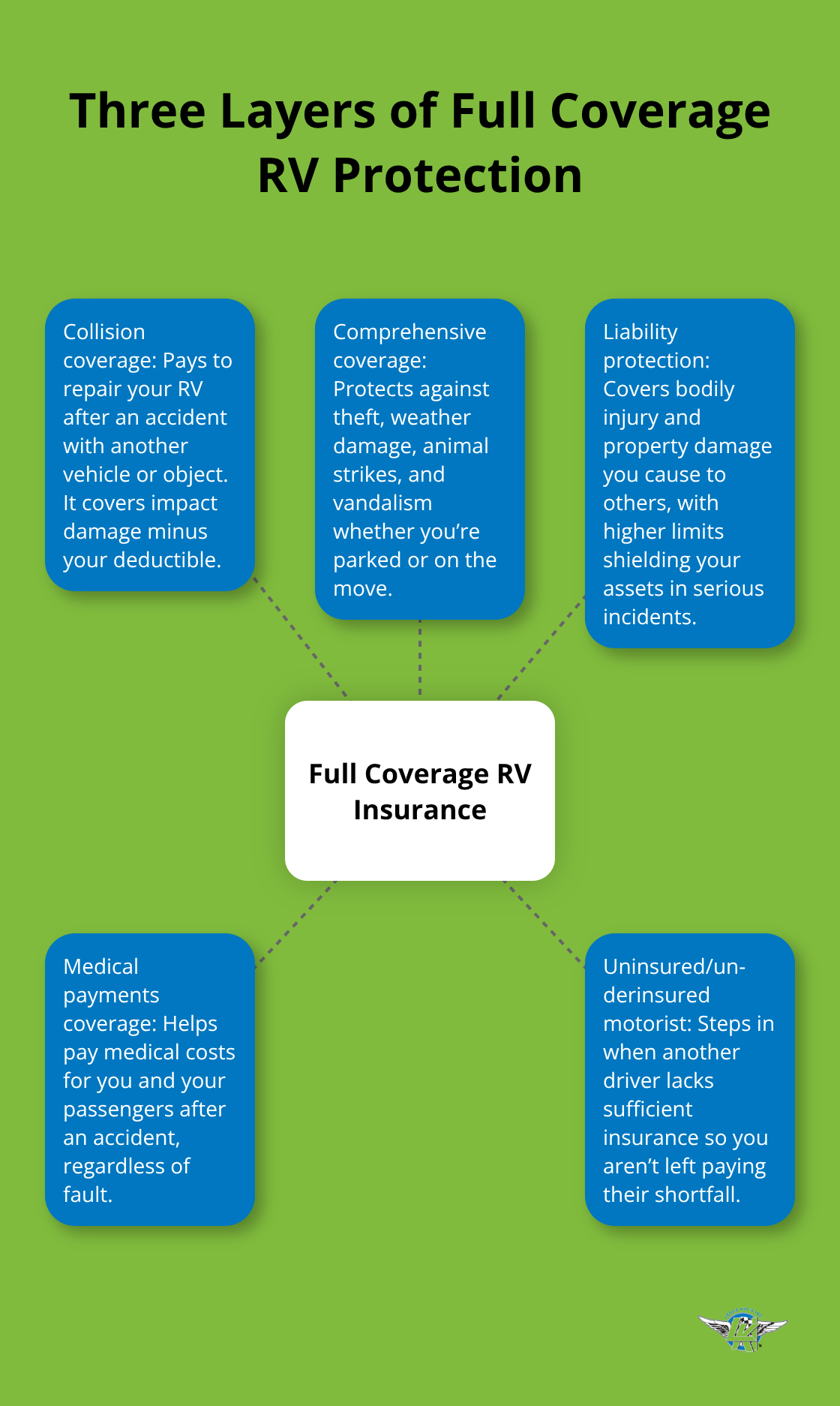
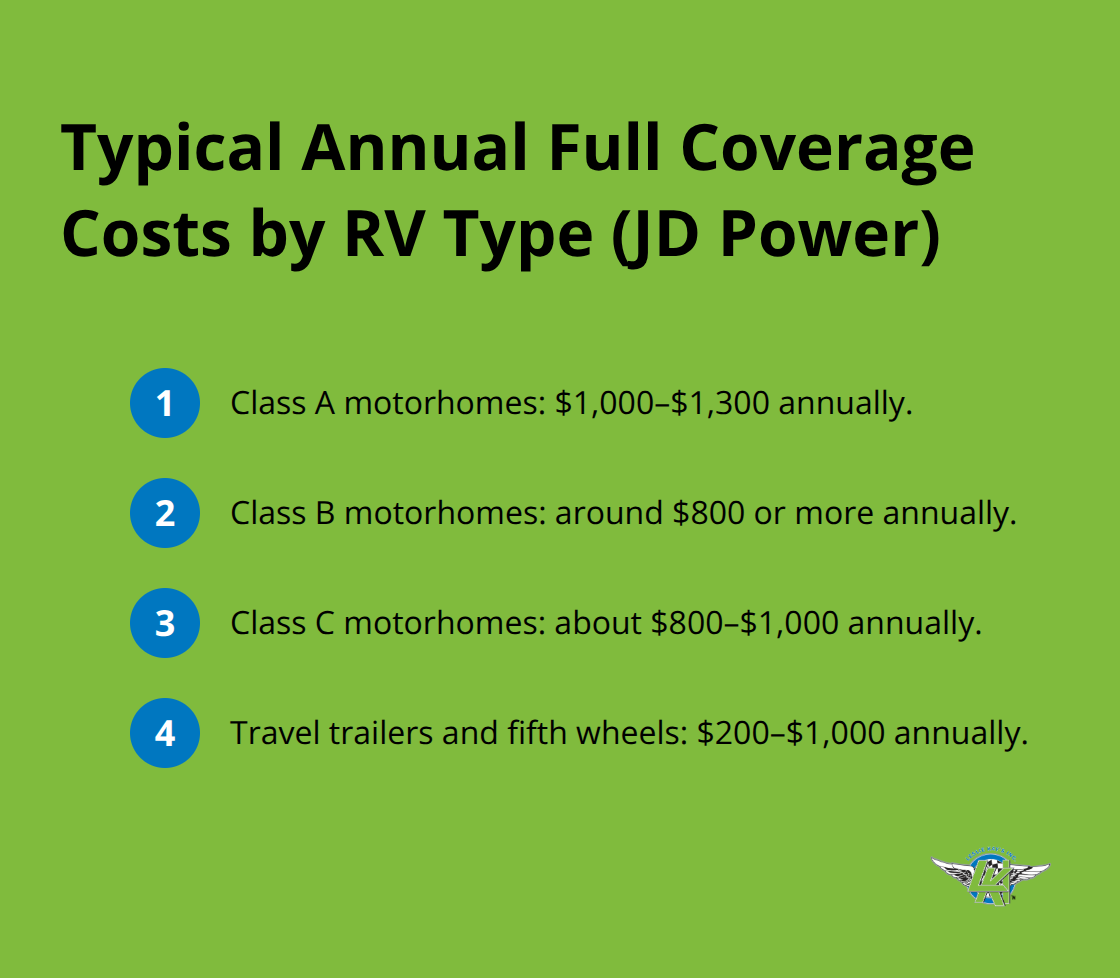
Medical payments coverage handles treatment costs for you and your passengers after an accident, regardless of fault. Uninsured or underinsured motorist coverage steps in when another driver lacks adequate insurance, preventing you from absorbing their financial irresponsibility. According to JD Power data, Class A motorhomes average $1,000–$1,300 annually for full coverage, Class B around $800 or more, Class C around $800–$1,000, and travel trailers or fifth wheels range from $200–$1,000 depending on value and usage patterns.
The Personal Property Gap Most RV Owners Miss
Standard comprehensive and collision coverage protects your RV’s structure and mechanical systems, but it does not automatically cover your belongings inside. Personal effects coverage is a separate add-on that reimburses full replacement cost for items like electronics, clothing, bedding, and kitchen equipment stored in your RV. This distinction matters enormously-if your RV is stolen or destroyed, you could lose tens of thousands in personal possessions without this endorsement. Full-time RV residents need to confirm their policy includes full-timer coverage, which extends liability protection beyond driving incidents to include when your RV is parked at a campground or on your property. Full-timer policies also provide worldwide protection for those traveling internationally, addressing a gap that standard RV policies often leave open.
Roadside Assistance and Specialized Endorsements
Roadside assistance covers towing, tire service, lockout assistance, and fuel delivery when you are stranded. This becomes invaluable in remote areas where professional help is hours away. Beyond these basics, consider endorsements for roof protection, awning replacement, custom equipment, and safety glass replacement, as these items fall outside standard comprehensive coverage. If you tow a vehicle behind your RV (called a toad), that towed vehicle requires separate insurance coverage-your RV policy typically does not extend protection to a vehicle being towed. An experienced agent can map out which endorsements align with your specific RV type, usage frequency, and the value of your belongings to avoid costly gaps in protection.
Finding the Right Coverage for Your Situation
The coverage you select depends on how you use your RV and what you carry inside it. Full-time residents need different protection than seasonal travelers, and the value of your personal belongings directly affects whether you should add personal effects coverage. Your RV’s age and model year also matter-newer RVs may qualify for full replacement cost coverage that provides a brand-new unit within the first five model years if your RV is totaled or stolen. Storage coverage can reduce your premiums during off-season months when your RV sits unused, making it a smart option for those who park their vehicle for winter or extended periods. These choices shape how well your policy actually protects your investment when something goes wrong.
Why Full Coverage Truly Protects Your RV Investment
One collision or theft can cost you $50,000 to $300,000 or more depending on your RV’s value, and standard auto insurance won’t cover it. Full coverage RV insurance exists specifically because RVs operate in high-risk scenarios that regular policies ignore. You’re not just protecting a vehicle you drive occasionally-you’re protecting a mobile home, a vacation investment, and potentially your primary residence. The financial exposure is real, and the gaps in protection without full coverage are enormous.
Repair Costs Far Exceed What Most Owners Expect
A single accident requiring frame repair on a Class A motorhome can run $15,000 to $40,000 in labor and parts alone. Roof damage from a fallen tree, hail, or wind damage frequently exceeds $10,000 for replacement and structural repairs. Water intrusion from theft or collision damage can compromise the entire interior, turning a $5,000 repair into a $30,000 rebuild if mold or structural rot develops. Collision coverage handles these costs after your deductible, but without it, you write checks from your personal account. Comprehensive coverage protects against theft, which accounts for significant RV losses annually, and weather-related damage that happens whether you drive or park at a campground. Class A motorhomes average $1,000 to $1,300 annually for full coverage according to JD Power, which breaks down to roughly $85 to $110 monthly-a manageable expense compared to absorbing even one major claim yourself.
Legal Liability Creates Financial Exposure Beyond Your Vehicle
If you cause an accident that injures another person or damages their property, liability coverage protects you from personal lawsuits that could exceed $100,000 easily. Many states require minimum liability coverage of $25,000 per person and $50,000 per accident, but these limits evaporate instantly in serious injury cases. A lawsuit from a pedestrian struck by your RV or a campground visitor injured on your property while your RV sits parked can result in judgments that attach to your personal assets for years. Full-time RV residents may protect your assets through full-time liability coverage that extends beyond driving incidents to include parked liability, protecting you when your RV sits stationary. Without this coverage, one serious incident wipes out savings, forces asset liquidation, or creates wage garnishment situations that devastate your financial security for a decade.
How Coverage Limits Affect Your Real Protection
The liability limits you select directly determine whether your policy actually protects your assets or leaves you exposed. A $100,000 liability limit sounds substantial until a serious injury case results in a $250,000 judgment against you-then you owe the difference from your personal finances. RV owners who carry higher limits (typically $250,000 per person and $500,000 per accident for serious incidents) pay only marginally more in premiums but gain substantially more protection. Your deductible choice also shapes your actual costs: a $500 deductible means you pay that amount out-of-pocket for each claim, while a $1,000 deductible reduces your premium but increases your immediate expense when damage occurs. The right balance depends on your financial situation and risk tolerance, which is why working with an agent who understands RV-specific exposures matters far more than simply selecting the cheapest quote available.
Theft and Weather Threats Hit RV Owners Harder
RVs attract theft because they contain valuable electronics, appliances, and tools that thieves can quickly remove and sell. Comprehensive coverage protects against theft losses, but only if you maintain adequate coverage limits that reflect your RV’s actual value. Weather events-hail storms, high winds, fallen trees, and flash flooding-damage RVs parked at campgrounds or on your property, and comprehensive coverage handles these losses regardless of whether you’re present. Many RV owners underestimate their exposure to weather damage because they assume their RV sits safely at a campground, yet severe weather strikes without warning and causes tens of thousands in damage in minutes. The combination of collision, comprehensive, and liability coverage creates a three-layer protection system that addresses the specific threats RV owners face, whether they travel full-time or use their RV seasonally.
Understanding what full coverage actually protects is only half the equation-selecting the right limits and endorsements for your specific situation determines whether your policy truly safeguards your investment or leaves dangerous gaps when you need protection most.
Selecting the Right Coverage Limits and Endorsements for Your RV
Start by knowing your RV’s actual cash value, not what you paid for it years ago. RV values depreciate significantly, and your coverage limits should reflect current market worth rather than nostalgia about purchase price. Use NADA Guides or similar valuation tools to establish a realistic figure, then add 10-15% to account for custom upgrades, installed equipment, or newer appliances you’ve added. This number becomes your target for collision and comprehensive coverage limits.
Next, assess how you use your RV honestly. Full-time residents need different protection than those who travel seasonally or recreationally. According to JD Power data, Class A motorhomes cost $1,000–$1,300 annually for full coverage, Class B around $800 or more, Class C around $800–$1,000, and travel trailers or fifth wheels range from $200–$1,000 depending on value and usage. If you live in your RV six or more months per year without a primary residence, you must upgrade to full-timer coverage, which extends liability protection beyond driving incidents to include parked situations at campgrounds or on your property. Seasonal users can often reduce premiums through storage coverage during off-season months when the RV sits unused, potentially saving hundreds annually.
Deductible Strategy Shapes Your Monthly Costs and Claims Expenses
Your deductible choice directly impacts what you pay monthly and what you pay out-of-pocket during a claim. A $500 deductible typically costs more in monthly premiums than a $1,000 deductible, but saves you $500 per claim when damage occurs. The math works differently for everyone: if you have substantial emergency savings and drive cautiously, a higher deductible reduces your annual costs significantly. If you carry older RVs or travel frequently in unfamiliar terrain, a lower deductible protects your cash flow when minor accidents happen.
Personal Belongings Require Separate Protection
Personal effects coverage is not automatically included in standard RV policies, yet most full-time residents carry valuable items in electronics, tools, clothing, and kitchen equipment inside their RV. This coverage pays full replacement cost for belongings if theft or disaster strikes, and costs roughly $150–$300 annually depending on coverage limits and your RV type. The investment becomes essential if your RV contains laptops, cameras, specialty tools, or high-end appliances. Without this endorsement, a total loss means you absorb the entire value of personal possessions from your own finances.
Roadside Assistance and Specialized Add-Ons Protect Against Unexpected Breakdowns
Roadside assistance covers towing, tire service, fuel delivery, and lockout help when you’re stranded, particularly valuable in remote areas where professional help is hours away. This typically costs $50–$150 annually and prevents situations where a single tow bill exceeds $2,000 in remote locations. Beyond roadside assistance, review roof protection, awning replacement, custom equipment coverage, and safety glass replacement endorsements.
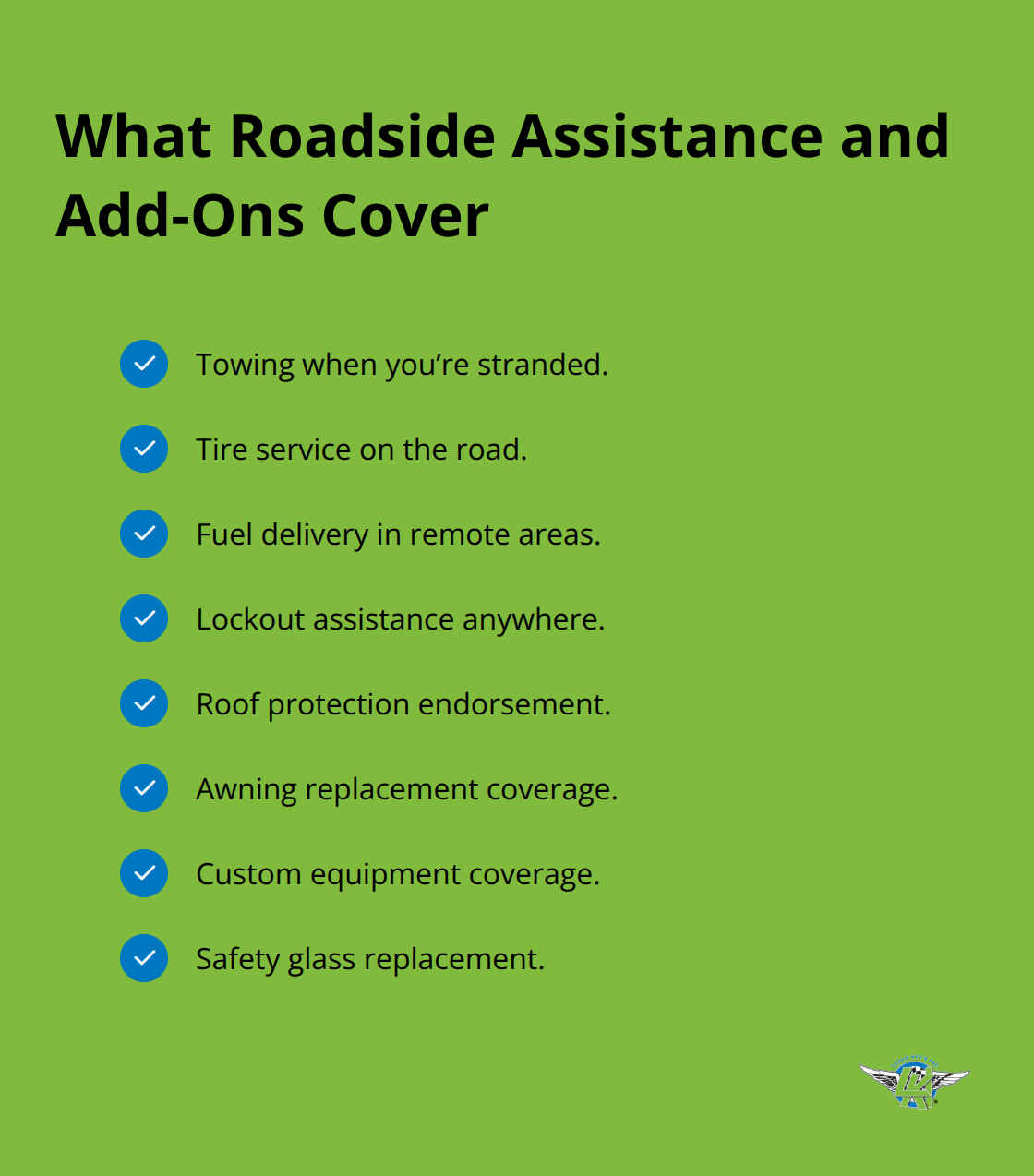
These items fall outside standard comprehensive coverage and can cost $5,000–$15,000 to repair or replace individually.
Towed Vehicles and Coverage Gaps Demand Separate Policies
If you tow a vehicle behind your RV, that towed vehicle requires separate insurance coverage because your RV policy typically does not extend protection to vehicles being towed. Review your liability limits before each trip to ensure adequate protection for towed vehicles and related liability. Multiple quotes from different carriers reveal significant premium variations for identical coverage levels. One carrier may quote $950 annually for a Class C motorhome while another quotes $1,200 for the same vehicle and limits, making comparison shopping essential before committing to any policy.
Final Thoughts
Full coverage RV insurance protects your investment from the financial devastation that one accident, theft, or weather event can cause. The combination of collision, comprehensive, liability, and specialized endorsements creates a safety net that lets you travel with confidence rather than anxiety about what happens if something goes wrong. Your RV represents significant financial exposure, and the cost of full coverage pales in comparison to absorbing even a single major claim from your personal finances.
The right full coverage RV policy reflects your specific situation, not a generic template that leaves gaps when you need protection most. Your usage pattern matters enormously-full-time residents need different protection than seasonal travelers, and the value of your personal belongings directly affects which endorsements make sense for your situation. Deductible choices, liability limits, and specialized add-ons like personal effects coverage and roadside assistance should align with your RV’s value, how you use it, and what you carry inside (this customization is where most RV owners struggle, because comparing quotes across carriers reveals wildly different coverage structures and premium variations for seemingly identical protection).
We at Leslie Kay’s, Inc. specialize in RV coverage and understand the specific risks that RV owners face. Contact us today to customize a full coverage RV policy that matches your adventures and gives you genuine peace of mind on the road.
The information provided in this blog is for general informational purposes only and does not constitute legal, financial, or insurance advice. Coverage options, terms, and availability may vary. Please consult with a licensed professional for advice specific to your situation.
Artificial intelligence may have been used to generate text and images in some blog articles.