
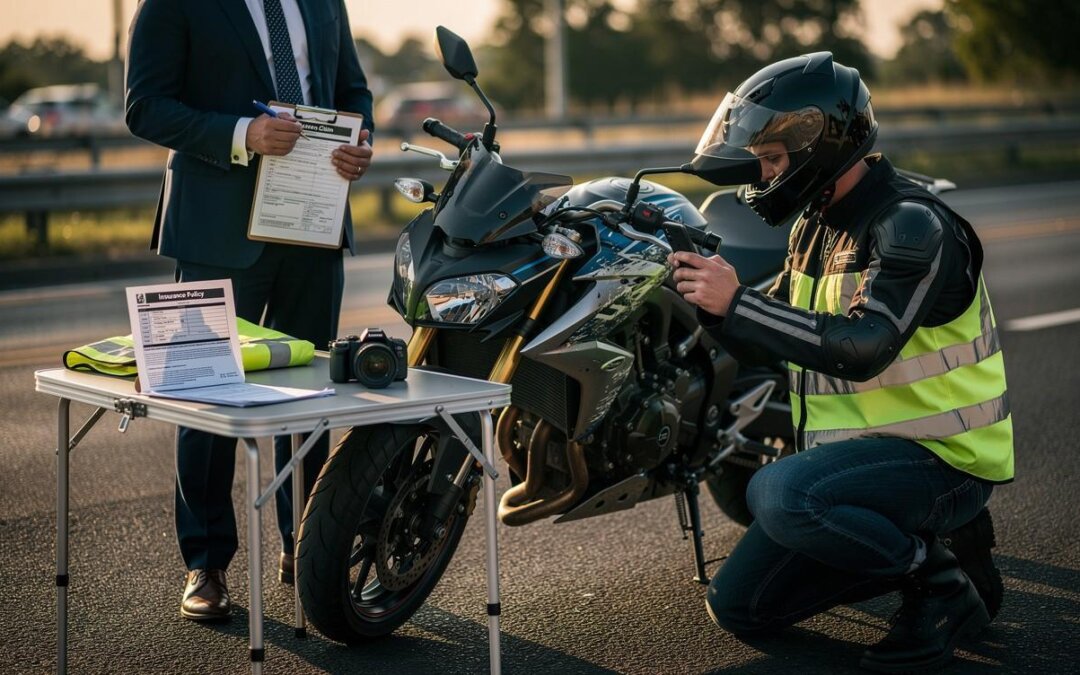
A motorcycle accident can derail your plans and drain your wallet fast. At Leslie Kay’s, Inc., we know that filing a claim shouldn’t add stress to an already difficult situation.
Our motorcycle insurance claim tips guide you through each step, from documenting the scene to maximizing your payout. Follow this roadmap and you’ll recover faster.
Capture Everything Before You Leave the Scene
The first hours after a motorcycle accident determine whether your claim succeeds or stalls. Most riders focus on their injuries and don’t realize that poor documentation at the scene costs them thousands in payouts. Start with your phone camera and take photos and videos from multiple angles, showing the entire damage to your bike, the other vehicle involved, and the surrounding area. Wide-angle photographs show the overall context of the crash-the positions of the vehicles relative to each other and to the road, the intersection layout, and any debris. Close-ups matter too-photograph specific damage points, tire marks, and broken parts. Weather and lighting affect how damage appears, so capture images in natural daylight if possible. If an accident happens at night, return to the scene the next day to photograph road conditions and sight lines that may have contributed to the crash.
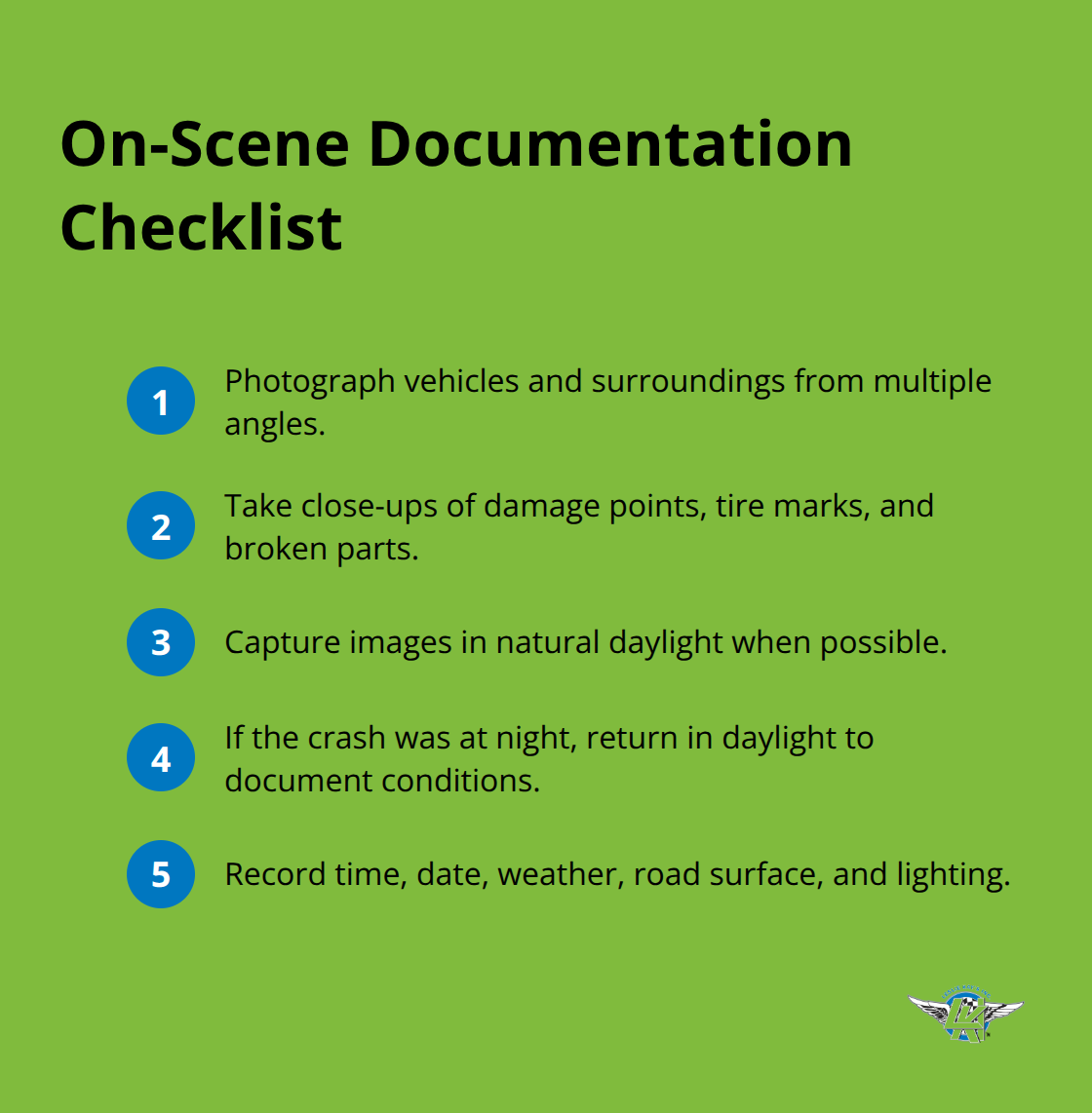
Write down the exact time, date, weather conditions, road surface type, and lighting. This information strengthens your claim because it provides context adjusters need to assess liability and damage severity.
Collect Information from Other Parties
Exchange names, phone numbers, addresses, email addresses, and insurance policy numbers with the other driver. Get their driver’s license number and vehicle identification number. Ask for their insurance company name and policy number directly-don’t rely on memory. Photograph their insurance card and driver’s license with your phone. This step takes five minutes but prevents weeks of delays later when you can’t reach the other party.
Secure Witness Statements
Identify and speak with any witnesses who saw the accident happen. Get at least two witness names, phone numbers, and email addresses. Ask each witness to write a brief statement about what they saw, then photograph that statement with your phone. Contact information from witnesses matters because insurance adjusters often contact them weeks later, and phone numbers change. Include details about any police report filed at the scene-get the report number and the responding officer’s name and badge number. If no police report was filed, file one yourself at the local police station within 24 hours.
Preserve All Evidence of Costs and Repairs
Keep every receipt related to the accident. If you paid for emergency towing, temporary repairs, a rental bike, or medical supplies, save the documentation. Store receipts in a dedicated folder on your phone and in a physical envelope. Don’t discard any parts removed from your motorcycle during repairs. Mechanics sometimes find hidden damage when they remove broken components, and original parts provide proof of what was on your bike before the accident. Photograph your bike before and after the accident if possible. If your bike was financed, your lender may require specific documentation before releasing repair funds, so having complete records accelerates the payout timeline.
With your documentation complete and organized, you’re ready to contact your insurance provider and file your claim within the critical first 48 hours.
File Your Claim Within 48 Hours
Contact your insurance provider within 24 to 48 hours of the accident, not later. Insurance companies track claim submission times, and delays weaken your position. Many adjusters become skeptical of claims filed weeks after an incident because memory fades and evidence disappears. Call your insurer’s claims line directly rather than using online portals for the initial report-speaking to a human ensures your claim gets logged immediately and you receive a reference number. Have your policy number, the date and time of the accident, and a brief description ready when you call. The adjuster will ask specific questions about what happened, the other party involved, and whether police were called. Answer factually and stick to what you observed, not what you assume. If you’re injured or emotionally shaken, it’s acceptable to say you’ll provide detailed written details later.
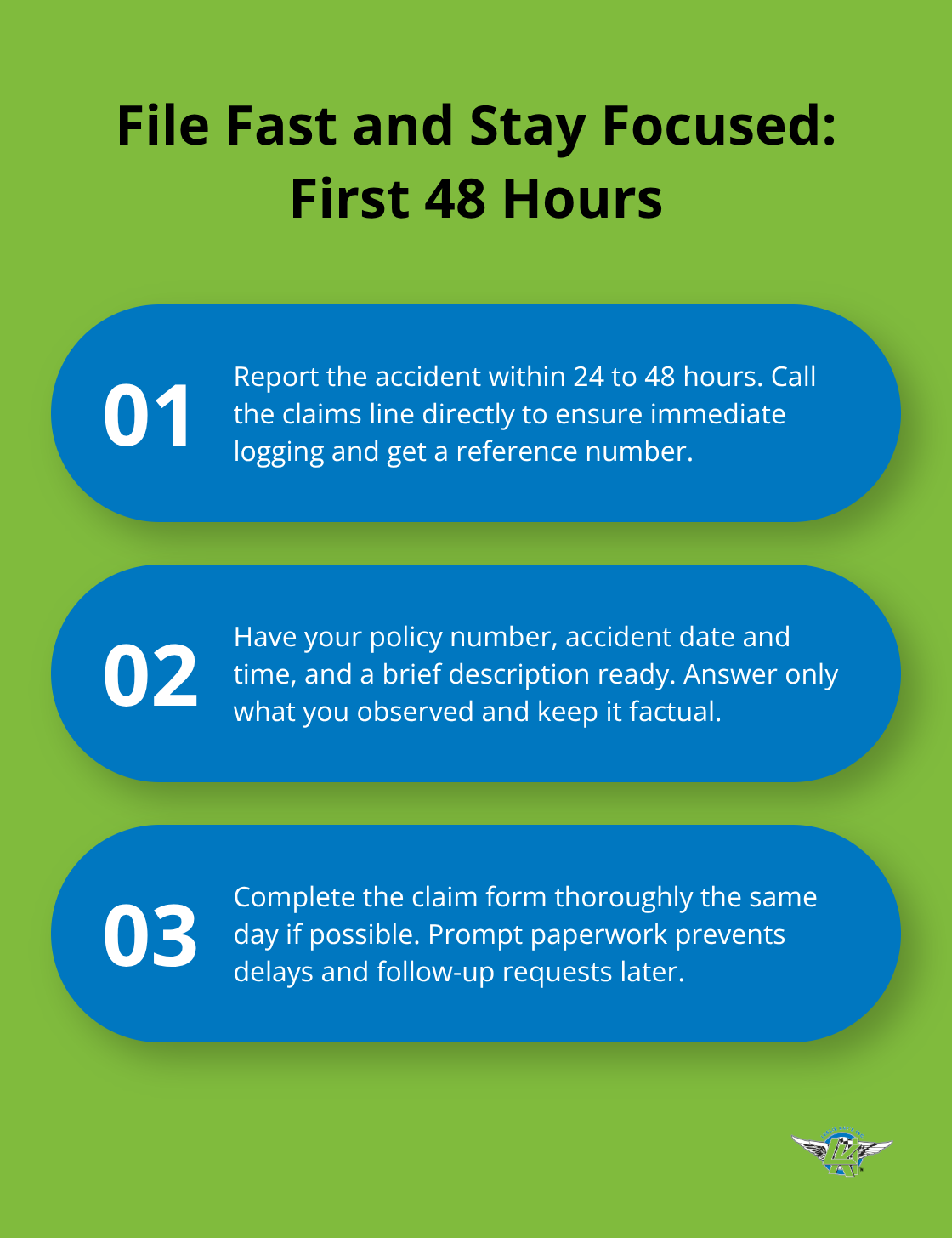
Your insurance company will likely email you a claim form within hours. Complete this form thoroughly and return it the same day if possible. Delays in returning paperwork extend the entire claims process and give your insurer reasons to request additional information later.
Write a Detailed Account of What Happened
Your adjuster needs a clear narrative of what happened before, during, and after the collision. Write a timeline starting with where you were riding, your speed, the weather conditions, and what you saw the other vehicle doing. Describe the exact moment of impact, what damage you noticed immediately, and what you did afterward. Include whether you called 911, if police responded, and the officer’s report number. This written account becomes part of your official claim file and multiple people within the insurance company will review it. Many claims get delayed because riders provide vague descriptions that raise questions, forcing adjusters to call back for clarification. The more specific and complete your initial statement, the faster your claim moves forward.
Submit All Documentation at Once
Gather all the photos, videos, witness statements, repair estimates, medical bills, and receipts you collected at the scene and compile them into a single folder. Your insurer will request these documents through their portal or via email. Upload everything at once rather than trickling documents in over time-this prevents your claim from stalling while adjusters wait for missing pieces. Organize your files by category (photos, receipts, medical records) so adjusters can locate information quickly without asking you to reorganize or resubmit.
Track Your Claim Status Actively
Check your claim status every three to five days through your insurance company’s online portal or mobile app. Most insurers provide real-time updates showing whether your claim is in the inspection phase, repair authorization phase, or payment phase. If you don’t see movement within a week, contact your adjuster directly and ask what documentation or information they need from you. Insurance companies handle hundreds of claims simultaneously, and proactive follow-up ensures yours doesn’t fall through the cracks. When your adjuster schedules an inspection, you’ll need to choose where the assessment happens-at a repair shop, your home, or your office.
How to Push Your Insurance Company for Maximum Payout
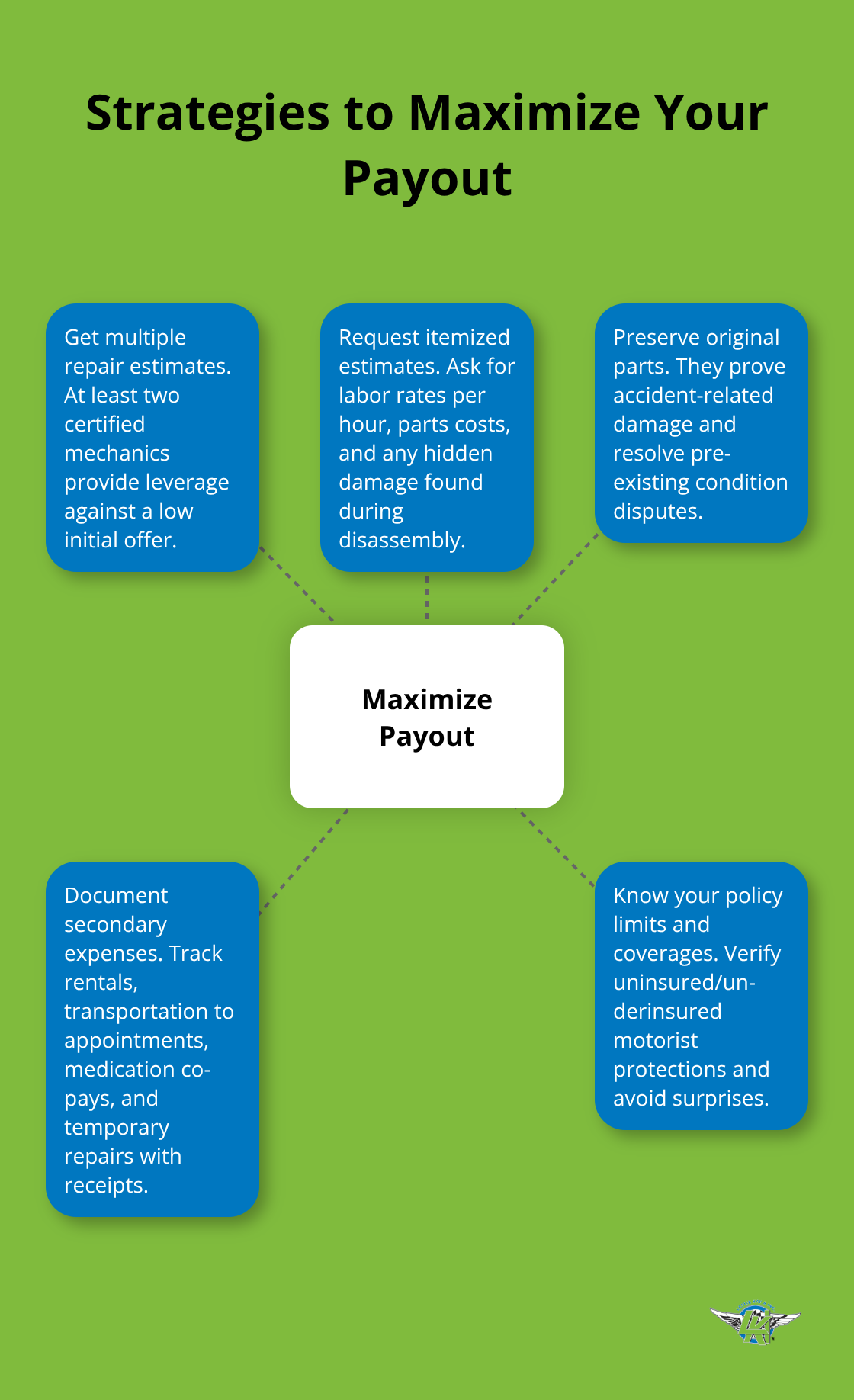
Insurance adjusters start with a low initial estimate because they know most riders accept the first number without question. We recommend getting repair estimates from at least two certified mechanics before accepting your adjuster’s assessment. Independent mechanics typically charge between 50 and 150 dollars for a detailed estimate, but this investment pays off when your estimate runs 1,000 to 3,000 dollars higher than the insurer’s initial offer.
Request Itemized Repair Estimates
Ask mechanics to itemize every repair, including labor rates per hour, parts costs, and any hidden damage discovered during disassembly. When you submit competing estimates to your adjuster, they often increase their payout rather than dispute multiple professional assessments. If the estimates differ significantly, ask your adjuster why their assessment is lower and request a detailed explanation for each discrepancy. Insurance companies know that riders with professional documentation are more likely to appeal denials or file complaints with state insurance regulators, so they tend to adjust their positions when faced with concrete evidence.
Preserve Original Parts as Physical Evidence
During repairs, mechanics will remove broken parts and components that need replacement. You should preserve original parts because they serve as physical proof of what damage actually occurred. Adjusters sometimes dispute whether damage was pre-existing or accident-related, and original parts eliminate this argument entirely. Photograph each removed part with your phone and store them in a safe location. If your mechanic finds additional damage during disassembly that wasn’t visible in the initial estimate, this discovery strengthens your claim for a higher payout. Ask your mechanic to document all additional damage in writing and photograph it before repairs begin. Your insurance company must cover these newly discovered damages if they’re directly related to the accident, so you should submit updated estimates immediately.
Document All Secondary Expenses
Track every expense tied to the accident beyond the repair bill itself. Rental motorcycle costs, transportation to medical appointments, medication co-pays, and temporary repairs all count as claimable damages. Keep receipts for everything and categorize them by type so your adjuster can verify each expense quickly. Many riders miss 500 to 2,000 dollars in reimbursable costs because they fail to document secondary expenses carefully. These additional costs add up fast, and your insurer will reimburse them if you provide proper documentation.
Understand Your Policy Limits and Coverage
Your policy limits determine the maximum your insurer will pay for repairs, medical bills, and other damages. Read your policy documents before meeting with your adjuster and know exactly what your coverage includes. If your policy limits are too low to cover all damages, your adjuster will inform you, but you need to understand this beforehand to avoid surprises. Some policies include uninsured or underinsured motorist coverage that applies if the other driver lacks sufficient insurance, so you should verify whether this protection applies to your situation. Understanding your coverage prevents disputes later and helps you identify whether you need to pursue the other driver’s insurance or your own supplemental coverage.
Final Thoughts
A motorcycle accident disrupts your life, but the claims process doesn’t have to compound that damage. Speed matters-you must file within 48 hours to signal seriousness and prevent adjusters from questioning your memory or evidence. Organization matters too, and riders who compile documentation systematically, submit everything at once, and follow up consistently receive higher payouts than those who trickle information in slowly.
Your role doesn’t end when you file your claim. You need to stay engaged throughout the process by checking your claim status regularly, responding to adjuster requests within 24 hours, and pushing back when estimates seem low. Insurance companies respect riders who know their policies and provide professional documentation, and independent repair estimates, preserved original parts, and tracked secondary expenses typically add hundreds or thousands to your final payout.
At Leslie Kay’s, Inc., we specialize in motorcycle coverage and understand the unique challenges riders face after an accident. We work with you to navigate these motorcycle insurance claim tips and provide hands-on support when you need it most, and we’re built for bikers, by bikers with availability seven days a week to help you recover.
The information provided in this blog is for general informational purposes only and does not constitute legal, financial, or insurance advice. Coverage options, terms, and availability may vary. Please consult with a licensed professional for advice specific to your situation.
Artificial intelligence may have been used to generate text and images in some blog articles.