
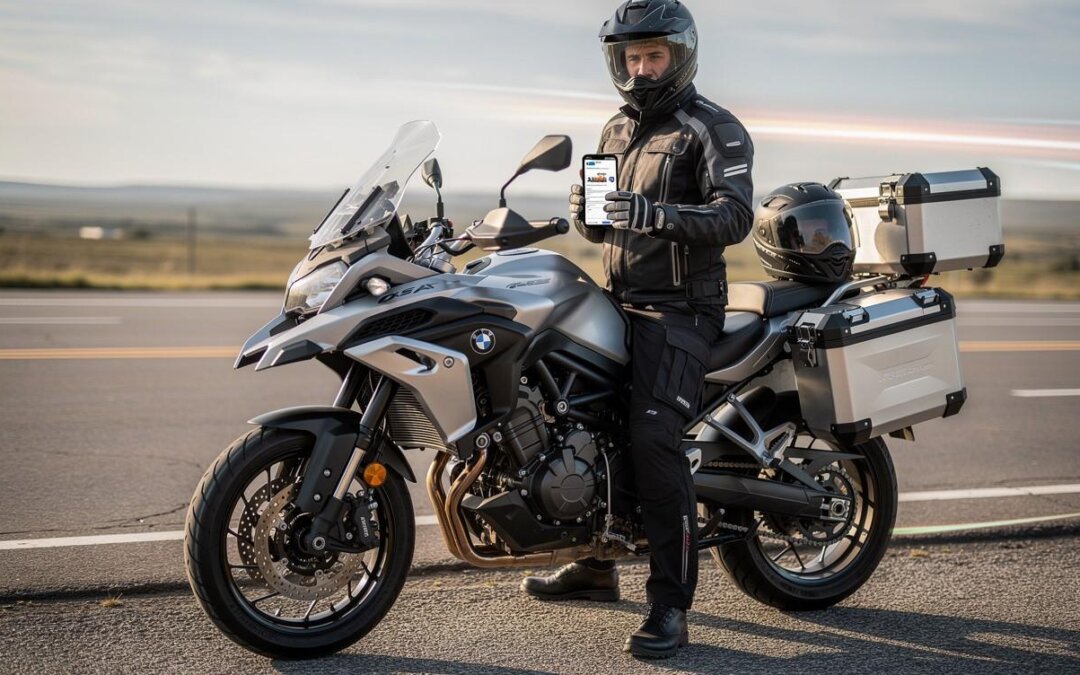
Motorcycle insurance for touring is fundamentally different from standard coverage. Most riders don’t realize their regular auto policy leaves them exposed on multi-state trips.
At Leslie Kay’s, Inc., we’ve seen too many touring riders face gaps in protection when they needed it most. The right policy covers your bike, your medical costs, and the unexpected situations that happen far from home.
Why Your Auto Policy Won’t Protect Your Touring Bike
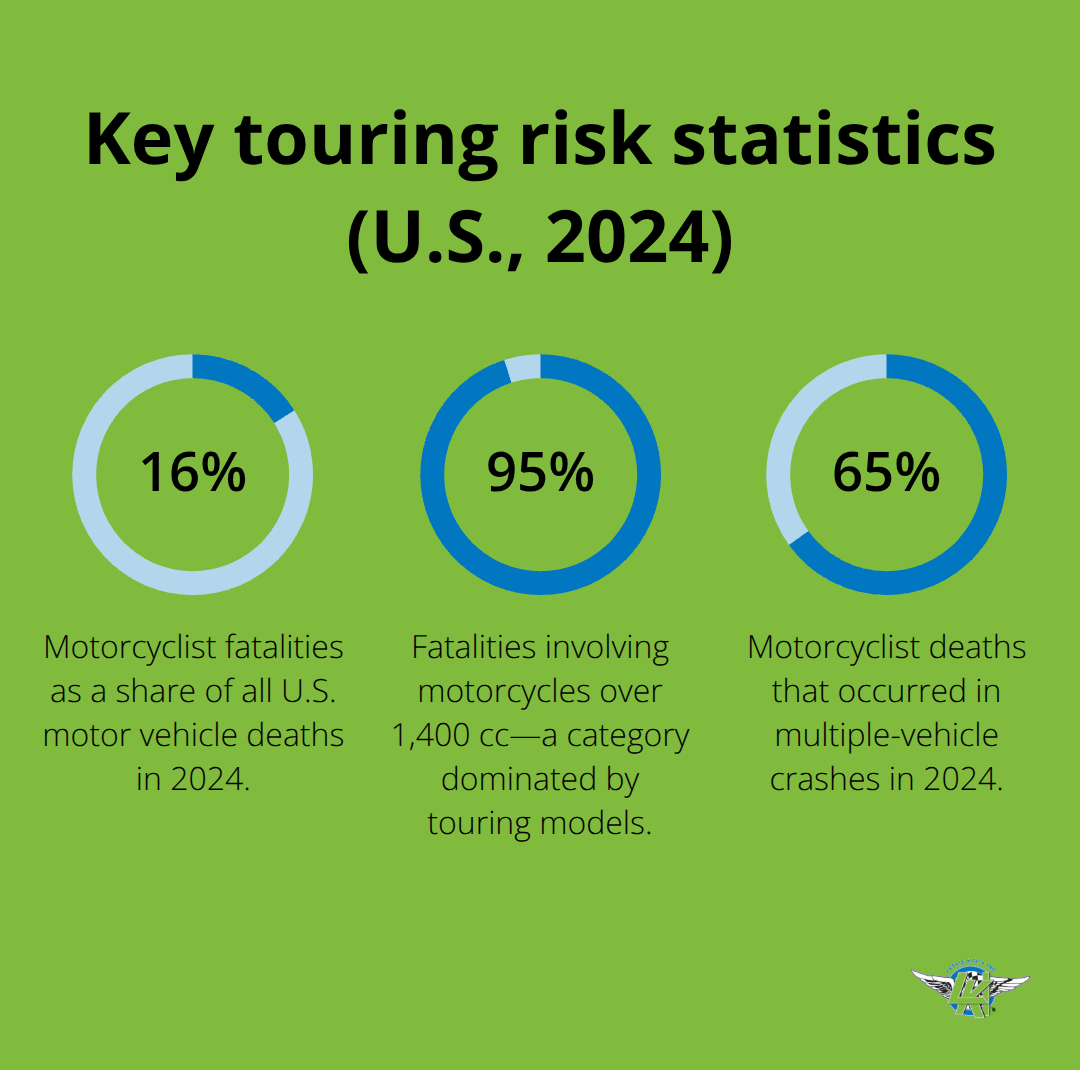
Your car insurance is worthless on a motorcycle. That’s the hard truth most touring riders learn too late. Auto policies explicitly exclude motorcycles because the risk profile is entirely different. When you cross state lines on a multi-week tour, that gap in coverage becomes a serious financial and legal problem. In 2024, 6,228 motorcyclists died in crashes across the United States, accounting for 16% of all motor vehicle fatalities. Touring riders face even steeper odds: motorcycles with engines over 1,400 cc accounted for 95% of fatally injured bikes that year, and touring bikes dominate this category. The exposure isn’t just about collisions either. Your bike sits in hotel parking lots, rest areas, and unfamiliar towns where theft and vandalism rates vary wildly by region.
Comprehensive coverage protects against these losses, but your auto policy won’t touch them. You need a dedicated motorcycle policy that travels with you across state lines and covers the specific hazards touring presents.
State Lines Create Coverage Gaps
Touring across multiple states requires insurance that’s portable and legally valid everywhere you ride. Many riders assume their home-state policy follows them, but coverage limits and requirements shift dramatically state to state. Liability coverage, which is mandatory in nearly every state, protects you if you cause injury or property damage to others on the road. The minimum limits vary: some states require as little as $15,000 in bodily injury coverage, while others demand $25,000 or more. If you’re underinsured and cause a serious accident in a state with higher minimums, you’re personally liable for the gap. Additionally, 65% of motorcyclist deaths in 2024 occurred in multiple-vehicle crashes, according to IIHS data, meaning your liability exposure is real and substantial. Your touring policy must cover all states on your itinerary, not just your home state. This is where many riders trip up: they purchase cheap coverage in their home state and discover mid-tour that it doesn’t apply in neighboring states or that coverage limits fall short.
Medical Costs and Roadside Reality
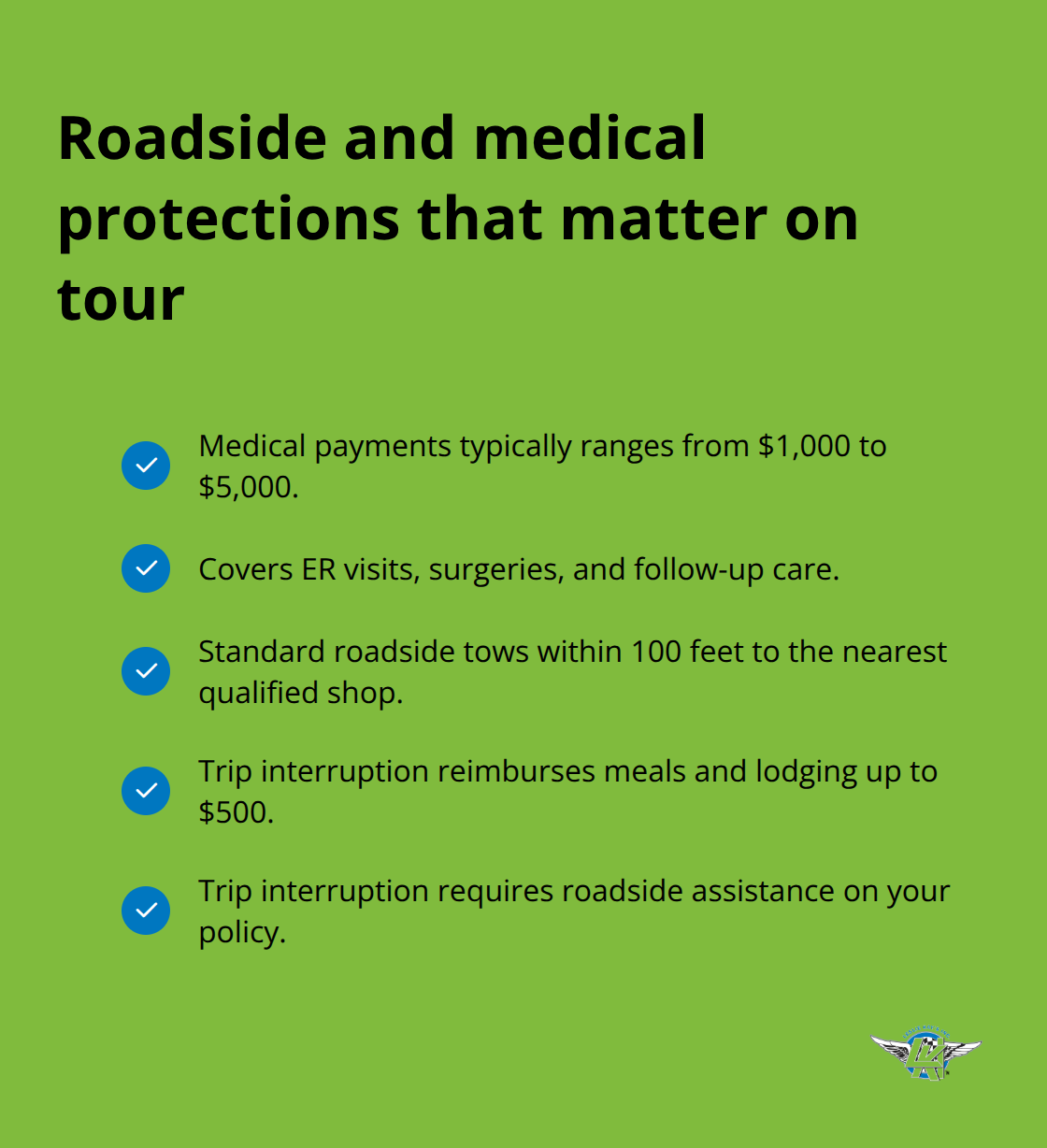
Touring means you’re far from your home hospital and regular doctor. If you crash or need emergency care, medical payments coverage reimburses your treatment costs directly, regardless of fault. This coverage typically ranges from $1,000 to $5,000 depending on your policy, and it covers emergency room visits, surgeries, and follow-up care. Roadside assistance is equally practical: if your bike breaks down 200 miles from the nearest dealer, towing to a qualified repair shop becomes essential. Standard roadside assistance covers towing within 100 feet of the roadway and transports your bike to the nearest repair facility. Some policies also offer trip interruption coverage, which reimburses meals and lodging up to $500 if your bike fails and you’re stranded mid-tour. That coverage requires roadside assistance to be added first.
Without these protections, a mechanical failure or accident transforms a touring adventure into a financial disaster. You’ll pay out of pocket for towing, hotels, and meals while your bike sits broken hundreds of miles from home.
What Coverage Actually Travels With You
Comprehensive and collision coverage protect your bike itself-not just your liability to others. Comprehensive coverage pays to repair or replace your touring bike after non-collision events such as hitting an animal or severe weather. Collision coverage covers damage to your bike from accidents, regardless of fault. Together, these two coverages (along with medical payments and roadside assistance) form the backbone of real touring protection. The challenge is that most standard policies don’t automatically include all of these options, and some riders skip them to save money. That decision often backfires when a breakdown or accident happens far from home. An independent agency that specializes in motorcycle coverage can help you understand which coverages actually matter for your specific routes and bike. They shop multiple carriers to find policies that travel with you and cover the real hazards you’ll face on extended tours.
What Coverage Actually Protects Your Touring Bike
Comprehensive and Collision: The Foundation of Bike Protection
Comprehensive and collision coverage form the foundation of real bike protection, but most touring riders misunderstand what each one actually covers. Comprehensive coverage pays to repair or replace your bike after non-collision events like hitting an animal, severe weather, theft, or vandalism. Collision coverage handles damage from accidents regardless of who caused them. These two coverages carry different deductibles, and raising your deductible from $500 to $1,000 can lower your premium significantly. That trade-off makes sense for experienced touring riders with solid emergency savings, but it doesn’t make sense for someone financing their bike. If your lender requires comprehensive and collision (which most do), you’ll need to balance the deductible against your actual financial cushion.
Protecting Your Bike’s True Value
Accessories coverage can include up to $2,000 in modifications depending on your state, so if you’ve upgraded your touring bike with saddlebags, custom seats, or electronic equipment, you must disclose those modifications when quoting. The insurer needs to know your bike’s true replacement value, not just the base MSRP. Failing to report upgrades leaves you underinsured and creates claim disputes when you need the money most.
Uninsured and Underinsured Motorist Protection
Uninsured and underinsured motorist coverage protects you when someone else causes the crash but lacks insurance or carries insufficient limits. According to IIHS data, 65% of motorcycle deaths in 2024 occurred in multiple-vehicle crashes, which means you’re regularly exposed to other drivers. If an uninsured driver hits you and causes $15,000 in injuries, your uninsured motorist coverage pays the difference between what their insurance covers and your policy limits. Medical payments coverage is separate and more straightforward: it reimburses your medical expenses up to the policy limit regardless of fault, covering emergency room visits, surgeries, and follow-up care without requiring you to prove someone else caused the crash.
Roadside Assistance: Your Lifeline on Tour
Roadside assistance is the coverage that actually prevents disasters on tour. Standard roadside assistance tows your bike within 100 feet of the roadway to the nearest qualified repair shop at no cost to you. Trip interruption coverage reimburses meals and lodging up to $500 if your bike breaks down mid-tour and you’re stranded, but this coverage requires roadside assistance to already be on your policy. Without roadside assistance, a mechanical failure 200 miles from home becomes a $1,000+ expense out of your pocket. A breakdown in an unfamiliar state transforms your adventure into a financial and logistical nightmare.
Matching Coverage to Your Specific Routes
The coverage limits and deductibles that work for a weekend rider don’t work for someone crossing five states over three weeks. Your routes, bike value, and financial situation all shape which deductibles and coverage limits actually make sense. An independent agency that specializes in motorcycle coverage can help you evaluate these decisions rather than letting you guess or skip protections to save $10 per month. The next chapter covers how to evaluate your specific needs and compare policies that actually travel with you across state lines.
Matching Your Policy to Your Actual Touring Plans
Know Your Bike’s True Replacement Cost
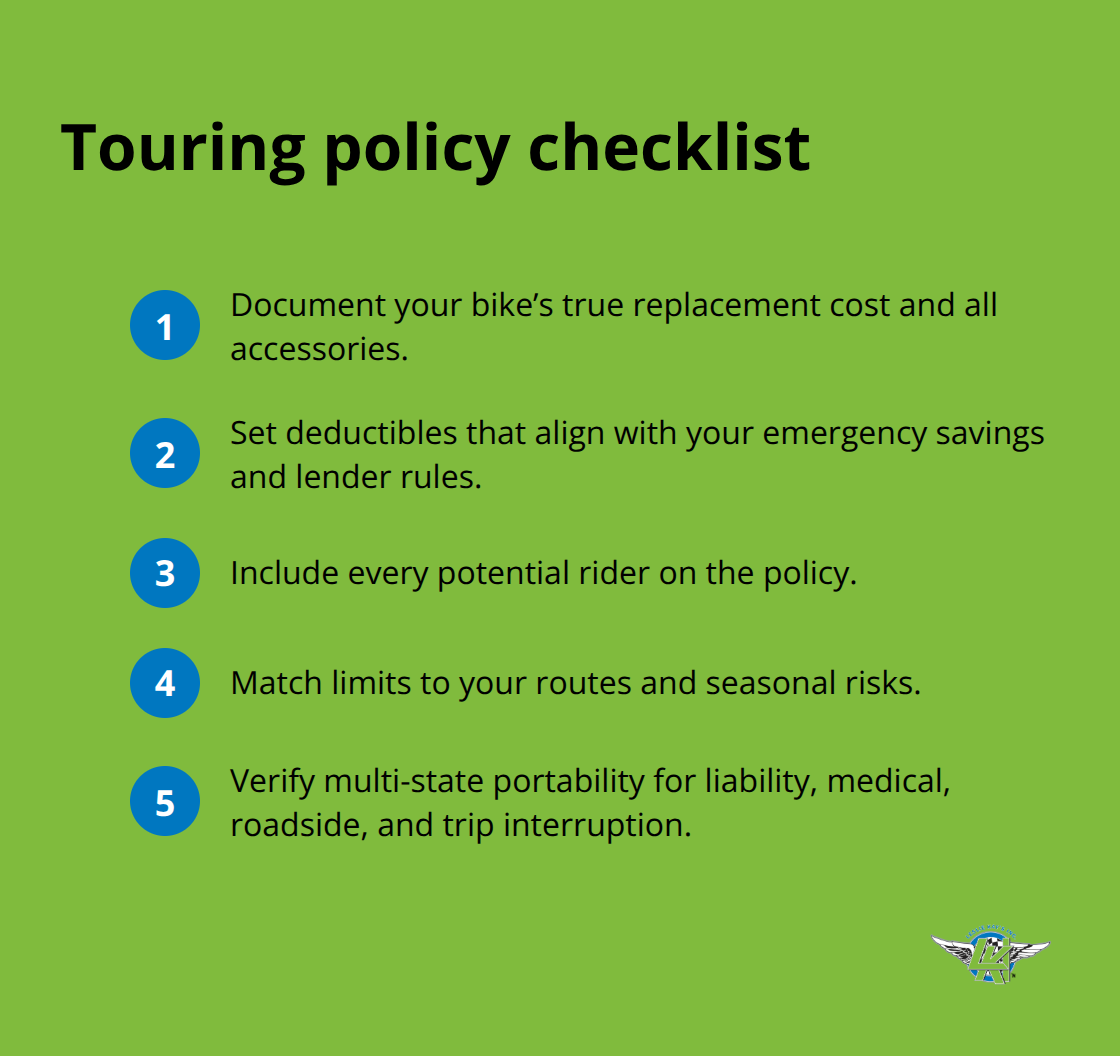
Choosing the right touring policy starts with honest answers about your bike’s value and your riding patterns. Most riders underestimate what their motorcycle actually costs to replace. If you own a Honda Gold Wing, BMW K 1600, or Harley-Davidson Road Glide, the MSRP alone doesn’t capture the true replacement cost when you factor in saddlebags, GPS systems, custom seats, and electronics you’ve added over time. Disclose every modification and upgrade to your insurer when quoting, because comprehensive and collision coverage only protect what the insurer knows about.
If your touring bike carries accessories but you only reported the base value, you’ll face a claim denial or a significant shortfall when your bike needs replacement. Your VIN, year, make, and model should be ready before you call for a quote, along with a detailed list of any non-stock additions. Total Loss Replacement coverage can replace a totaled bike with the current MSRP of a new model rather than the depreciated actual cash value, which protects you against the steep depreciation that hits motorcycles during the first few years of ownership.
Evaluate Your Deductible Strategy
Raising your deductibles from $500 to $1,000 can lower your premium significantly, but this trade-off only works if you have genuine emergency savings to cover that out-of-pocket expense when your bike breaks down far from home. If you’re financing your motorcycle, your lender typically requires comprehensive and collision coverage with deductibles no higher than $1,000, which removes that decision from your control. Total Loss Replacement coverage costs more in premium but makes financial sense if you’re financing your touring bike or can’t afford a significant out-of-pocket replacement cost.
Account for Your Travel Routes and Seasonal Patterns
Your travel routes and seasonal patterns determine which coverage limits actually protect you. If you tour primarily in summer across the Northeast and Midwest, your exposure to theft and vandalism differs significantly from someone who winters in Florida or travels cross-country year-round. Theft rates and weather hazards vary by region, which directly affects your comprehensive coverage needs and deductible decisions. Many touring riders raise their deductibles to lower premiums, but this strategy only works if you have genuine emergency savings to cover a $1,000 or $1,500 out-of-pocket expense when your bike breaks down far from home.
Include All Potential Riders on Your Quote
Include all potential riders on your quote to avoid coverage gaps later, because a policy written for one rider won’t automatically extend protection to a spouse or friend who takes the bike out. Your insurer needs accurate information about everyone who will operate the motorcycle, not just the primary rider. This step prevents claim disputes and ensures that coverage applies when someone else sits in the saddle.
Verify Multi-State Coverage and Portability
Your policy must remain valid and fully enforceable across every state on your itinerary, not just your home state. Verify that liability limits meet or exceed the highest minimums on your route, and confirm that medical payments coverage, roadside assistance, and trip interruption benefits travel with you without reduction or exclusion. Multi-state coverage and portability matter more than most riders realize. An independent agency that specializes in motorcycle coverage shops multiple carriers to find policies that actually travel with you, rather than leaving you to guess whether your protection follows you across state lines.
Final Thoughts
Motorcycle insurance for touring demands planning that matches the reality of extended travel, not the assumptions of weekend riders. The coverage types we’ve outlined-comprehensive, collision, medical payments, uninsured motorist protection, and roadside assistance-work together to address the specific hazards you’ll face across multiple states and hundreds of miles from home. Each coverage type fills a gap that standard auto policies leave wide open, and skipping any of them creates exposure that can turn a mechanical failure or accident into a financial catastrophe.
The real challenge isn’t understanding what coverage exists; it’s matching the right combination to your actual bike, routes, and financial situation. A Honda Gold Wing touring the Northeast in summer faces different risks than a BMW K 1600 crossing the country year-round, and your deductible strategy, accessory coverage, and trip interruption limits should reflect your specific plans rather than generic recommendations. Most touring riders either over-insure and waste money on coverage they don’t need, or they under-insure and discover gaps when they’re stranded 300 miles from home.
An independent agency that specializes in motorcycle insurance for touring shops multiple carriers to find policies that actually travel with you across state lines and understand the difference between coverage that looks good on paper and protection that works when your bike breaks down in an unfamiliar state. We at Leslie Kay’s, Inc. shop multiple carriers to deliver customized policies that match your touring plans, not generic templates. Visit https://lesliekays.com to discuss your specific routes and bike, and let us help you build protection that travels as far as you do.
The information provided in this blog is for general informational purposes only and does not constitute legal, financial, or insurance advice. Coverage options, terms, and availability may vary. Please consult with a licensed professional for advice specific to your situation.
Artificial intelligence may have been used to generate text and images in some blog articles.