
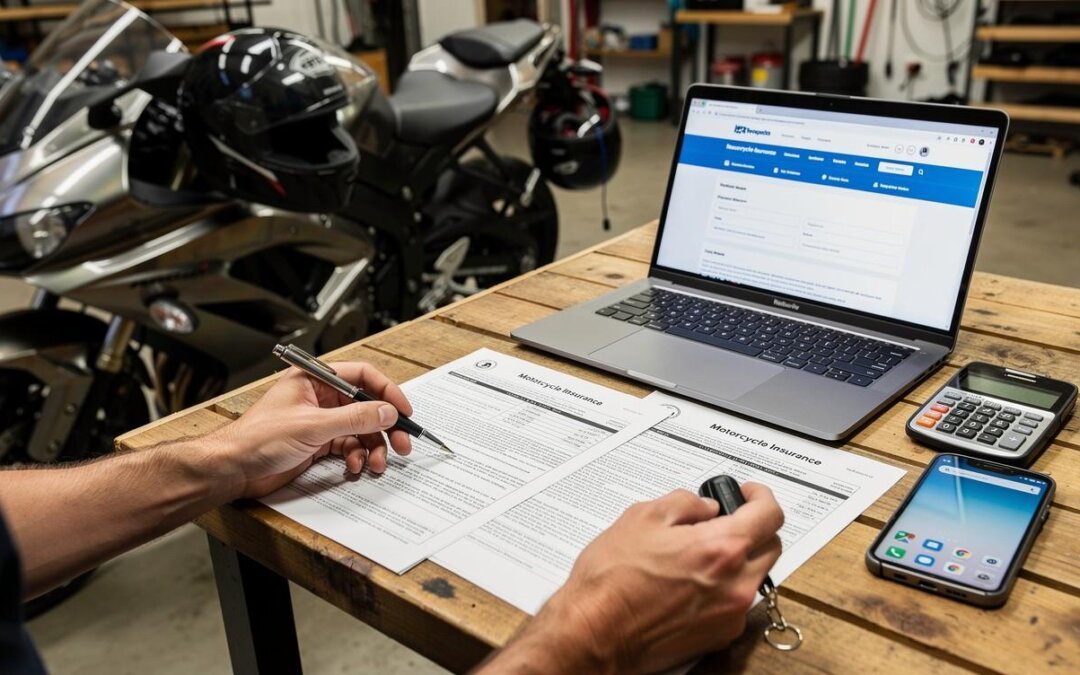
Motorcycle insurance shopping doesn’t have to be overwhelming. Most riders either pay too much or carry too little coverage, simply because they don’t know what to compare.
We at Leslie Kay’s, Inc. built this guide to show you exactly what matters when evaluating policies. You’ll learn how to gather quotes, spot common mistakes, and find the coverage that actually fits your needs.
What Matters Most When Comparing Policies
Liability Limits Set Your Financial Exposure
Liability limits directly determine your financial exposure when you’re at fault. Most states require minimum bodily injury liability coverage to protect against costs caused by injuries and property damage, according to the Insurance Information Institute. These minimums exist for a reason-they’re often not enough. If you cause a serious accident with injuries and property damage, you could face costs far exceeding these thresholds. Riders who carry only state minimums are betting that nothing catastrophic happens.
Try carrying at least $100,000 in bodily injury coverage; the premium difference is minimal compared to the protection gap. This single decision protects your assets far more effectively than chasing lower monthly payments.
Comprehensive and Collision Coverage Require Honest Assessment
Comprehensive covers theft, vandalism, and weather damage; collision covers crash damage. If you financed or leased your bike, your lender requires both. If you own it outright, many riders skip these thinking they’ll save money, but Insurify data shows full-coverage policies average around $179 per month nationally, while basic liability runs about $81 per month.
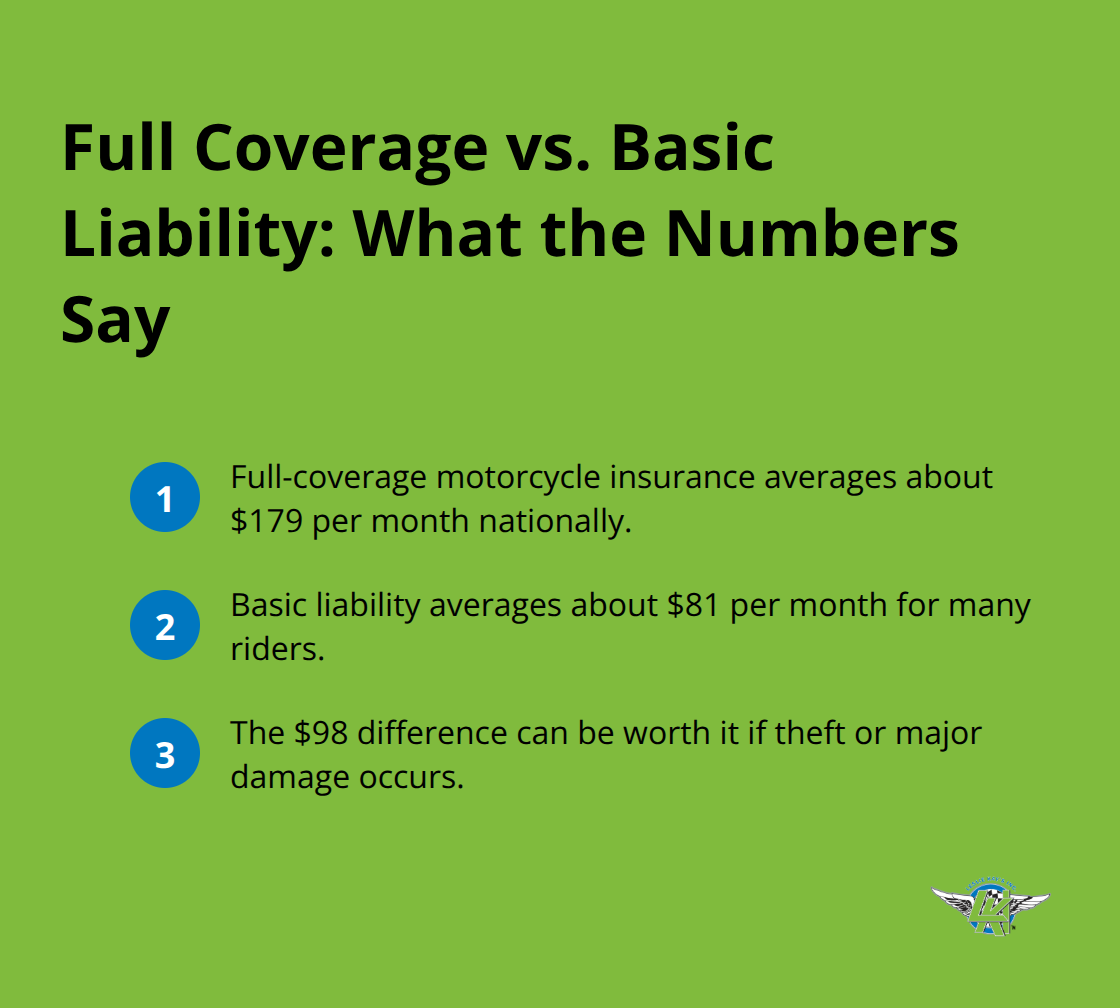
That $98 monthly difference becomes worthwhile if your bike gets stolen-125cc motorcycles are frequently targeted by thieves, especially in urban areas. The actual cash value payout from comprehensive coverage protects you far better than the false economy of skipping it.
Custom Parts and Accessories Need Specific Coverage Limits
Standard policies include automatic coverage up to $3,000 for aftermarket upgrades and custom equipment, but you can increase this to $30,000 if needed. If you’ve invested in high-end custom parts, you must increase this limit or face massive out-of-pocket costs in a claim. Original equipment manufacturer parts are used for repairs on bikes with comprehensive and collision coverage, which matters for resale value and reliability.
Deductibles Must Match Your Financial Reality
Raising your deductible from $250 to $1,000 lowers your monthly premium, sometimes by 15–20%, but this only makes sense if you can actually afford to pay that $1,000 when a claim happens. Navy Federal Credit Union research shows this is a significant decision point-many riders choose high deductibles to save $20 monthly, then face financial hardship when they need to file a claim. Your deductible should match your emergency fund, not your desire for the cheapest quote.
Location, Storage, and Optional Coverage Shape Real Costs
Location and storage matter far more than most riders realize. Postcode-level data from UK insurers shows premiums can range from £60–£90 monthly in some areas to £150 monthly in others like Southampton, with London typically higher. Garaging your bike versus street parking can cut premiums substantially. If you’re in a high-theft urban area, that $30 monthly savings from selecting minimum coverage evaporates the moment your bike gets stolen.
Optional coverage like total loss replacement (available from some carriers for bikes no more than one model year old) pays the full manufacturer’s suggested retail price if your new motorcycle is totaled, rather than depreciated actual cash value. This matters more than riders think-a $12,000 bike that’s one year old might have an actual cash value of $9,500, leaving you $2,500 short on a loan payoff. Guest passenger liability and medical payments coverage are frequently overlooked. If you regularly carry passengers, guest passenger liability covers their injuries up to your policy limits when you’re at fault; in some states this is bundled with bodily injury liability, in others it’s separate. Medical payments coverage handles medical expenses for you and passengers regardless of fault, which matters because motorcycle injuries are common and expensive.
Bundling motorcycle insurance with auto, home, or renter policies typically saves around 5% on auto coverage in most states according to industry data, making this a straightforward cost reduction worth pursuing. Once you understand what coverage actually protects you, the next step is knowing exactly what information insurers need and how to gather quotes efficiently.
How To Gather Quotes From Multiple Insurers
Provide Consistent Information Across All Quotes
Accurate quotes require you to submit the same information to multiple insurers, and most riders fail at this step. You need your motorcycle’s year, make, model, and VIN to receive a real quote, though some online tools let you start without a VIN and complete it later. Your riding history matters enormously-insurers ask about traffic violations, at-fault accidents, and prior claims because these directly predict claim likelihood. Riders under 25 face substantially higher premiums than those over 30, and a single speeding ticket can increase your rate by 10–15% depending on your state.
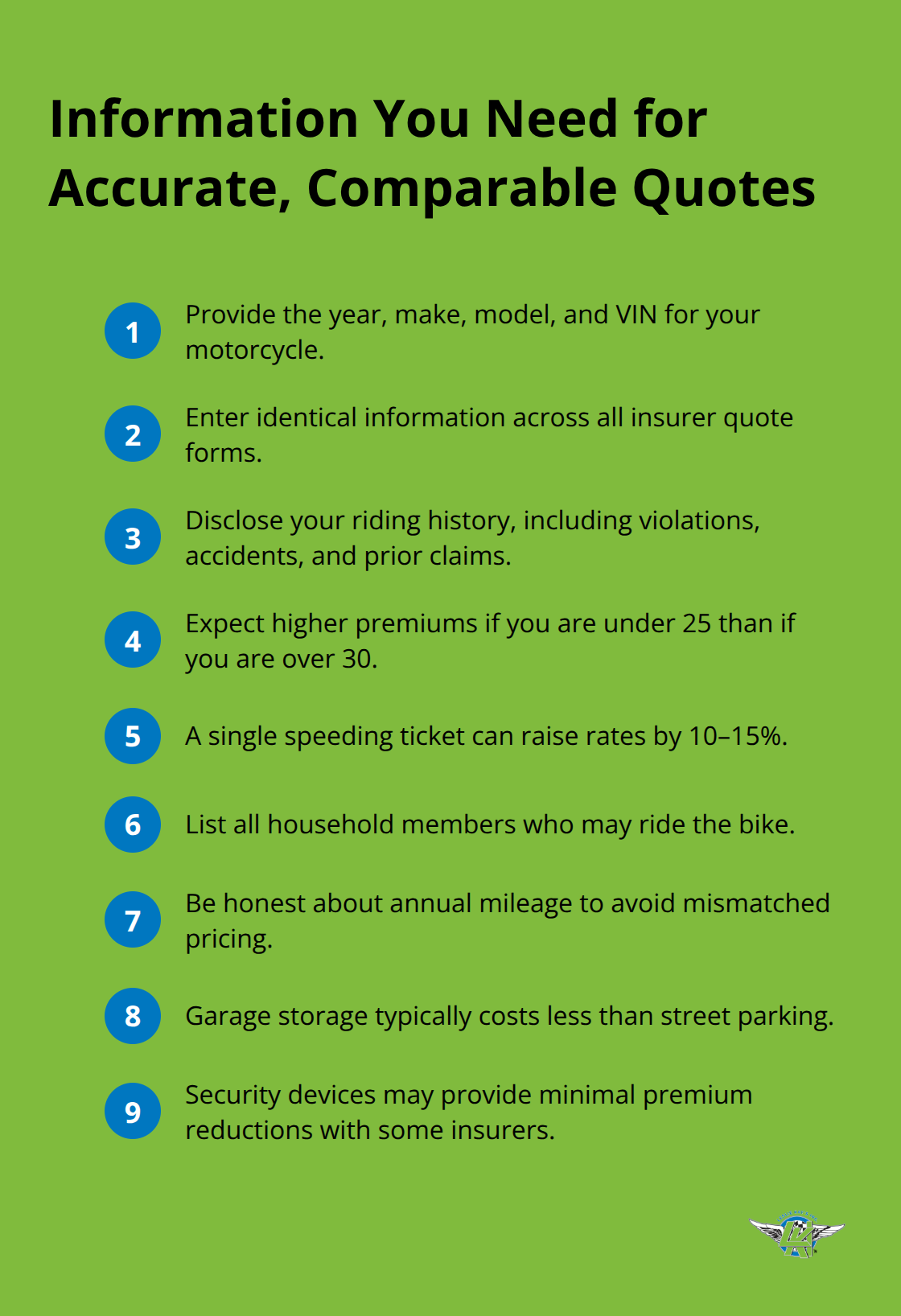
Your intended annual mileage also affects pricing; insurers worry about very low mileage because it suggests inexperience or irregular riding patterns, so be honest about how much you actually ride. List all household members who will ride the bike, since adding a younger or less experienced rider significantly raises premiums. Your storage method matters-street parking costs more to insure than garage storage because theft and weather damage risk is higher. Some insurers ask about security devices like GPS trackers or alarms, though data shows these don’t always reduce premiums; some riders see minimal savings despite installing them.
Use Online Quote Tools to Compare Rates Quickly
Online quote tools from Progressive and GEICO generate estimates in minutes, but the speed works against you if you rush through. Entering your VIN automatically populates accurate bike specifications, which prevents quote mismatches. Completing quotes from at least three different insurers reveals which companies price your specific profile favorably-rates vary wildly because insurers assess risk differently. One insurer might charge $600 annually while another quotes $900 for identical coverage on the same bike and rider, making comparison non-negotiable.
The online approach demands discipline: enter identical information into each tool, note the coverage levels and deductibles for each quote, and track which insurers offer bundling discounts. Most riders complete only one or two quotes and accept the first price, which typically costs them hundreds annually in unnecessary premiums.
Work With Independent Agents for Personalized Shopping
Independent agents shop multiple carriers simultaneously, saving you hours of individual quote entry. They understand state-specific requirements, know which insurers offer the best rates for your profile, and can explain why one policy costs more than another. Agents catch mistakes you’d make alone-like selecting minimum coverage when your situation demands comprehensive protection-and they handle the entire claims process after purchase.
Independent agents specialize in motorcycle coverage and shop multiple carriers to deliver customized policies tailored to your needs. The agent route eliminates the legwork and often uncovers bundling discounts you’d miss shopping alone. Completing quotes takes 30 minutes online or 15 minutes with an agent; the choice depends on whether you value speed or personalized guidance. Once you have multiple quotes in hand, you’ll spot patterns in pricing and coverage-but many riders then make critical mistakes that undermine all this comparison work.
Common Mistakes That Cost Riders Thousands
Choosing Minimum Coverage Without Assessing Your Actual Risk
Most riders optimize for the wrong variable when selecting policies: they chase the absolute cheapest option and move forward. This impulse costs riders money repeatedly. Navy Federal Credit Union research shows that riders selecting minimum coverage to save $20–30 monthly often face financial disaster when a claim happens. A 125cc motorcycle stolen from street parking costs around $2,000–3,000 to replace; if you skipped comprehensive coverage to save $25 monthly, you spent $300 annually to avoid covering a $2,500 loss. That math fails instantly.
The real mistake isn’t selecting minimum coverage in isolation-it’s selecting minimum coverage without honestly assessing your actual risk. If your bike lives in a locked garage in a rural area with zero theft history, basic liability coverage makes sense. If your bike sits on a city street in a high-crime postcode, comprehensive coverage becomes mandatory, not optional. Insurify data shows full-coverage policies average $179 monthly versus $81 for basic liability. That $98 difference disappears the moment theft happens in your neighborhood.
Underestimating Custom Parts and Accessories Exposure
Riders catastrophically underestimate custom parts exposure. Standard policies include $3,000 automatic coverage for aftermarket upgrades, which sounds adequate until you total a bike with $8,000 in custom wheels, exhaust, and suspension work. You’ll pay $5,000 out of pocket because you never increased the equipment coverage limit. Increasing coverage to $5,000 or $10,000 costs roughly $50–100 annually-a trivial premium compared to absorbing thousands in uninsured custom parts.
Original equipment manufacturer parts are used for repairs on bikes with comprehensive and collision coverage, which matters for resale value and reliability. If you’ve invested in high-end custom parts, you must increase this limit or face massive out-of-pocket costs in a claim. This single oversight transforms a manageable premium into a financial catastrophe.
Ignoring Discounts That Compound Savings Substantially
The final widespread mistake involves ignoring available discounts that compound savings substantially. Bundling motorcycle insurance with auto, home, or renter policies typically saves around 5% on auto coverage in most states according to industry data, yet most riders never ask about bundling when comparing quotes. Completing a motorcycle safety course reduces premiums with most insurers, sometimes by 10–15%, but riders skip this because they underestimate the financial benefit.
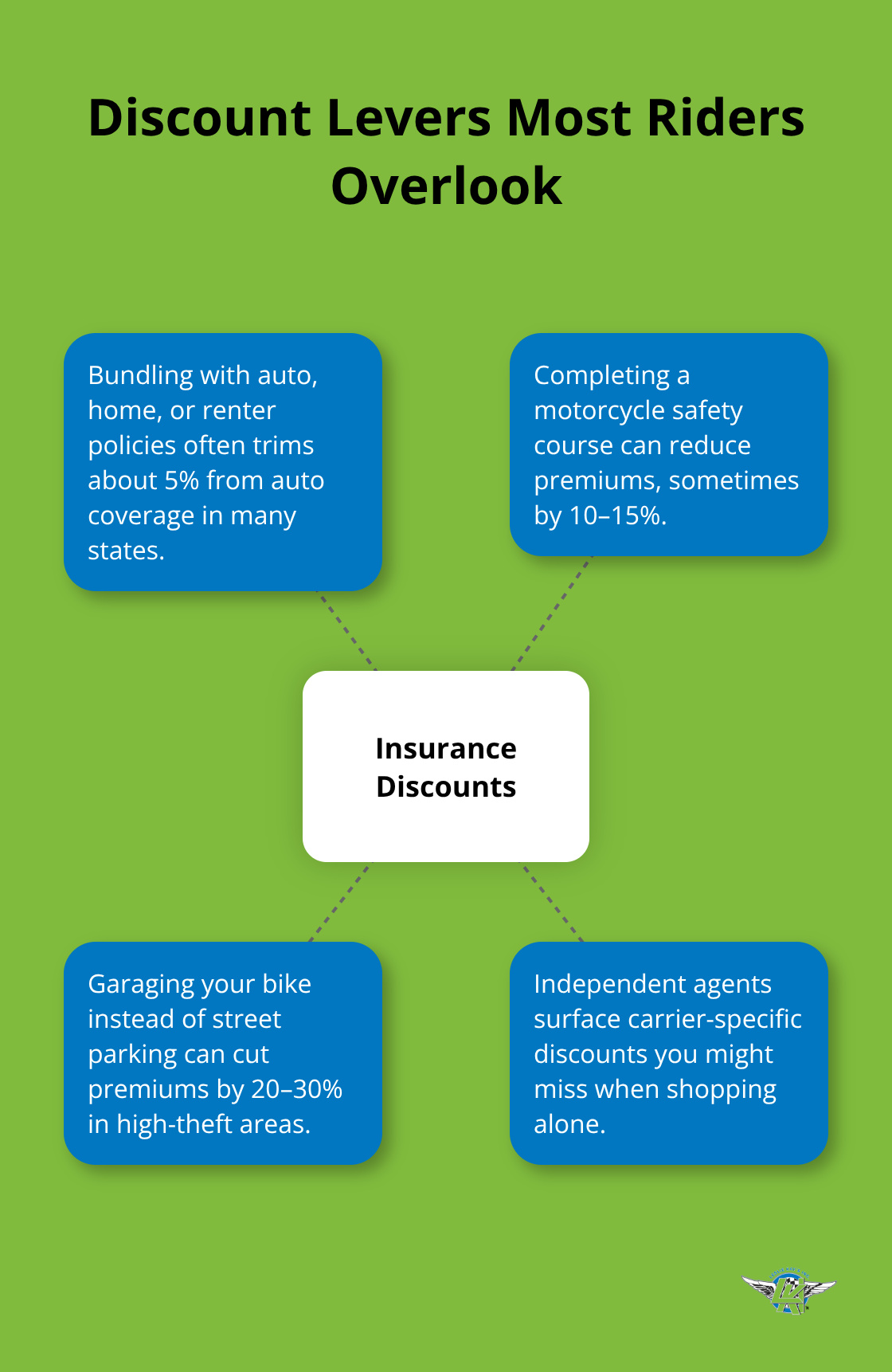
Garaging your bike versus street parking can cut premiums by 20–30% in high-theft areas-yet riders accept street parking as unchangeable instead of treating secure storage as a premium reduction strategy. Progressive reports that 1 in 3 motorcycle riders choose their company, and agents there consistently see riders leave discounts on the table by not mentioning bundling, safety training, or storage improvements during the quote process.
Independent agents actively probe for these discount opportunities because they shop multiple carriers simultaneously and know exactly which insurers reward specific behaviors. The rider who takes a safety course, bundles policies, and garages their bike might pay $400 annually instead of $650-a 38% reduction that compounds year after year. This requires no sacrifice in coverage; it simply requires asking the right questions during the quote process and following through on actions that insurers reward.
Final Thoughts
Motorcycle insurance shopping requires you to compare three critical elements: coverage types that match your actual risk, deductibles aligned with your financial capacity, and discounts you actively pursue. Riders who skip this comparison pay hundreds more annually than those who invest 30 minutes gathering quotes from multiple insurers. The difference between selecting minimum coverage and comprehensive protection often costs less than $100 monthly, yet protects thousands in assets.
Gather your motorcycle’s year, make, model, and VIN, then complete quotes from at least three different insurers using identical information. Track which companies offer bundling discounts, safety course reductions, and storage-based savings. If you’ve invested in custom parts, increase equipment coverage limits before requesting quotes, and calculate whether raising your deductible actually makes sense given your emergency fund rather than accepting high deductibles simply to lower monthly payments.
Independent agents shop multiple carriers simultaneously, understand state-specific requirements, and identify discounts you’d miss shopping alone. They catch coverage gaps before claims happen and handle the entire process after purchase. Contact us at Leslie Kay’s, Inc. to discuss your motorcycle insurance shopping options with agents who understand motorcycle riders and the protection you actually need.
The information provided in this blog is for general informational purposes only and does not constitute legal, financial, or insurance advice. Coverage options, terms, and availability may vary. Please consult with a licensed professional for advice specific to your situation.
Artificial intelligence may have been used to generate text and images in some blog articles.