
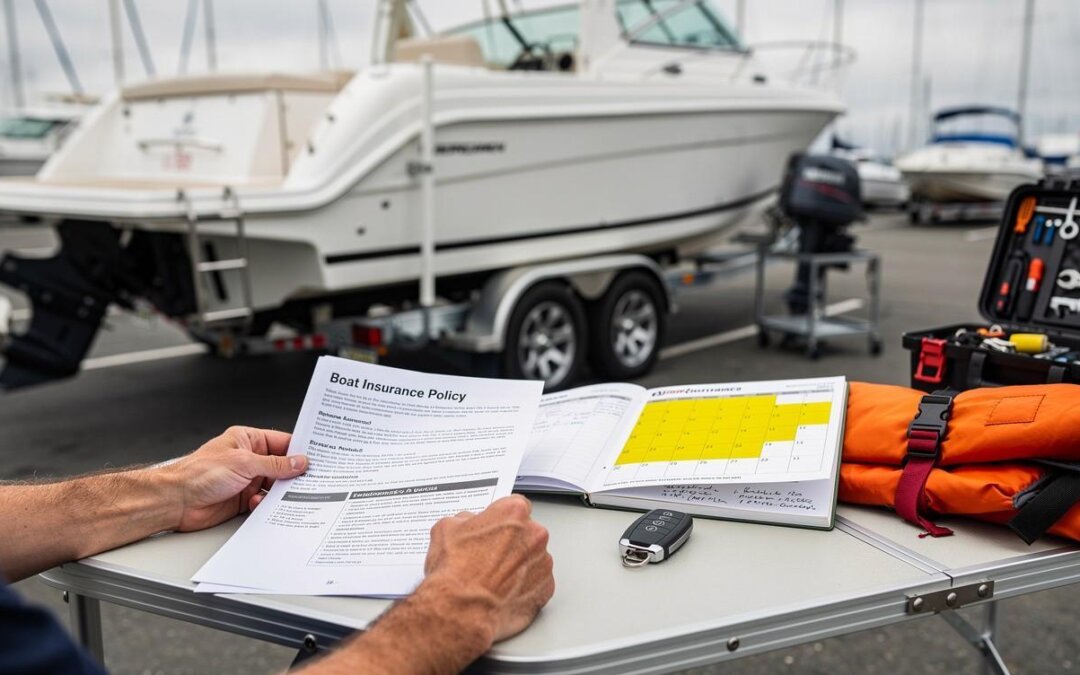
Most boat owners shut down their insurance during winter months, paying for coverage they don’t use. At Leslie Kay’s, Inc., we’ve seen firsthand how a seasonal boat insurance plan solves this problem by letting you pay only when your boat is in the water.
This guide walks you through everything you need to know about activating coverage when boating season starts and adjusting it based on how you actually use your boat.
What Seasonal Coverage Actually Protects
Understanding Your Protection Window
Seasonal boat insurance covers your vessel during active boating months, typically May through September, though your specific window depends on your region and how you use your boat. The coverage includes liability protection if you damage someone else’s property or injure another person while operating your boat, physical damage coverage for collisions and weather events, theft protection, and medical payments for injuries sustained aboard. Many seasonal plans also include uninsured boater coverage, which handles accidents involving uninsured operators, and towing and assistance services if your engine fails or you run aground.
Why Seasonal Plans Cost Less
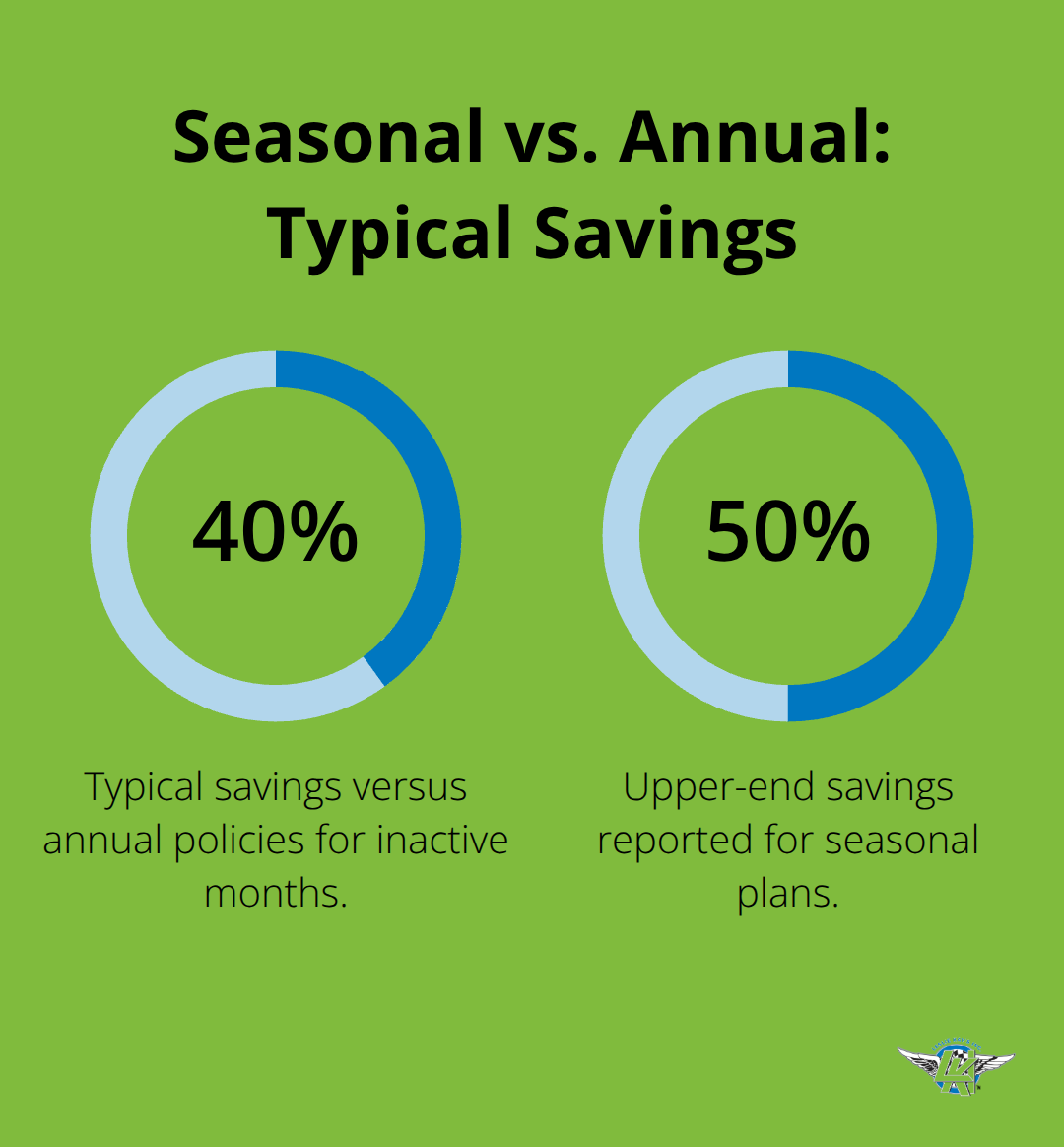
Year-round policies keep you paying even when your boat sits idle in winter storage, but seasonal plans activate only during months when you actually launch your boat, then pause coverage during dormant periods. Insurance companies recognize that a boat in dry storage faces dramatically different risk than one navigating open water. The difference in claims frequency between active and inactive seasons is substantial, which is why insurers structure seasonal options to reflect actual usage patterns rather than forcing full-year premiums on inactive vessels. Most boat owners benefit from switching coverage on and off because seasonal plans typically cost 40 to 50 percent less than annual policies when you account for the months your boat remains stationary.
Timing Your Activation and Deactivation
You should activate coverage roughly two weeks before you plan to launch your boat, accounting for any prep work, inspections, or test runs before hitting the water. Deactivation typically happens in late September or early October when most recreational boating declines, though charter operators or fishing enthusiasts in warmer climates may extend coverage through November. Activation timing determines your actual protection window, and you need to review your specific boating calendar each year because activation and deactivation dates directly impact both your premium costs and coverage gaps.
Avoiding Coverage Gaps and Overpayment
If you activate coverage too early or let it run too late into dormant months, you pay for protection you won’t use. Conversely, activating too late creates an uninsured period if you launch before your policy kicks in, leaving you exposed to liability claims and physical damage losses. Getting the timing right (within that two-week window before launch and the September-October window for shutdown) protects both your wallet and your boat. The next section examines how different boating activities affect your coverage needs and premium calculations.
Cost Savings and Flexibility of Seasonal Plans
Lower Premiums During Off-Season Months
Seasonal boat insurance creates real savings because you stop paying premiums during months when your boat never touches water. Most boat owners pay between 40 and 50 percent less annually by switching to seasonal plans compared to year-round policies, according to insurance data on usage-based pricing. If your annual year-round premium runs $1,200, seasonal coverage could cost around $600 to $720 for the active months only. That difference matters, especially when you multiply it across multiple seasons. The savings grow even larger if you own a second or third vessel, since each boat can operate on its own seasonal schedule. Regional differences in boating seasons and your specific boat type determine the exact percentage, but the 40 to 50 percent reduction represents a reliable baseline for recreational boaters in temperate climates.
Adjusting Coverage Based on Usage Patterns
Your actual coverage needs shift throughout the year based on how you use your boat, and seasonal plans let you adjust without penalty. A recreational angler who fishes weekends from May through August pays only for those months, then removes coverage when winter storage begins. Someone who runs a charter operation extending into October or November can activate coverage exactly when needed and pause it when business slows. This flexibility means you’re not subsidizing risk periods that don’t apply to your situation. Insurance companies price seasonal plans by recognizing that a boat in a climate-controlled storage facility generates virtually zero claims compared to one navigating open water during peak season. You control the activation and deactivation dates within reasonable windows, so your premium directly reflects your actual exposure timeline rather than forcing you into an arbitrary 12-month cycle.
Comparing Seasonal versus Annual Insurance Costs
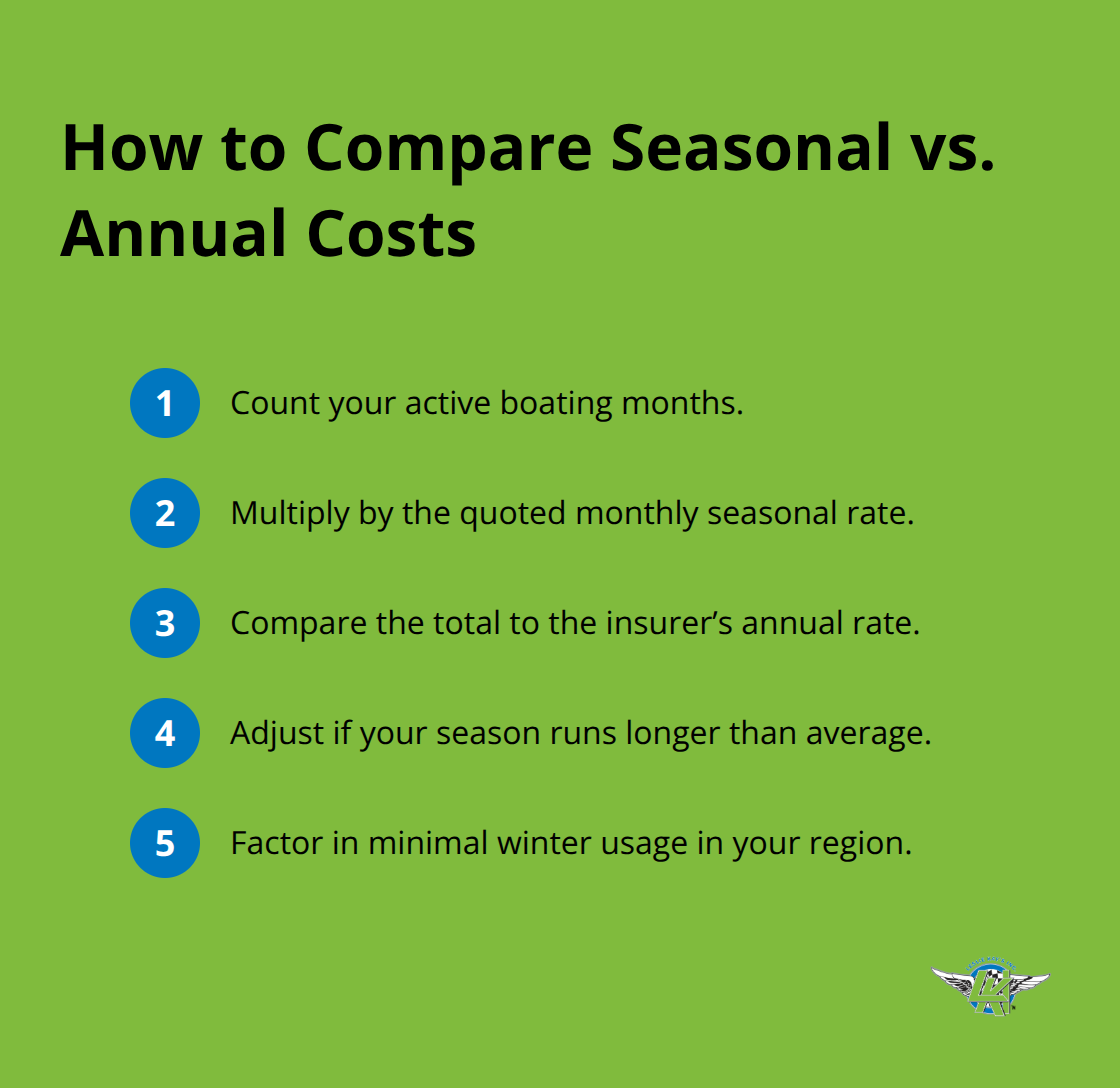
Comparing seasonal and annual costs requires looking at your specific boating calendar: calculate the number of active months, multiply by the monthly seasonal rate your insurer quotes, then compare that total to their annual rate. Most boat owners find that seasonal coverage saves money even when they extend their boating season longer than average, because the winter months contribute disproportionately to annual premiums despite minimal boat usage.
The next section examines how different boating activities affect your coverage needs and premium calculations, since a fishing charter operation carries different risk profiles than weekend recreational boating.
Coverage Options for Different Boating Activities
Matching Your Activities to Coverage Requirements
Recreational boaters, fishing charter operators, and water sports enthusiasts face completely different risk profiles, which means your seasonal coverage should match exactly what you do on the water. A weekend angler running a small fishing operation needs liability limits that protect against a client’s injury claim, while someone towing wakeboarders behind a speedboat faces exposure to high-speed accidents and spectator injuries. Boat owners often pay for coverage they don’t need or skip protection for activities their basic policy excludes entirely. The key is mapping your specific activities to coverage requirements rather than accepting a generic seasonal plan that leaves gaps.
Recreational Boating Coverage Needs
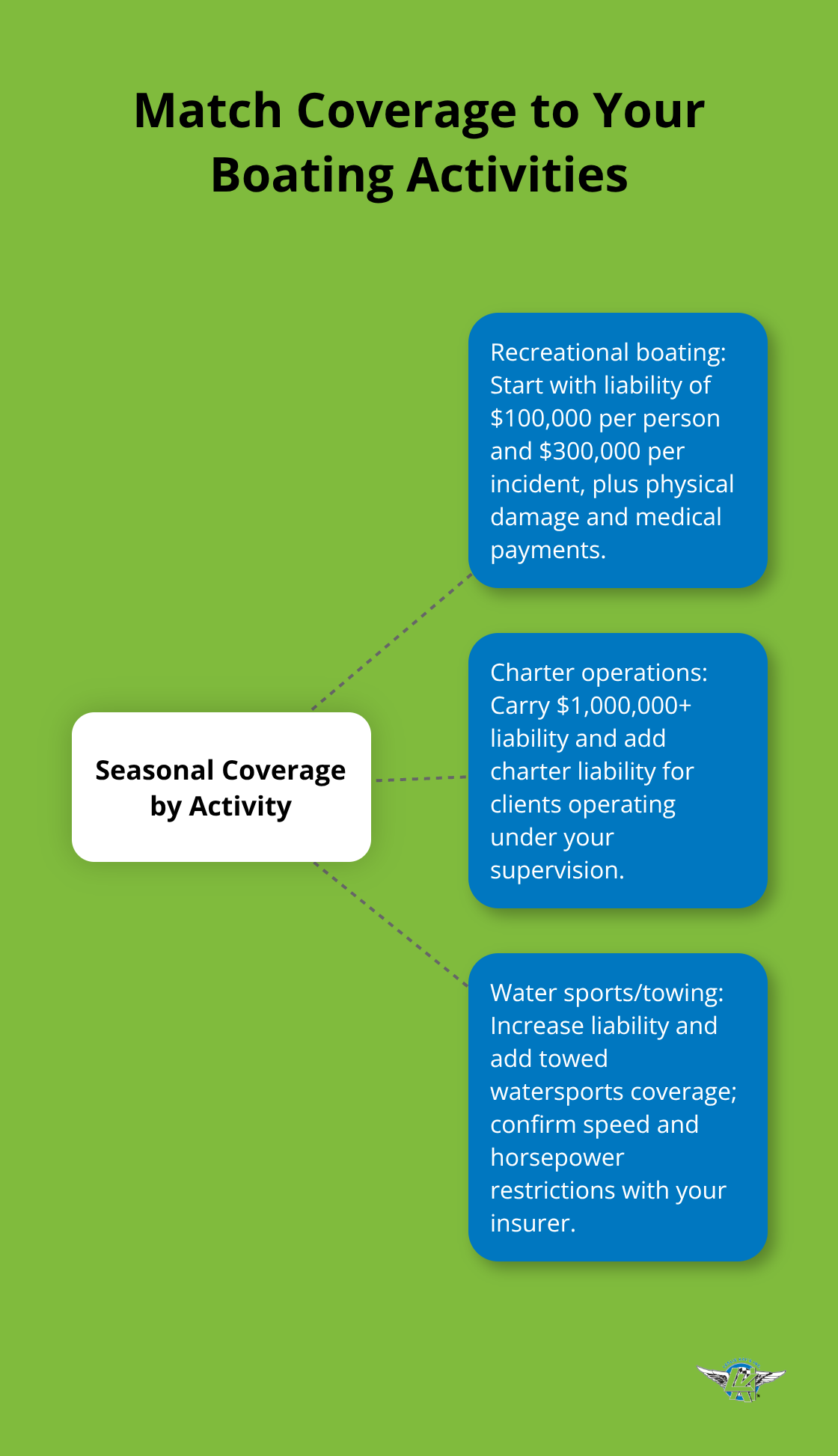
Recreational boaters who spend weekends cruising calm lakes or coastal waters typically need liability coverage starting at $100,000 per person and $300,000 per incident, which protects you if you collide with another vessel or cause injury to a passenger. Physical damage coverage for collisions and weather events matters significantly if you operate near rocks, shallow areas, or during spring and fall when sudden storms hit without warning. Medical payments coverage of $1,000 to $5,000 per person covers immediate treatment for injuries on your boat, preventing situations where a guest’s hospital visit becomes a liability nightmare.
Charter and Commercial Fishing Operations
Fishing charter operations and commercial guide services require substantially higher liability limits, typically $1,000,000 or more, because each client represents a potential claim if they sustain injury while under your supervision. Charter operators also need coverage for charter liability specifically, which protects you when clients operate the boat under your instruction or supervision-a distinction that standard recreational policies often exclude. If you run multiple charter trips monthly, your seasonal activation window might extend from April through November, capturing the entire revenue season while avoiding premium payments during winter months when charter demand drops to nearly zero.
Water Sports and High-Performance Vessels
Water sports operations towing tubes, wakeboards, or skis demand higher liability limits and specific coverage for towed watersports, since insurers recognize that towed activities produce significantly higher injury claims than passive boating. Some insurers charge additional premiums for towing operations because the activity falls into a higher-risk category, but seasonal activation lets you add this coverage only during months when you actively tow rather than paying year-round for capability you use three months annually. High-performance boats running at speeds above 50 miles per hour often face additional premiums or coverage restrictions, so confirm your vessel’s horsepower and hull design with your insurer during the activation process to avoid surprises when a claim occurs.
Final Thoughts
Seasonal boat insurance plans deliver straightforward benefits that year-round policies cannot match. You pay only during months when your boat actually operates, cutting premiums by 40 to 50 percent compared to annual coverage. This approach eliminates the frustration of subsidizing protection for a vessel sitting idle in storage.
Choosing the right seasonal coverage requires matching your activities to appropriate limits. Recreational boaters need different protection than charter operators or water sports enthusiasts, and your seasonal plan should reflect exactly what you do on the water. A weekend angler requires different liability limits than someone running a commercial fishing operation, and towing activities demand specific coverage that standard recreational policies often exclude.
Getting started with a seasonal boat insurance plan means identifying your activation window two weeks before launch and your deactivation point when boating season ends in your region. Contact an agency that understands watercraft coverage and can shop multiple carriers to find competitive rates tailored to your situation. Visit Leslie Kay’s, Inc. to explore seasonal boat insurance options and get a quote based on your specific boating schedule.
The information provided in this blog is for general informational purposes only and does not constitute legal, financial, or insurance advice. Coverage options, terms, and availability may vary. Please consult with a licensed professional for advice specific to your situation.
Artificial intelligence may have been used to generate text and images in some blog articles.