
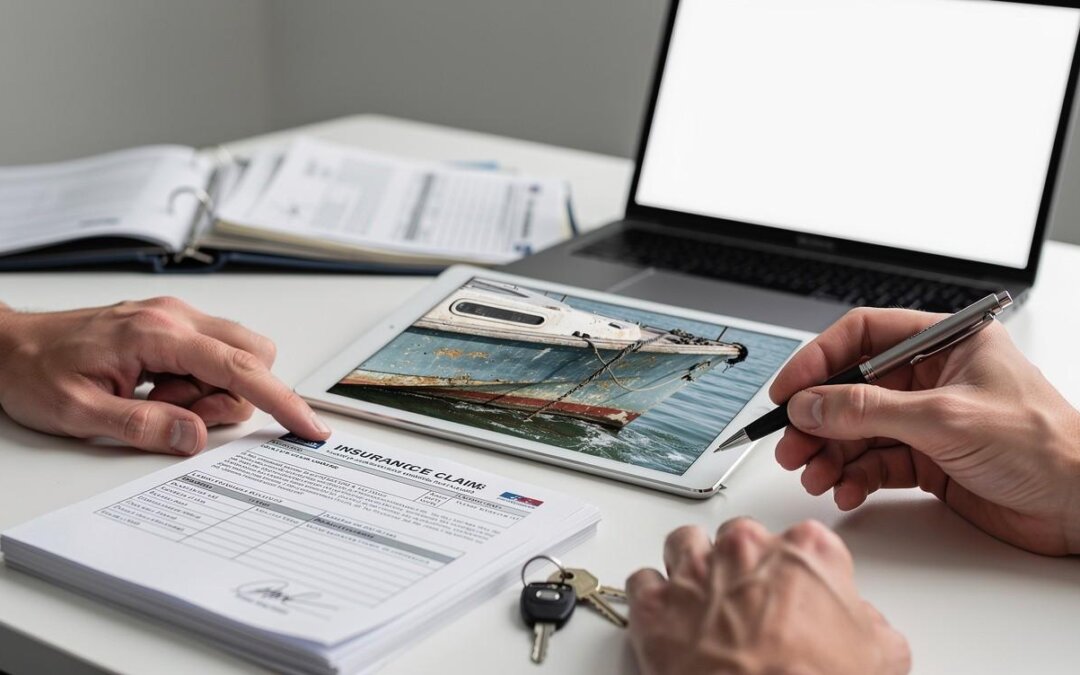
Filing a boat insurance claim doesn’t have to be stressful. We at Leslie Kay’s, Inc. know that understanding the boat insurance claims process from start to finish makes all the difference when you need to recover from damage.
This guide walks you through exactly what happens when you file a claim, what documentation you’ll need, and how long you can expect to wait for settlement.
What Your Boat Insurance Actually Covers
Hull, Liability, and Comprehensive Coverage Explained
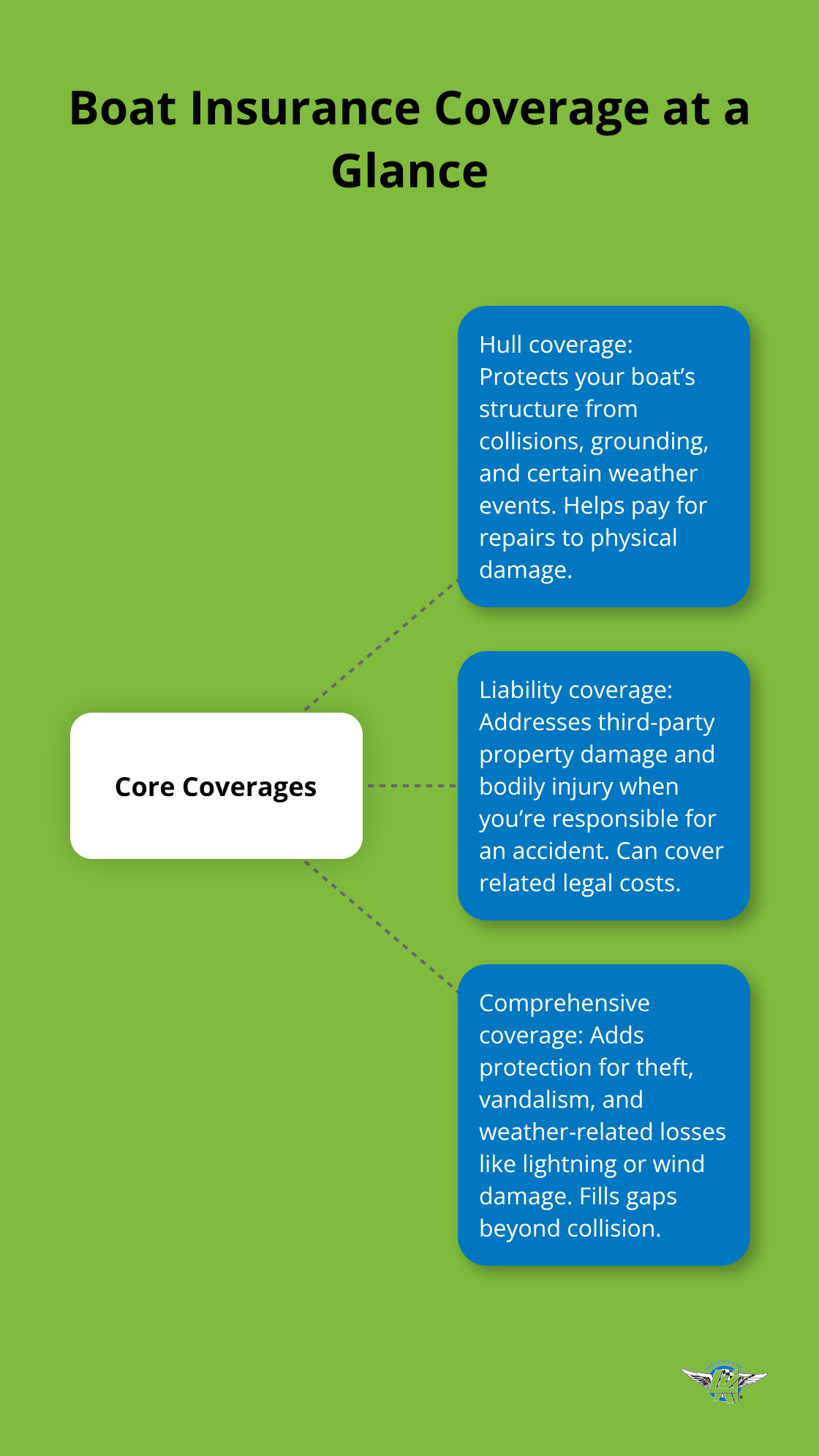
Most boat owners face coverage gaps only after damage strikes, which is far too late. Your boat insurance policy covers specific perils, and understanding exactly which ones apply to your vessel matters before you need to file a claim. Hull coverage protects against physical damage to your boat’s structure from collisions, grounding, or weather events. Liability coverage handles third-party property damage and bodily injury claims if you’re found responsible for an accident. Comprehensive coverage adds protection against theft, vandalism, and weather-related losses like lightning strikes or wind damage.
The distinction between marine policies and homeowners insurance matters significantly. Homeowners insurance does not cover boats-marine policies exist specifically because watercraft face unique risks that standard home policies exclude entirely. This specialized approach means your marine policy accounts for water-based hazards that land-based coverage ignores.
How Deductibles Work on Watercraft Claims
Deductibles on boat claims operate differently than you might expect. A standard deductible typically ranges from $250 to $1,000 for most losses, but named storm deductibles are usually a percentage of the home’s value, ranging from 1% to 10%. For a $200,000 boat, that means a potential $2,000 to $20,000 out-of-pocket cost before coverage kicks in. Theft and lightning deductibles commonly sit at 5 to 10 percent of hull value as well, making a $100,000 hull with a 10 percent theft deductible require $10,000 before reimbursement.
Endorsements like mechanical breakdown or haul-out coverage carry their own separate deductibles, which compounds your out-of-pocket responsibility during claims. This layered deductible structure requires careful review before an incident occurs.
Exclusions and Geographic Restrictions
Exclusions vary widely across policies, but most marine insurers exclude damage from wear and tear, poor maintenance, or mechanical breakdown unless you’ve added a separate endorsement. Geographic location affects coverage too-some policies restrict coverage in certain zones or during hurricane season unless you’ve selected named storm coverage. Reviewing your policy’s specific deductible structure and exclusion list before an incident prevents costly surprises when you’re already stressed about damage to your vessel.
Understanding these coverage details positions you to make informed decisions about your protection level. The next step involves knowing exactly what documentation you’ll need when you actually file a claim.
Filing Your Boat Insurance Claim
Act Fast and Report Immediately
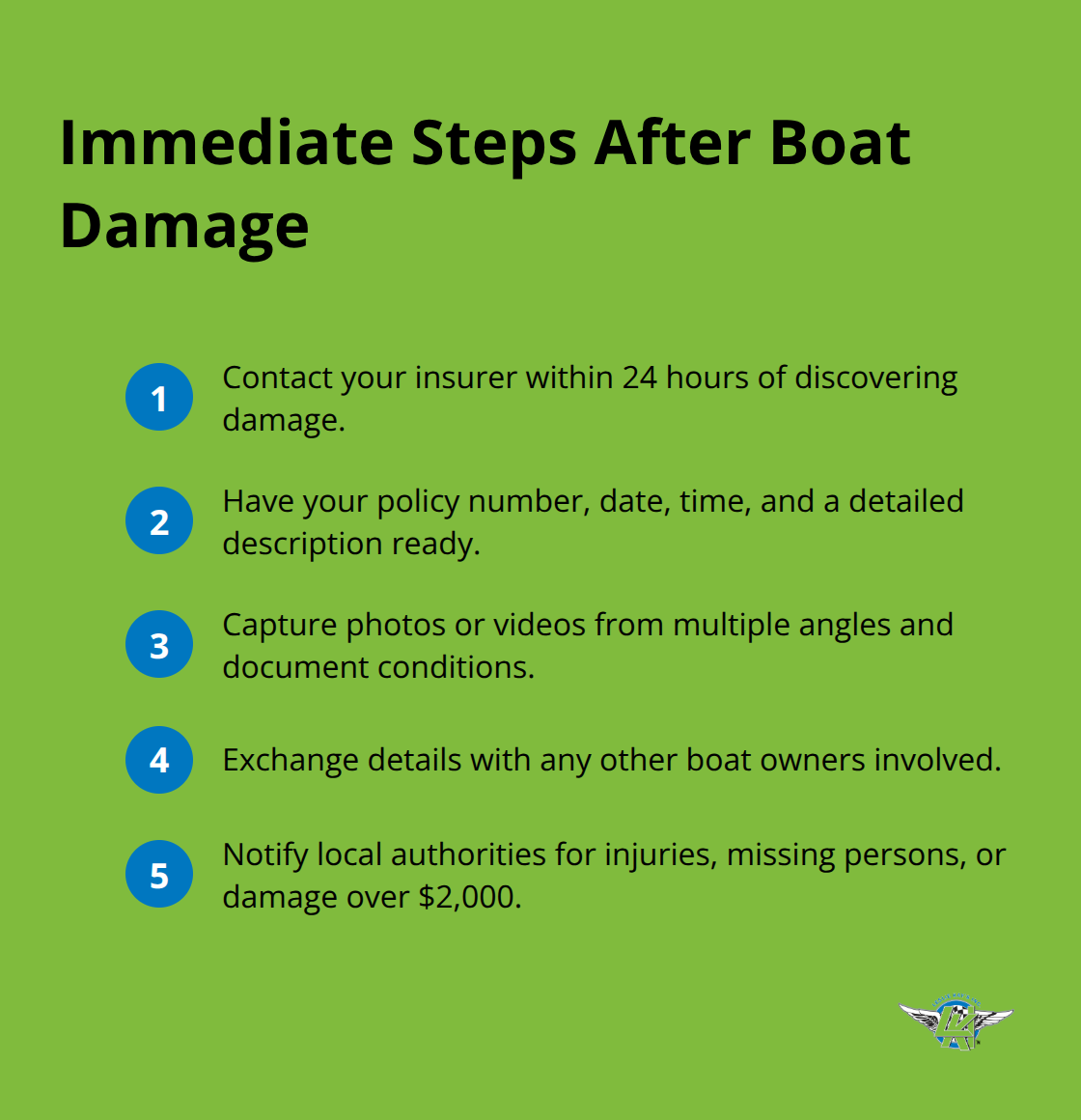
Speed matters more than most boat owners realize when damage occurs. Contact your insurer within 24 hours of discovering damage-most carriers offer 24/7 online or phone claim submission, so you won’t need to wait for business hours. Have your policy number ready and provide the date, time, and detailed description of what happened. Take photos or videos immediately while damage remains visible; capture the scene from multiple angles and document any weather conditions or environmental factors that contributed to the incident. If another boat was involved, obtain the owner’s contact information, insurance details, and notes about their vessel’s condition. For incidents involving injuries, missing persons, or damage exceeding $2,000, you must notify local authorities alongside your insurer-this requirement isn’t optional, and skipping this step can complicate your settlement significantly.
Gather Essential Documents Before Filing
Insurers request specific documents to verify your claim eligibility and process payment. Collect your boat’s title and proof of ownership documents before filing, as these form the foundation of your claim. If your boat is financed, contact your lender immediately since many lenders require repairs rather than cash settlements. Compile pre-damage photos showing your boat’s condition, maintenance records, recent upgrades, and any professional appraisals if available. Create an itemized inventory of onboard equipment and personal items with estimated values and purchase receipts. Obtain written repair estimates from certified marine repair shops-these establish a baseline for what your claim should cover and prevent disputes later.
Submit Thorough Documentation With Your Claim
The adjuster’s assessment depends entirely on the information you provide. Submit all damage estimates, medical bills if applicable, police or incident reports, and witness statements with your claim form. An adjuster will inspect your watercraft and evaluate damage through your photos, the on-site visit, and the information you provide, so the more thorough your documentation, the faster and more accurately they can assess your claim. For hurricane damage specifically, document pre-storm condition with comprehensive photos and videos, maintain records of hurricane preparedness actions your policy required, and preserve all post-damage media showing the extent of loss. Don’t assume the adjuster will know your boat’s unique features or recent repairs-provide this context explicitly so the repair estimate accounts for returning your vessel to its previous condition rather than just covering basic repairs.
Understand What Happens Next in Assessment
Once you submit your claim, the insurer moves into the evaluation phase. An adjuster will contact you to explain what your policy covers and how coverages apply to your damages. They become your main point of contact throughout the process and will schedule an inspection at a repair shop of your choice. The adjuster reviews the resulting estimate with you, clarifying how much repairs will cost and what you may owe. Understanding this assessment process helps you prepare for the conversations ahead and know what questions to ask when the adjuster reaches out.
From Inspection to Settlement
What Happens During the Inspection
The inspection phase determines your entire claim outcome, so understanding exactly what occurs during this step prevents misunderstandings later. When the adjuster schedules your inspection at the repair shop you’ve selected, they evaluate whether damage falls within your coverage and calculate what repairs will actually cost. The adjuster examines physical damage, reviews your documentation, and cross-references everything against your policy’s specific terms. This isn’t a quick visual assessment-a thorough marine inspection can take several hours depending on damage complexity. For example, a boat with hull damage from grounding requires the adjuster to inspect the hull’s interior and exterior, assess structural integrity, and determine whether repairs are feasible or whether the boat qualifies as a total loss. Bring your maintenance records and any pre-damage photos to the inspection so the adjuster understands your boat’s condition before the incident.
If damage appears extensive, the insurer may bring in a marine surveyor from the Society of Accredited Marine Surveyors to document damage formally and help quantify the scope of repairs needed. This surveyor’s detailed findings directly influence how much your settlement will be, so cooperate fully and answer all questions about what happened.
How Insurers Calculate Your Claim Value
Insurers calculate claim value using different methods depending on loss type, and this distinction dramatically affects your payout. For total losses-when repair costs exceed 70 to 80 percent of the boat’s agreed value-you receive payment based on the agreed value you selected when purchasing the policy, minus your deductible. Partial losses are usually paid for actual repair costs, though depreciation may apply to certain equipment or components depending on age and condition. A $200,000 boat with $50,000 in damage receives a settlement of approximately $50,000 minus your deductible; if you have a $1,000 standard deductible, expect a check for $49,000. However, if your named storm deductible is 10 percent of hull value, that same claim would subtract $20,000 before paying the remaining $30,000.
Timeline From Filing to Payment
Timeline varies significantly based on claim complexity, but most boat claims settle within 30 to 60 days from filing. Simple claims with clear damage and cooperative repair shops move faster-sometimes settling in two to three weeks. Complex claims involving multiple parties, disputed coverage, or total-loss determinations can stretch to 90 days or longer.
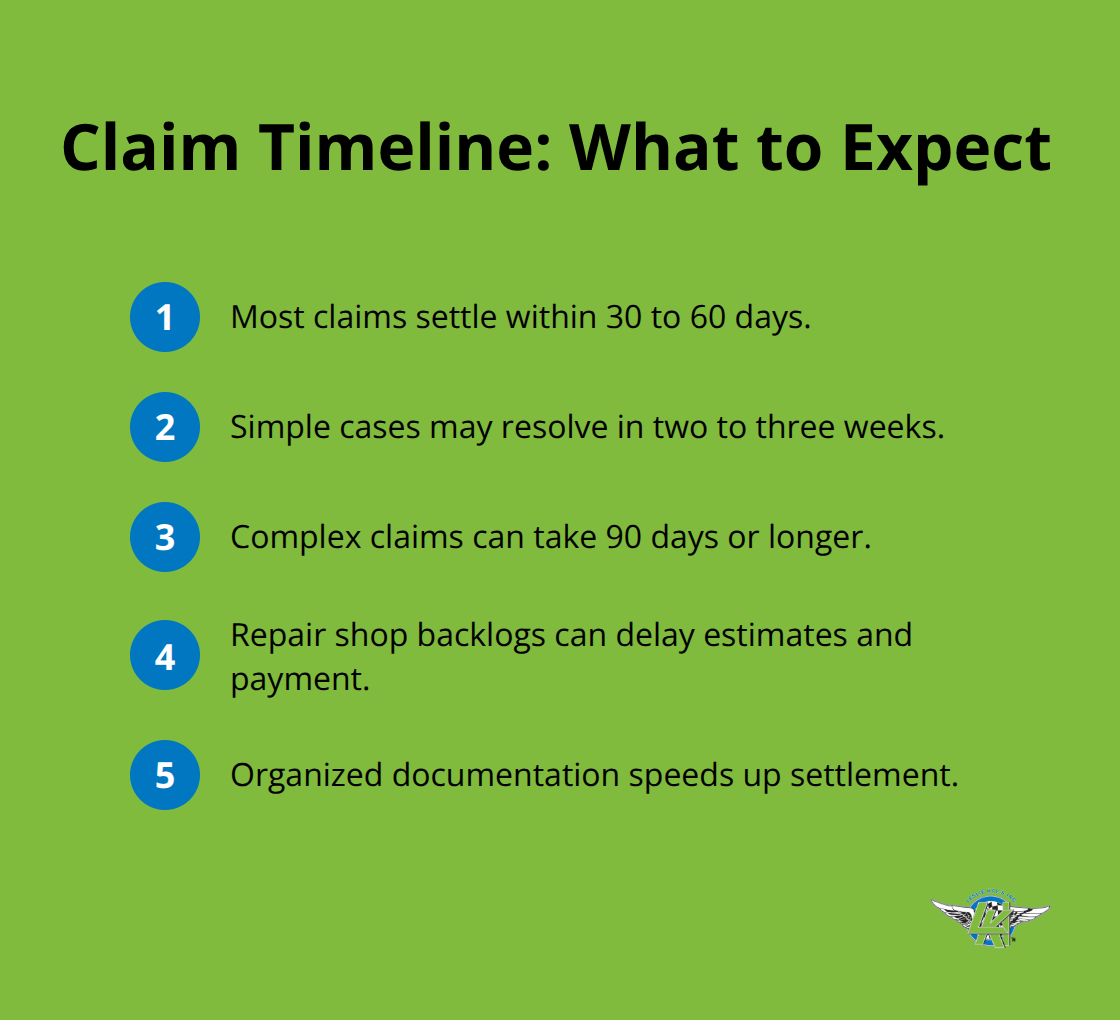
The repair shop’s schedule also affects timing; if they’re backlogged, settlement waits for their completion estimate. Maintain detailed records throughout this process because organized documentation accelerates settlement and prevents disputes over what was covered or what repairs cost.
Final Thoughts
The boat insurance claims process works smoothly when you act fast and stay organized after damage occurs. Contact your insurer within 24 hours, submit thorough documentation with photos and repair estimates, and cooperate fully during the inspection phase. Most claims settle within 30 to 60 days, though complex situations may extend the timeline depending on damage severity and repair shop availability.
Preventing future claims protects your investment and keeps you on the water longer. Regular maintenance reduces mechanical failures, boating safety courses improve accident prevention, and hurricane preparedness (including haul-out coverage during storm season) shields your vessel from weather losses. Maintain detailed records of upgrades and repairs so you can prove your boat’s condition if a claim arises.
We at Leslie Kay’s, Inc. specialize in watercraft coverage and provide hands-on support when you need it most. Our team shops multiple carriers to deliver customized policies at competitive rates, and we answer questions seven days a week to guide you through the boat insurance claims process. Contact us today to review your current coverage or discuss how we can protect your vessel better.
The information provided in this blog is for general informational purposes only and does not constitute legal, financial, or insurance advice. Coverage options, terms, and availability may vary. Please consult with a licensed professional for advice specific to your situation.
Artificial intelligence may have been used to generate text and images in some blog articles.