
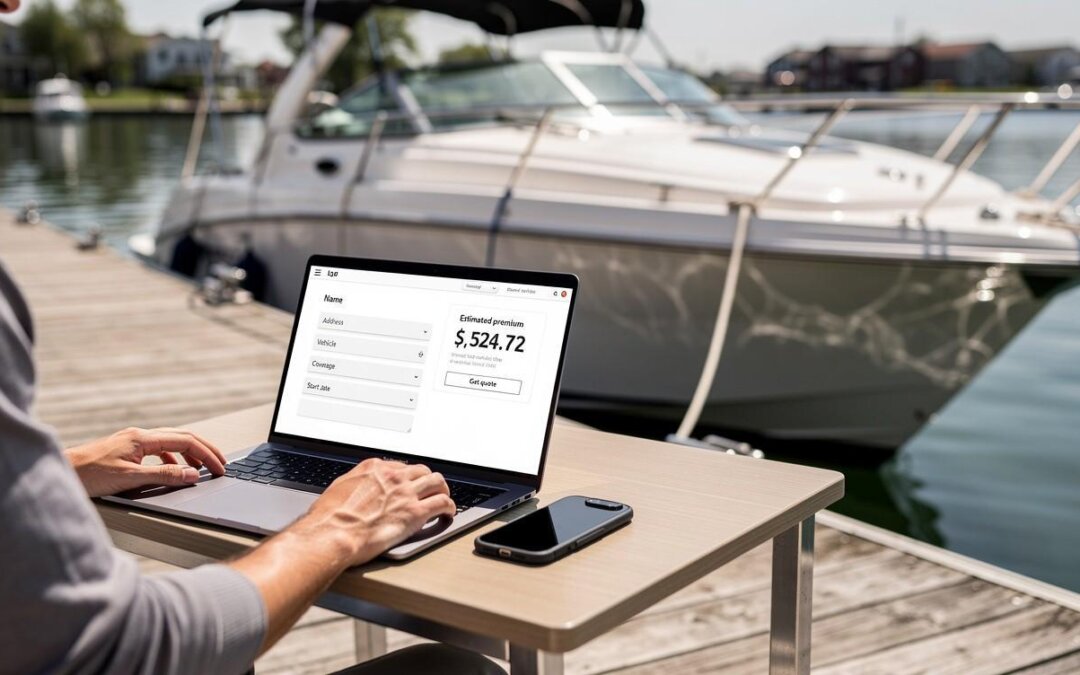
Boat owners often overpay for coverage or miss critical protections because they don’t understand their options. Getting a boat insurance policy online has become simpler than ever, but knowing what to look for makes all the difference.
We at Leslie Kay’s, Inc. help boat owners find the right protection without the confusion. This guide walks you through coverage types, how to compare quotes, and the mistakes that cost owners thousands in uncovered losses.
What Your Boat Insurance Actually Needs to Cover
Liability coverage forms the foundation of every boat policy, and most owners select limits that don’t match their actual exposure. If your boat causes damage to a dock worth $50,000 or injures another boater, a $100,000 liability limit falls short. Standard policies typically offer $100,000 to $300,000 in liability protection, but you should try for at least $250,000 if your boat exceeds 25 feet or you frequently carry passengers.
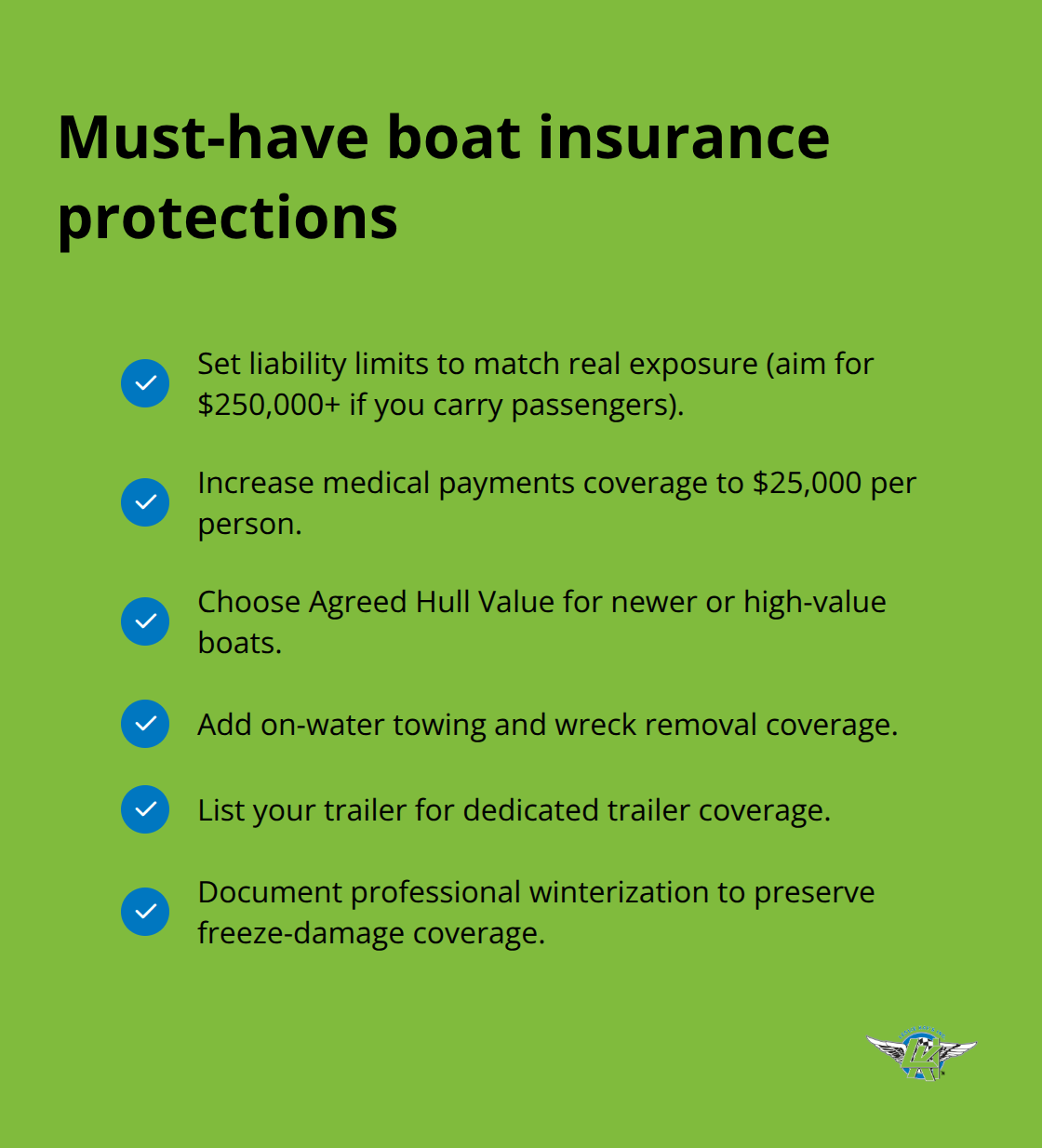
Medical payments coverage, which handles healthcare costs for you and your guests regardless of fault, usually maxes out at $5,000 per person. That’s insufficient if someone needs emergency care after a water accident, so adding supplemental medical coverage to reach $25,000 provides practical protection that costs just a few dollars monthly.
Hull Coverage Protects Your Investment
Hull damage from collisions, storms, or theft requires either Agreed Hull Value or Actual Cash Value coverage. Agreed Hull Value pays the full amount you both agreed to upfront if your boat is totaled, while Actual Cash Value covers the market value of your boat at the time of the loss. For boats financed through a lender, comprehensive and collision coverage is mandatory, and deductibles typically range from $250 to $1,000. Choosing a $1,000 deductible instead of $250 can reduce premiums by 10-15%, but only if you have emergency savings to cover that gap. Personal belongings on board deserve specific attention: standard policies cover up to $10,000 for fishing gear and $5,000 for other items like electronics or diving equipment, which may fall short if you carry expensive camera gear or tournament-level tackle.
Navigation and Towing Add Real Value
On-water towing coverage through services like TowBoatUS costs as little as $3 monthly for smaller boats and covers disabled vessels, fuel delivery, and soft groundings. This matters because a standard tow from a commercial marine service can run $500-$2,000 depending on distance and conditions. Wreckage removal and fuel spill liability are often included automatically in comprehensive policies but cap coverage at specific limits, so verify your policy covers sunken boat removal if legally required in your state. Trailer coverage, included when you add your trailer to the policy, protects against roadside breakdowns while you trailer your boat and covers the trailer even when the boat isn’t attached. Ice and freezing damage is typically excluded unless your boat is winterized by a marine professional, which becomes critical if you store your vessel in northern states where freeze damage costs thousands in repairs.
What Happens When You Compare Quotes
The speed of online quotes has transformed how boat owners shop for coverage. Most platforms generate quotes in 90 seconds and email policies within minutes after purchase, enabling near-instant coverage for owners who need protection fast. You’ll provide specific boat details-type, moorage state, year, make, model, and length-to receive accurate quotes from multiple top-rated boat insurance companies. If your boat’s make or model isn’t listed, you can select “Other” and input the exact details later to avoid inaccurate quotes. This flexibility matters because accurate information directly affects your premium and the coverage options available to you.
How to Compare Boat Insurance Quotes and Lock in Real Savings
Speed Cuts Through Traditional Shopping
The 90-second quote generation you encounter on most online platforms cuts through the traditional insurance shopping process, but speed alone doesn’t guarantee savings. When you pull quotes from multiple carriers simultaneously, you’re looking at actual premium differences of 20-40% for identical boats and coverage levels-not theoretical savings. Progressive advertises boat insurance starting at $100 annually, while GEICO quotes begin around $75, yet both rates fluctuate dramatically based on your specific boat details, location, and claims history.
Document Your Boat Details First
The critical step most boat owners skip is entering identical information across platforms. If you list your 2019 Grady-White at 28 feet on one site but 27 feet on another, you’ll receive incomparable quotes that waste your time. Spend five minutes documenting your exact boat specifications-year, make, model, length, horsepower, number of engines, and primary moorage location-before requesting quotes. This consistency reveals genuine price differences rather than variations from incomplete data. Progressive and GEICO both allow you to retrieve, edit, and compare existing quotes online, meaning you can adjust coverage levels across multiple quotes side-by-side without starting from scratch each time.
Deductibles Control Your Premium More Than Anything Else
Your deductible choice directly controls your premium more than any other single decision. A $1,000 deductible versus $250 typically reduces your annual cost by 10-15%, translating to $100-$300 in yearly savings on mid-range policies. However, that savings only makes sense if you maintain emergency reserves to cover the higher out-of-pocket expense after a claim.
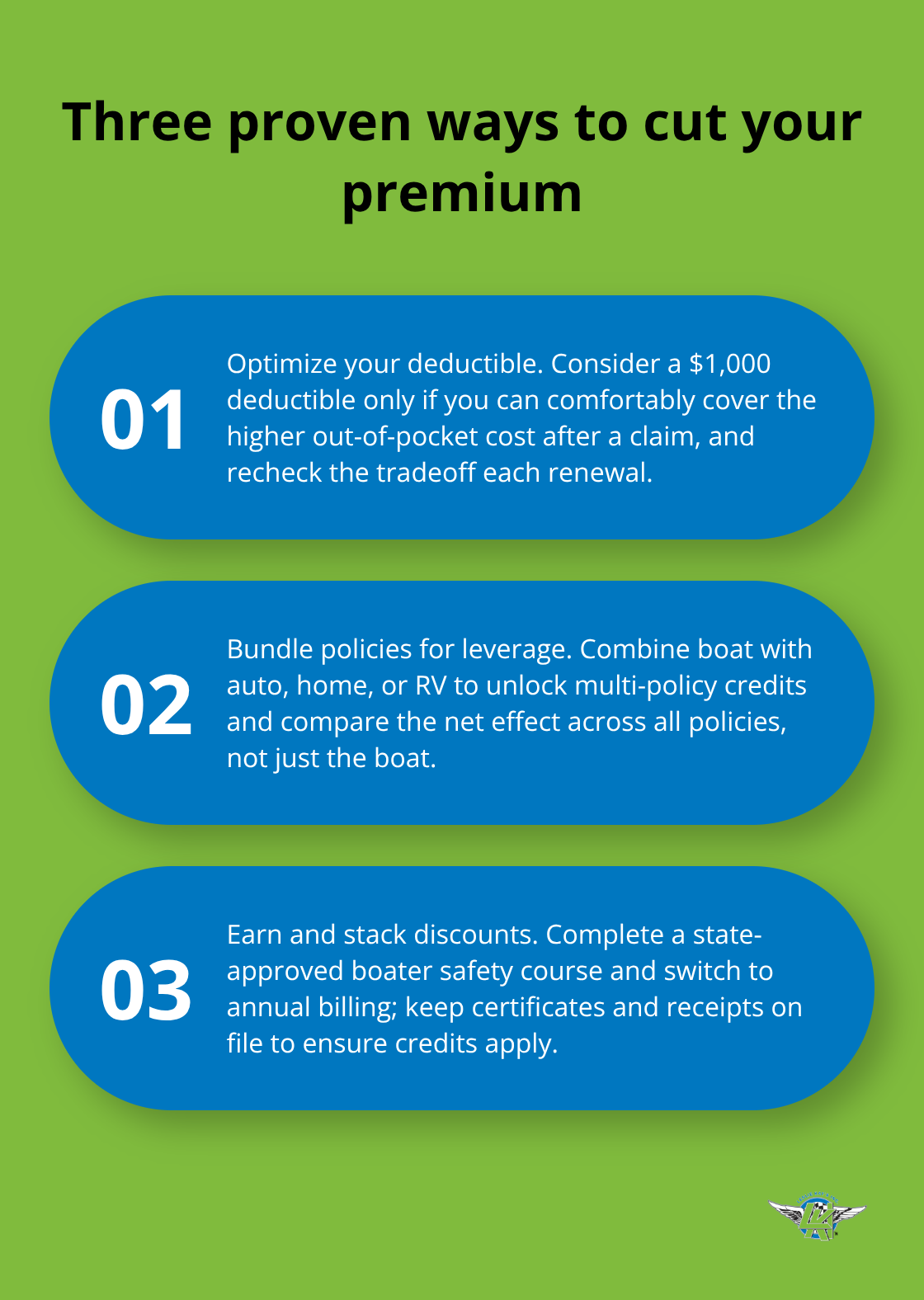
Bundling your boat policy with auto, home, or RV coverage through the same carrier saves money on your premiums, which compounds across multiple policies. Completing a state-approved boater safety course through programs like the BoatUS Foundation qualifies you for additional discounts depending on your insurer. Paying your premium annually rather than monthly also triggers discounts at most carriers.
Spot the Red Flags in Online Quotes
Red flags emerge when quotes seem suspiciously low-if your $150,000 boat receives a quote under $40 annually, the insurer likely misunderstood your boat’s specifications or excluded critical coverages. Policies requiring no marine survey sound convenient but often signal that the underwriter hasn’t properly assessed your vessel’s actual condition, creating gaps in coverage when you file a claim. If your boat’s make or model doesn’t appear in the quote system, selecting “Other” and providing details later leaves room for the insurer to adjust your quote downward after underwriting, potentially changing your coverage options.
Moving Forward with Your Comparison
Try quotes from at least three carriers and compare not just premiums but coverage limits, deductibles, and available add-ons before making your decision. The differences you uncover in this process reveal which insurers truly understand your boat type and boating habits-information that matters far more when you need to file a claim. Your next step involves understanding which mistakes boat owners make most often, mistakes that cost thousands in uncovered losses and missed discounts.
Common Mistakes Boat Owners Make with Insurance
Most boat owners set their coverage limits based on what sounds reasonable rather than what their actual exposure demands, then compound the mistake by ignoring how seasonal usage changes their risk profile. A 28-foot powerboat owner carrying six passengers on weekends faces dramatically different liability exposure than someone who moors the same boat and uses it twice monthly, yet standard quotes don’t account for this variation. Underinsuring happens because owners focus on the premium number rather than calculating what they actually stand to lose.
Underinsuring Your Vessel Costs Thousands
If your boat is worth $150,000 and you select $100,000 in hull coverage to save $200 annually, you’re gambling with $50,000 of unprotected value. Lenders won’t allow this anyway-they require comprehensive and collision coverage when you finance a boat-so artificially lowering limits to reduce premiums simply creates a false economy. The real cost emerges when weather damage, theft, or a collision totals your vessel and your insurer pays $100,000 while you absorb the remaining loss.
Personal belongings coverage operates the same way: standard limits of $10,000 for fishing gear and $5,000 for other items sound adequate until you factor in tournament-grade tackle boxes running $3,000-$8,000, marine electronics costing $15,000-$25,000, or camera equipment exceeding $5,000. Supplemental medical payments coverage maxes out at $5,000 per person on standard policies, which covers basic urgent care but fails entirely if a passenger requires emergency surgery or helicopter evacuation. Adding $25,000 in supplemental coverage costs roughly $3-$5 monthly but prevents catastrophic financial exposure.
Seasonal Coverage Gaps Leave You Exposed
Boats stored during winter months still face theft, vandalism, and weather-related damage, yet owners often reduce coverage or lapse policies entirely during storage periods. Ice and freezing damage is excluded from standard comprehensive policies unless your boat is winterized by a marine professional-a requirement that must be documented before a claim. If you store your boat in a northern state without professional winterization coverage, freeze damage to water systems, engines, and plumbing can cost $5,000-$15,000 in repairs, entirely uninsured.
Seasonal renters who charter their boats during peak months require a boating resume form for owner/operators, which insurers use to assess experience and qualifications. This coverage becomes mandatory if you earn income from your vessel.
Missing Out on Available Discounts Costs Hundreds
State-approved boater safety courses through the BoatUS Foundation or equivalent programs qualify you for discounts ranging from 5-15% depending on your insurer, yet most owners never complete training. Bundling boat coverage with auto, home, or RV policies through the same carrier saves approximately 5% on auto insurance plus additional boat premium reductions, compounding savings across multiple policies. Paying your annual premium upfront rather than in monthly installments triggers additional discounts at most carriers, typically saving 3-5% of your total cost.
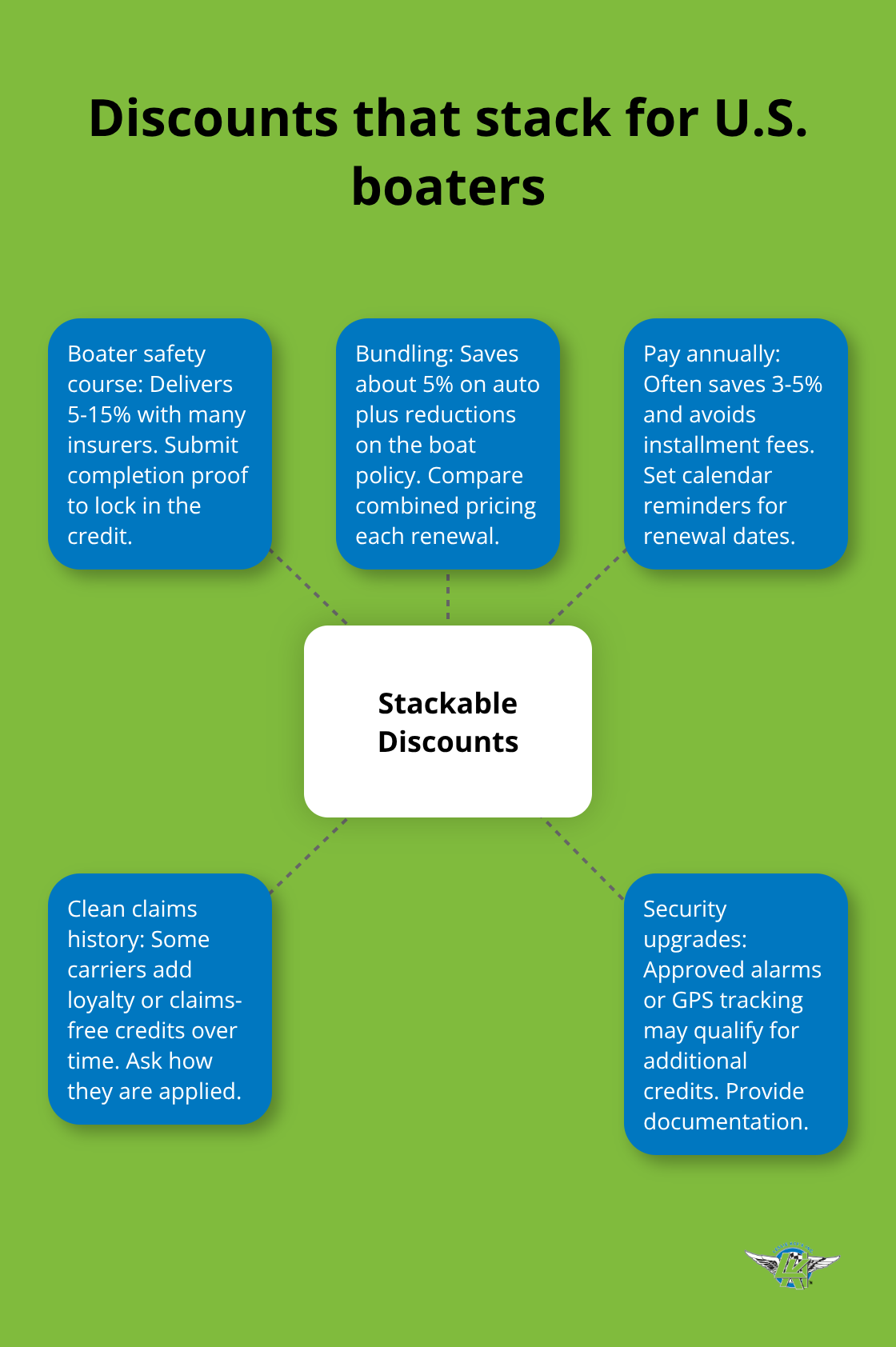
On a $600 annual boat policy, these overlapping discounts represent $75-$150 in annual savings that vanish when owners shop quotes individually without bundling or fail to report completed safety training to their insurer.
Final Thoughts
Finding the right boat insurance policy online requires matching your coverage to actual risk, not just selecting the lowest premium. You must set liability limits that reflect your boat size and passenger load, choose hull coverage that protects your investment, and add specialized protections like towing and medical payments that prevent catastrophic gaps. Most boat owners regret their choices only after a claim reveals what wasn’t covered, so comparing quotes across multiple carriers and documenting your exact boat specifications now pays dividends later.
Pull quotes from at least three insurers using identical boat information, compare deductible options side-by-side, and identify which discounts apply to your situation. Completing a boater safety course, bundling with other policies, and paying annually rather than monthly compound into real savings that offset the time spent shopping. Don’t accept the first quote that arrives in your inbox, and don’t assume online quotes automatically deliver the lowest rates without verification across carriers.
We at Leslie Kay’s, Inc. specialize in watercraft insurance alongside motorcycle, RV, and auto coverage, which means we shop multiple carriers to find policies tailored to your specific boat and boating habits rather than generic templates. Our team handles the comparison work for you, explains coverage options in plain language, and provides support when you need claims assistance or policy adjustments. Visit Leslie Kay’s, Inc. to discuss your watercraft protection with specialists who understand boating.
The information provided in this blog is for general informational purposes only and does not constitute legal, financial, or insurance advice. Coverage options, terms, and availability may vary. Please consult with a licensed professional for advice specific to your situation.
Artificial intelligence may have been used to generate text and images in some blog articles.