
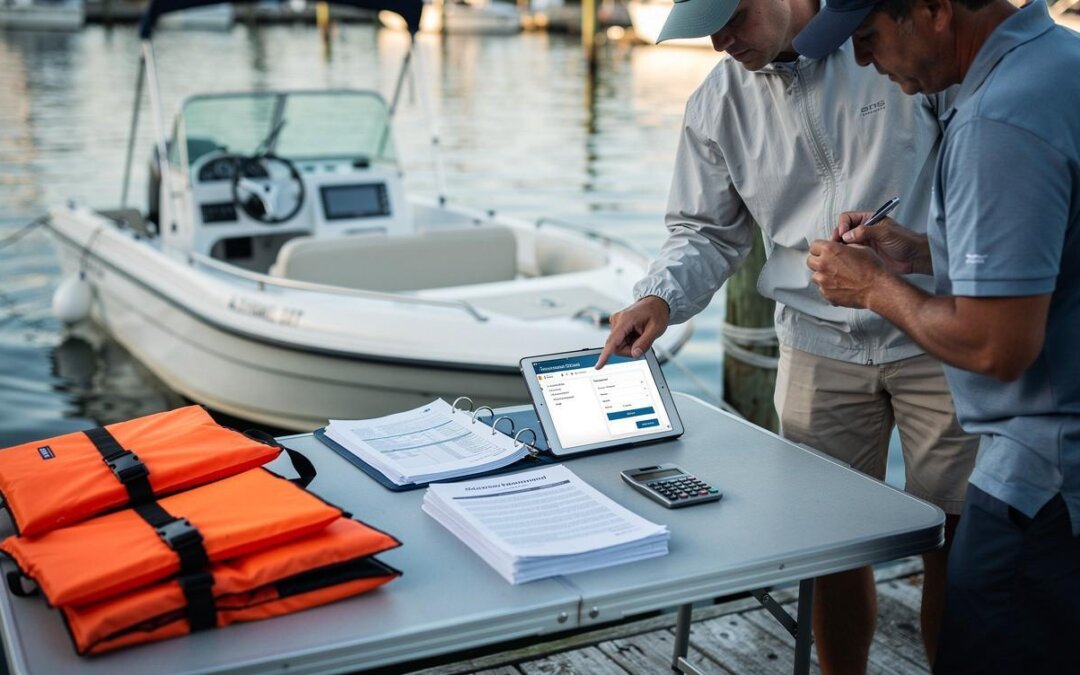
Boat insurance protects your investment and shields you from liability when accidents happen on the water. Finding the best boat insurance options means understanding what coverage you actually need and comparing rates across carriers.
At Leslie Kay’s, Inc., we help boaters navigate these decisions by breaking down the types of coverage available, the factors that impact your premiums, and how to select a policy that fits your specific situation.
What Coverage Do You Actually Need on the Water?
Liability coverage is non-negotiable, and most boaters underestimate how much they need. This coverage pays for damages or injuries you cause to others, including damage to docks, pilings, and other boats. Many professionals recommend at least $100,000 in liability coverage, especially if you own a fast or high-value boat. Property damage liability specifically covers harm to other people’s property in a boating incident, which can include expensive dock repairs or damage to someone else’s vessel. If you tow someone on a tube or wakeboard, liability coverage protects your passengers too. Arkansas requires a minimum of $50,000 in liability for engines over 50 HP and all personal watercraft, while Utah mandates $25,000 per person and $50,000 total bodily injury. However, these legal minimums often prove inadequate for real-world accidents where repair costs and medical bills can exceed $100,000 quickly.
Hull Protection Matters More Than Most Boaters Think
Collision and comprehensive coverage protect your actual boat, and the distinction between them matters for your wallet. Collision coverage pays for damage after you hit another watercraft or submerged object, including capsizing. Comprehensive coverage handles everything else your boat might face: theft, vandalism, fire, weather damage, lightning strikes, and falling objects. If you finance your boat, lenders require hull coverage to protect their investment, typically demanding both collision and comprehensive together. The payout method affects how much you recover after a total loss. Agreed hull value fixes a predetermined payout amount in advance, which works well for newer boats since you know exactly what you’ll receive. Actual cash value pays the current market value at time of loss, which decreases over time and suits older boats better since premiums cost less. Most recreational boats average about $200 to $500 annually, with a typical $300 for a $25,000 boat.
Medical Bills and Uninsured Boaters Create Hidden Gaps
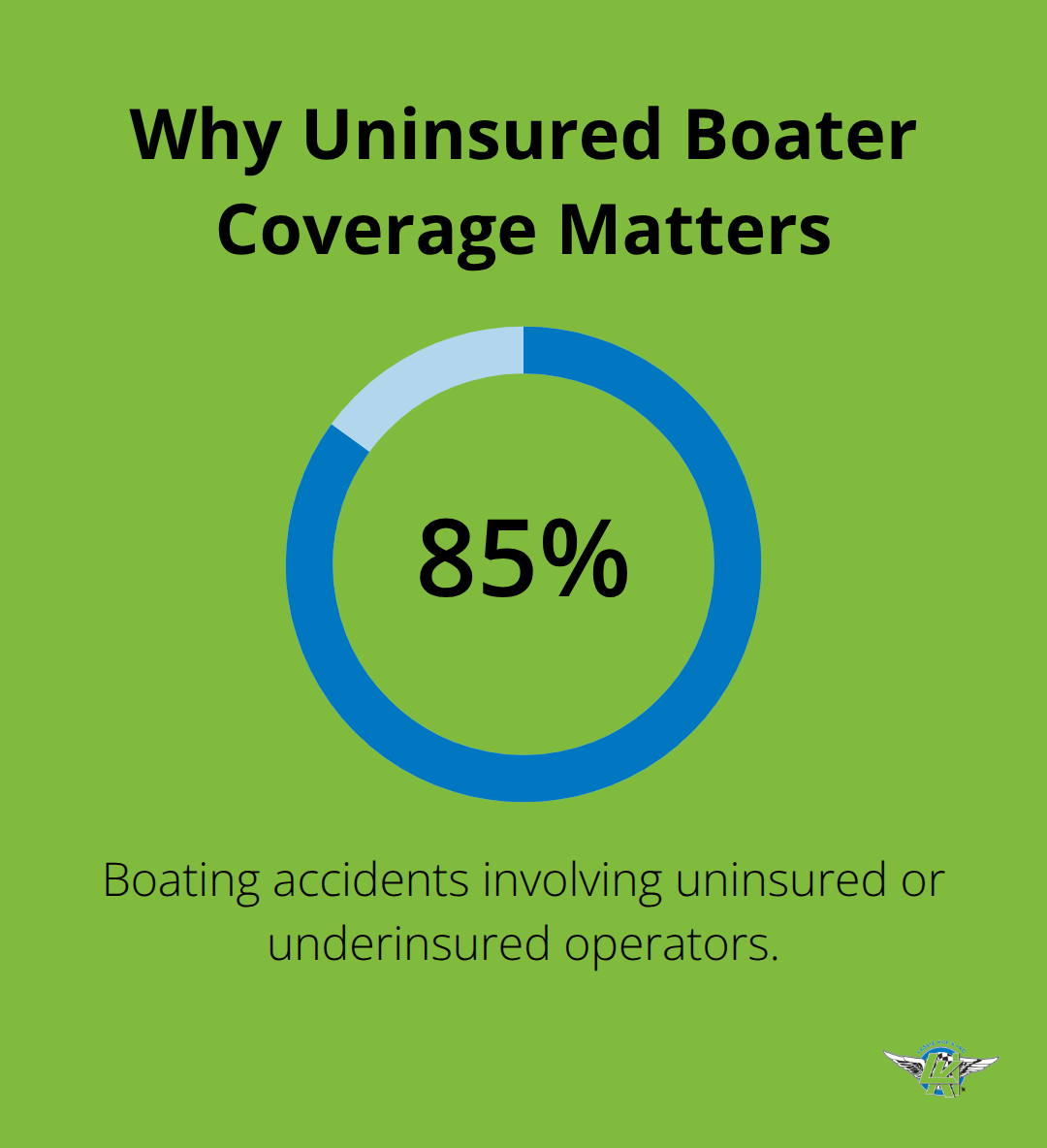
Medical payments coverage covers hospital bills and treatment costs for you and your passengers after an accident, regardless of who caused it. This coverage works alongside your health insurance and pays up to your policy limit. Uninsured and underinsured boater coverage protects you against the protection most boaters lack until they need it badly. If another boater hits you and lacks adequate insurance or carries none at all, this coverage pays for your injuries and damage up to your policy limits. On the water, roughly 85% of boating accidents involve operators with no insurance or grossly insufficient coverage, making this protection essential rather than optional. Many carriers now offer supplemental family medical payments that add $25,000 or more in coverage for injuries beyond what standard medical payments provide. These add-ons cost little relative to their protection value, typically adding just a few dollars monthly to your premium.
What Happens Next: Rate Factors That Hit Your Wallet
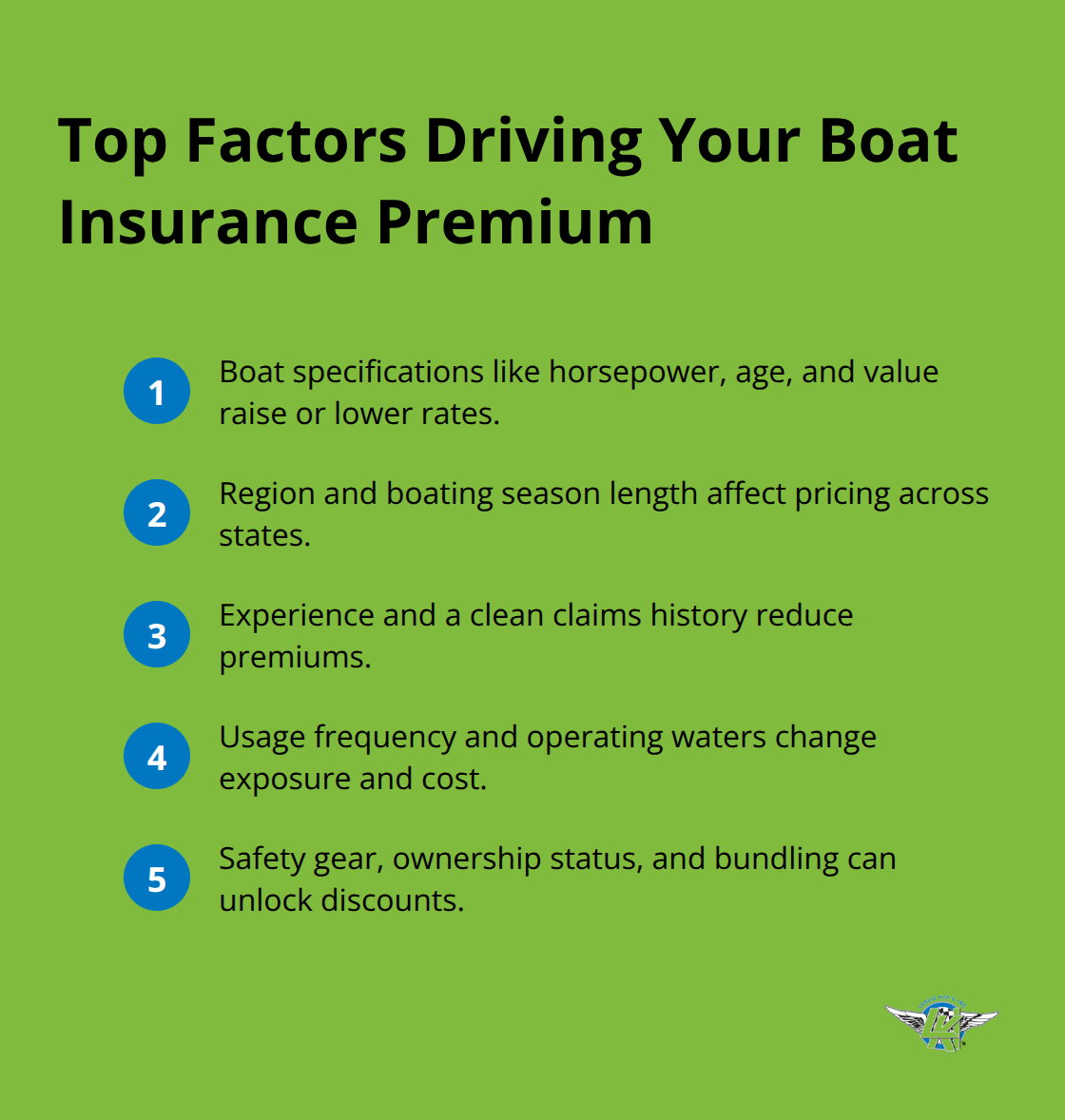
Your boat’s characteristics and your personal boating profile determine what you’ll actually pay for coverage. The type of watercraft you own, its age, engine horsepower, and current market value all influence your premium significantly. Newer boats with high-performance engines command higher rates because they cost more to repair and attract riskier operators. Your boating experience and claims history matter just as much as your vessel itself-experienced boaters with clean records qualify for lower premiums than newcomers or those with prior incidents. Where you boat and how often you use your vessel also shape your costs substantially, with coastal and southern states charging more than inland regions due to longer boating seasons and larger, more expensive boats.
What Actually Drives Your Boat Insurance Costs
How Your Boat’s Specifications Shape Your Premium
Your boat’s specifications create the foundation of your premium, and the numbers matter more than most boaters realize. A high-performance fishing boat with a 250 HP engine will cost significantly more to insure than a 50 HP pontoon boat of similar age, primarily because repair costs scale dramatically with engine power and boat complexity. Your boat’s age influences premiums substantially as well-newer boats command higher premiums than older models because replacement costs are steeper and they attract operators willing to push performance limits. A brand-new center console fishing boat valued at $75,000 might run $1,125 annually using the industry standard of 1.5% of boat value, while a ten-year-old model of the same type could cost 30% less.
Regional Differences and Boating Season Length
Location and boating season length create regional price disparities that catch many boaters off guard. Coastal and southern states consistently charge higher premiums than inland regions because boaters there operate year-round and typically own larger, more expensive vessels. Northern states and Great Lakes regions stay cheaper due to shorter boating seasons and prevalent inland boating with smaller boats that cost less to repair.
Your Personal Boating Profile and Claims History
Your personal boating profile determines whether you pay the base rate or qualify for meaningful discounts that reduce costs substantially. Boaters with clean claims histories and significant experience on the water qualify for lower premiums than newcomers or those with prior incidents-your track record matters as much as your vessel itself. Completing a boating safety course through an accredited program can yield insurer discounts ranging from 5% to 15% depending on the carrier, making the investment in a few hours of online training worthwhile financially.
Safety Gear, Ownership Status, and Usage Patterns
Extra safety gear onboard (fire extinguishers, life jackets, and navigation equipment) can lead to additional discounts from many carriers. If you own your boat outright rather than financing it, you have flexibility in coverage levels, though lenders require hull coverage protecting their loan amount if you financed the purchase. Seasonal boaters pay less than those operating year-round because exposure to risk decreases with fewer days on the water. Some carriers offer discounts for multi-policy bundling, particularly if you insure your vehicle, home, or other watercraft through the same company.
Finding Every Available Discount
These reductions often total 20% to 30% of your base premium when you combine them strategically. The key to lowering your actual costs lies in understanding which discounts apply to your specific situation and asking carriers directly about programs you might qualify for. Once you understand what drives your rates and which discounts you can access, the next step involves comparing actual quotes from multiple carriers to see which one delivers the best value for your coverage needs.
Picking the Right Policy for Your Boat
Compare Quotes from Multiple Carriers
Multiple carriers produce dramatically different prices for identical coverage, with differences often exceeding 40% between the cheapest and most expensive options. Boat insurance costs vary significantly by location; Progressive’s 2023-2024 data shows annual costs ranging from $267 in Minnesota to $839 in Florida, and your specific location within a state can push costs even higher depending on local risk factors and boating season length. When you request quotes, have your boat’s type, model year, length, hull configuration, horsepower, and your desired coverage limits and deductible amounts ready. Most carriers now offer online quoting that takes fifteen minutes or less, though calling for personalized quotes often uncovers discounts you might miss on digital platforms.
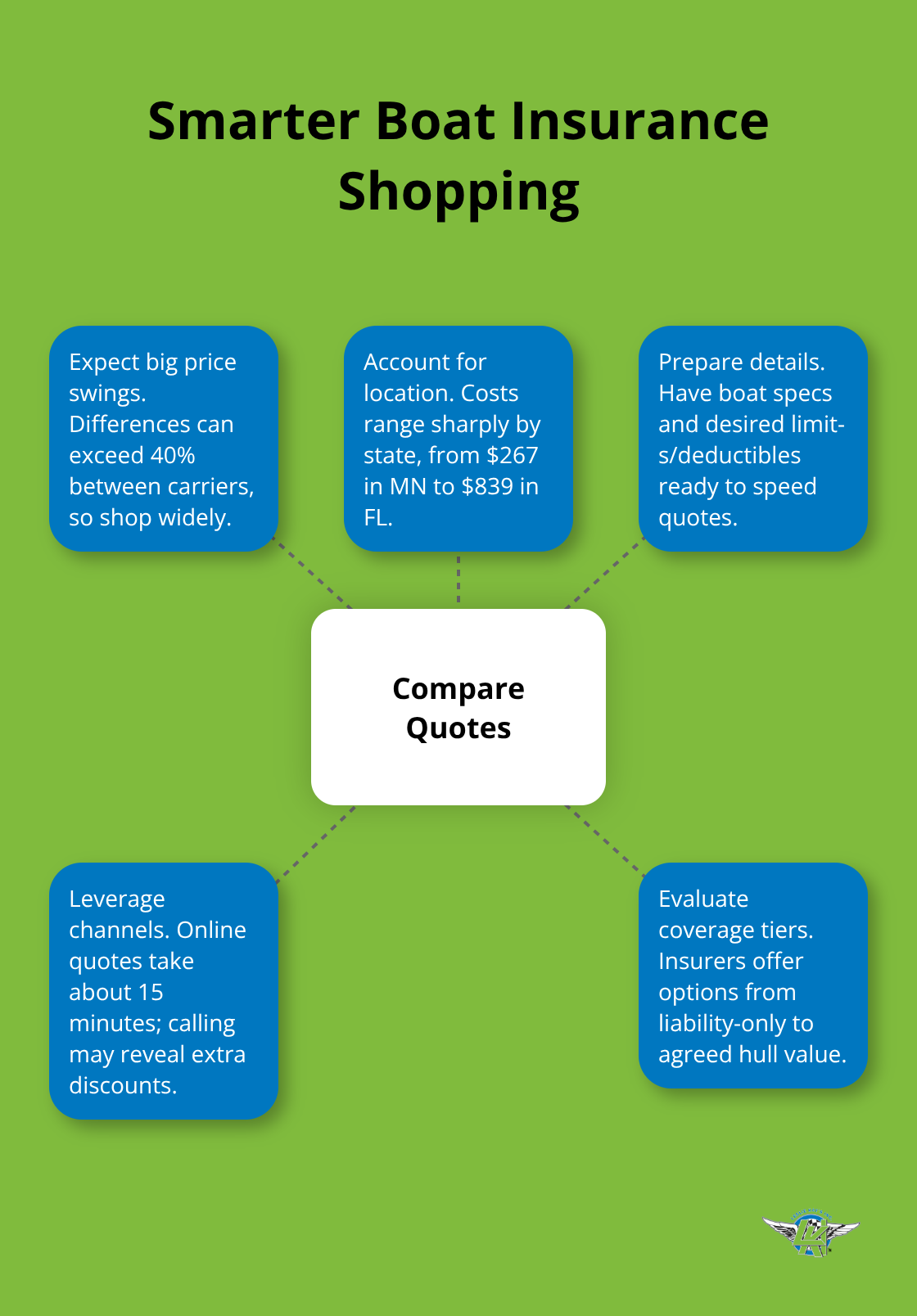
Progressive reports policies can start around $100 annually for basic coverage, while BoatUS, backed by Geico, offers three distinct tiers ranging from liability-only to agreed hull value options depending on your boat’s value and financing requirements.
The critical mistake most boaters make involves comparing only price without examining what each quote actually covers-a $300 annual policy with $50,000 liability and actual cash value coverage differs dramatically from a $350 policy with $100,000 liability and agreed hull value protection. Requesting quotes from at least three carriers takes an hour and typically saves $100 to $300 annually compared to accepting the first quote you receive.
Match Coverage to Your Boat Type and Usage
Your coverage needs depend entirely on your boat type, how you use it, and whether you’ve financed the purchase or own it outright. A fishing boat with expensive electronics demands different protection than a simple pontoon, and a boat used for water sports requires liability coverage that explicitly protects passengers on tubes and wakeboards. If your lender holds a security interest, they’ll mandate hull coverage protecting their investment, typically requiring both collision and comprehensive together with minimum liability limits stated in your loan documents.
Select Deductibles That Fit Your Budget
Deductible selection directly impacts your monthly costs-choosing a $1,000 deductible instead of $500 might reduce your premium by 15% to 20%, but only if you can actually pay that amount from savings when damage occurs. Your boating frequency matters significantly: seasonal boaters who operate only four months yearly pay substantially less than year-round operators because exposure decreases with fewer days on water.
Leverage Safety Features and Discounts
Safety features like navigation electronics, fire extinguishers rated for marine use, and modern life jacket systems can qualify you for discounts ranging from 5% to 10% with carriers like Progressive and BoatUS. These investments in onboard safety (beyond their obvious protective value) directly reduce what you pay for coverage each year. As an independent, customer-focused insurance agency specializing in watercraft coverage, Leslie Kay’s shops multiple carriers to match your specific boat and usage pattern against coverage options that actually protect your situation rather than offering generic solutions that leave gaps or overcharge for unnecessary coverage.
Final Thoughts
Boat insurance protects your investment and shields you from financial devastation when accidents happen on the water. The coverage types we’ve discussed-liability, collision, comprehensive, medical payments, and uninsured boater protection-form the foundation of any solid policy. Your actual costs depend on boat specifications, regional location, boating season length, and your personal experience and claims history.
The best boat insurance options for your situation won’t match what works for another boater, even if you own similar vessels. A $50,000 fishing boat in Florida faces different risks and costs than an identical boat in Minnesota, and your boating frequency changes what coverage makes financial sense. Comparing quotes from at least three carriers typically saves $100 to $300 annually while revealing coverage differences that price alone won’t show you.
Progressive, BoatUS, Foremost, Markel, and Chubb each excel in different areas-affordability, membership benefits, personal watercraft specialization, fishing-focused coverage, or luxury yacht protection. Most carriers complete quotes in fifteen minutes or less, and the time investment pays dividends when you discover meaningful savings or better coverage options. Contact Leslie Kay’s to explore your best boat insurance options with an agency built to understand boaters and deliver customized protection across multiple states.
The information provided in this blog is for general informational purposes only and does not constitute legal, financial, or insurance advice. Coverage options, terms, and availability may vary. Please consult with a licensed professional for advice specific to your situation.
Artificial intelligence may have been used to generate text and images in some blog articles.