
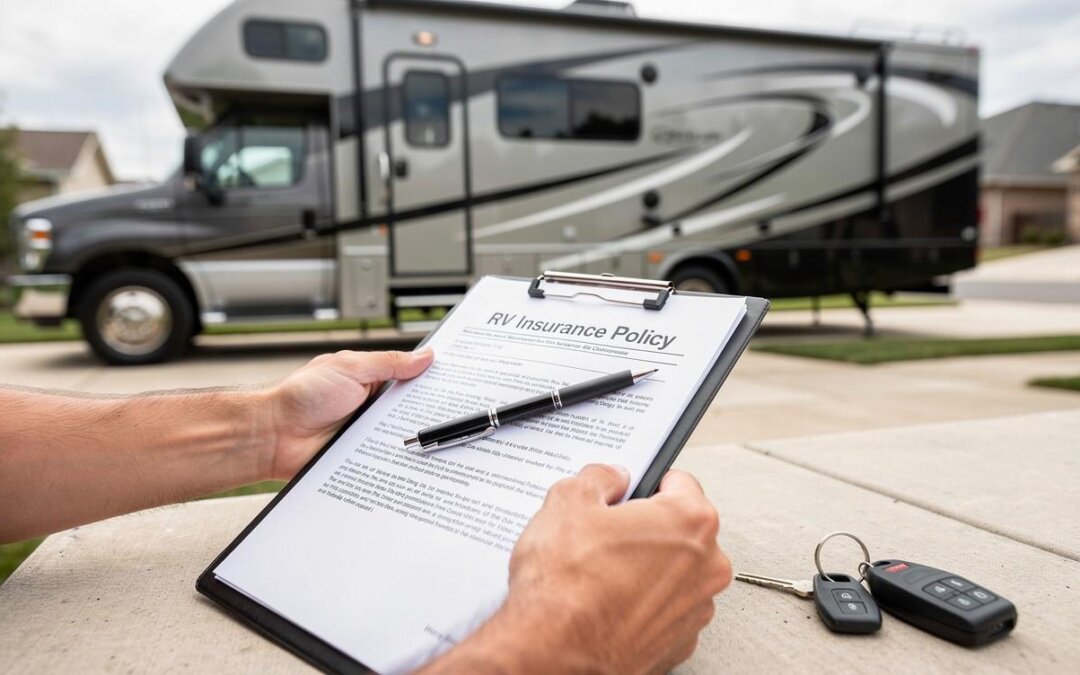
Most RV owners underestimate their liability exposure on the road. A single accident involving your rig can result in tens of thousands of dollars in damages-far beyond what standard auto insurance covers.
At Leslie Kay’s, Inc., we’ve seen firsthand how the right RV liability coverage specifics make the difference between financial security and devastating loss. This guide walks you through what you actually need to protect yourself and your assets while traveling.
What Your RV Liability Coverage Actually Pays For
Bodily Injury and Property Damage: Your Two Core Protections
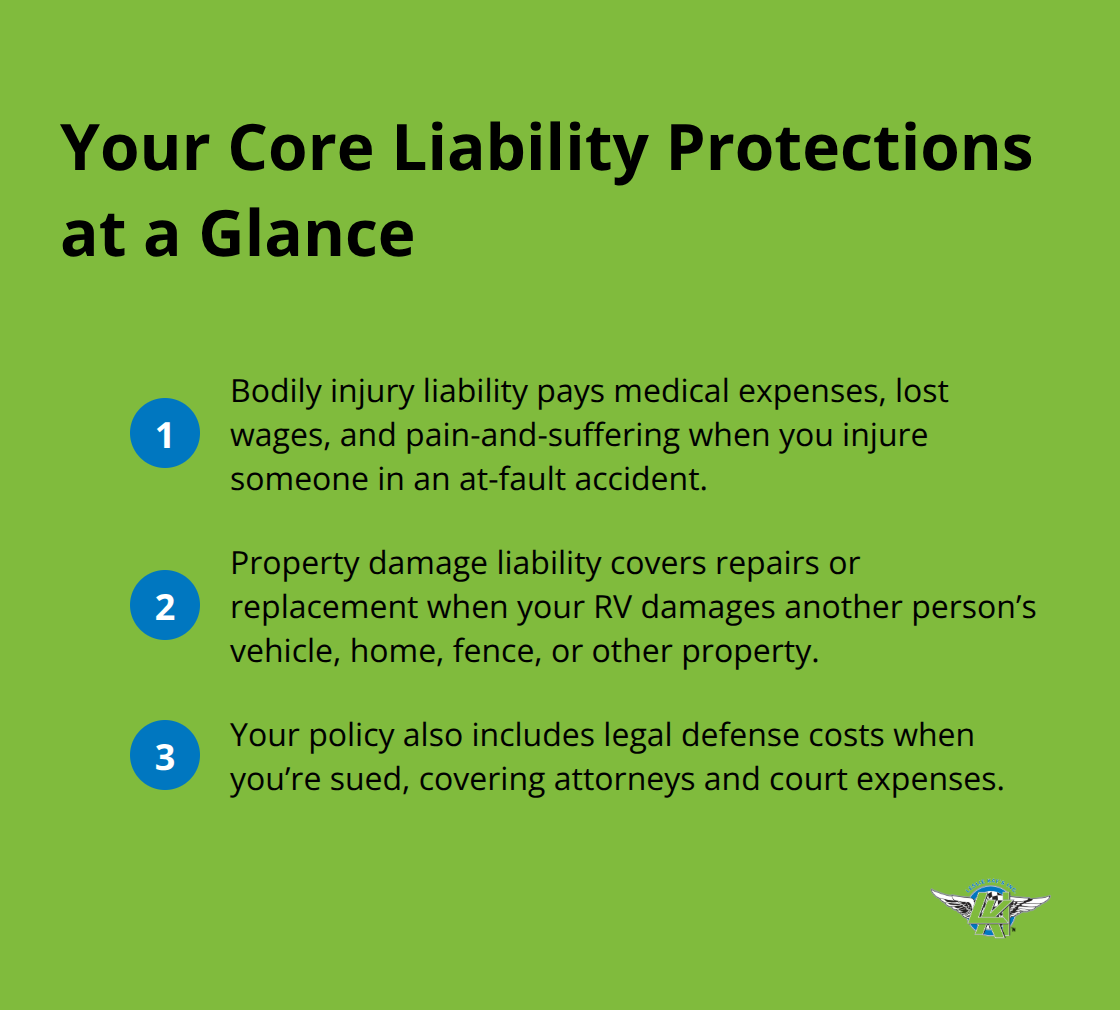
RV liability coverage is required for motorhomes in nearly every state and helps pay for injuries or property damage you cause to others in an accident. Bodily injury liability covers medical expenses, lost wages, and pain-and-suffering claims when you injure someone in an accident you cause. Property damage liability pays for repairs or replacement when your RV damages another person’s vehicle, home, fence, or other property. Together, these two coverages represent your legal obligation to others on the road.
Most states require minimum liability limits expressed in a format like 20/40/20, meaning up to $20,000 per person for bodily injury, $40,000 total per accident for bodily injury, and $20,000 for property damage per accident. However, these state minimums often fall dangerously short of actual claim costs.
Why State Minimums Leave You Exposed
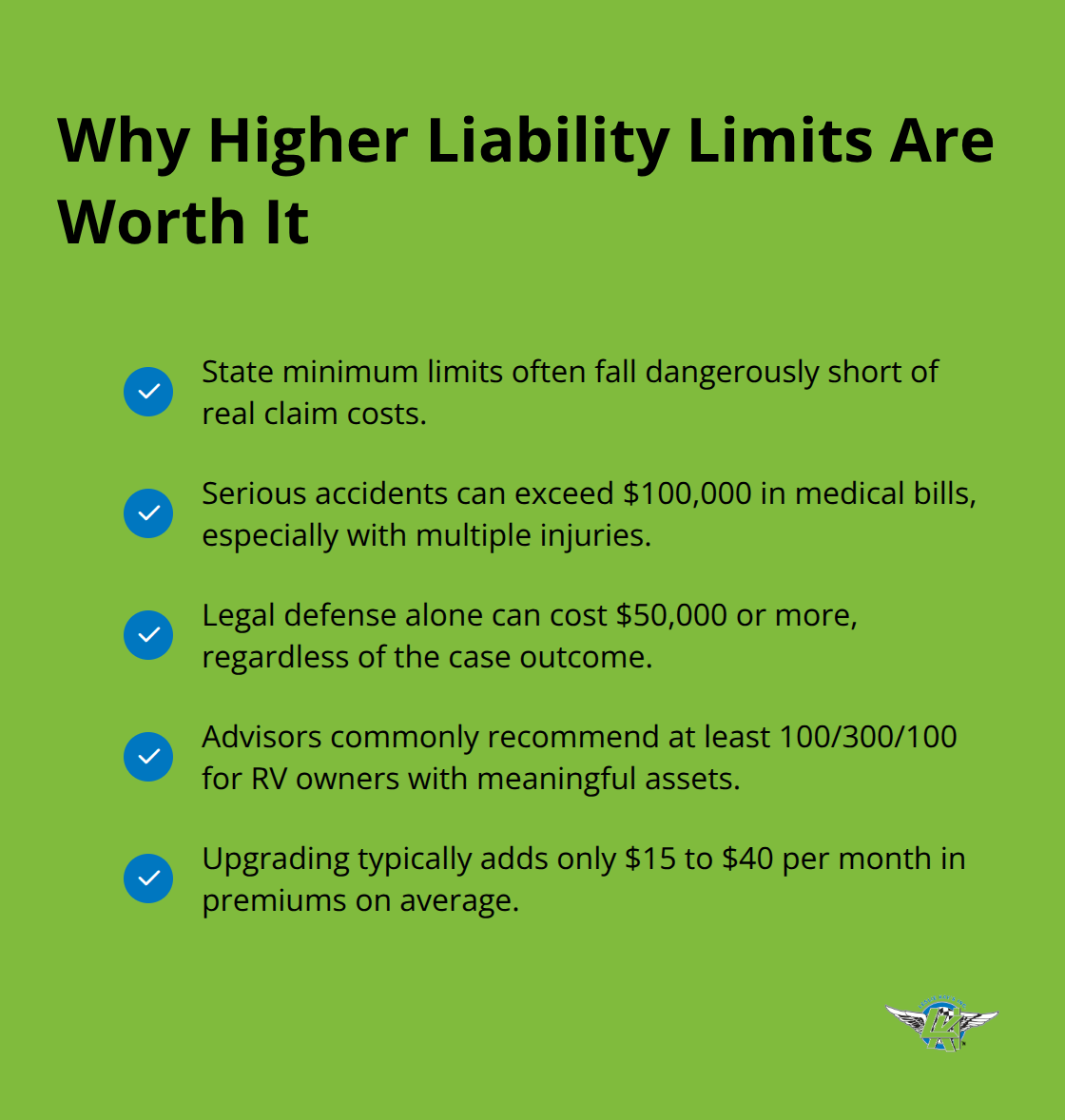
A serious accident involving your motorhome can easily generate $100,000 or more in medical bills alone, especially if multiple people are injured. Your RV’s size and weight amplify potential property damage exposure compared to standard vehicles. A collision with a parked vehicle, storefront, or residential structure can result in tens of thousands of dollars in damages that your state minimum won’t cover.
Legal Defense Costs: Protection Beyond Claims
Your liability coverage includes legal defense costs when you’re sued. This means your insurance company pays for your attorney and court expenses, protecting your personal assets from judgment. This protection matters enormously because even defending yourself legally can cost $50,000 or more, regardless of the outcome.
Matching Your Coverage to Your Assets
You should carry liability limits that match or exceed your total personal assets. If you own a home, significant savings, or other valuable property, carrying only state minimum liability exposes everything to seizure if a judgment exceeds your policy limits. Most RV owners with meaningful assets should carry at least 100/300/100 limits or higher, depending on their situation.
The cost difference between state minimum and higher limits is surprisingly modest, often just $10 to $30 more per month in premiums. That small investment protects decades of financial security and gives you genuine peace of mind while traveling. Understanding what your liability coverage actually pays for sets the foundation for selecting the right limits-a decision that becomes more complex when you realize standard auto insurance simply doesn’t account for the unique risks your RV presents.
Why Your RV Needs Different Coverage Than Your Car
Standard auto insurance policies simply don’t account for the physical realities of RV ownership. Your personal vehicle weighs around 4,000 pounds and operates within predictable parameters that insurers have refined over decades. Your motorhome weighs 10,000 to 36,000 pounds depending on the class, extends across multiple axles, and functions as both a vehicle and temporary residence. State minimum liability limits of 20/40/20 work for cars because the damage exposure stays contained. For RVs, those same limits vanish in a single serious accident.
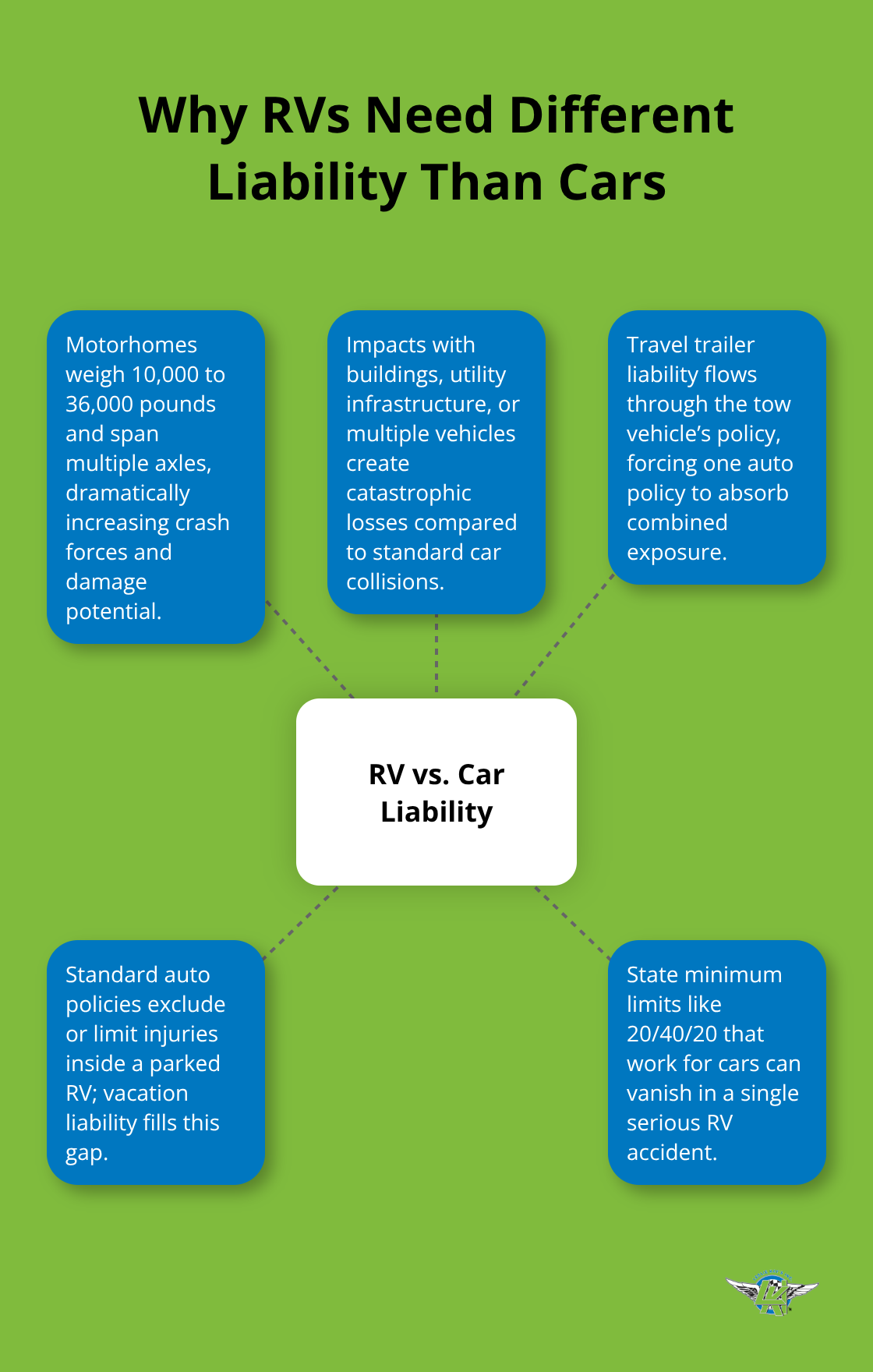
The size differential matters enormously. When your motorhome strikes another vehicle, a building, or utility infrastructure, the damage multiplies compared to a standard car collision. A Class A motorhome colliding with a parked sedan doesn’t just damage the sedan-it causes catastrophic structural damage, medical expenses for multiple occupants, and ancillary costs like rental vehicles and diminished value. Insurance industry data shows that motorhome accident claims generate significantly higher payouts than standard vehicle claims, yet most RV owners carry liability limits designed for compact cars. Travel trailer owners face additional complications because liability from the trailer flows through the tow vehicle’s policy, meaning your standard auto insurance must cover both your truck and the trailer’s damage exposure simultaneously. This creates gaps where your auto policy wasn’t designed to handle the combined weight and liability profile of a motorized vehicle pulling a multi-thousand-pound structure.
Slideouts and Living Spaces Create Uninsured Exposure
Modern motorhomes feature hydraulic slideouts, full kitchens, bathrooms, and sleeping areas that transform the RV into livable space. Standard auto policies exclude or severely limit liability coverage for injuries occurring inside your RV when it sits stationary. A guest slips in your motorhome’s bathroom while parked at a campground and suffers a serious injury-your standard auto liability won’t cover medical expenses or legal defense. Vacation liability coverage protects you when your RV is parked, addressing this exact gap. Progressive offers vacation liability with minimums starting at $10,000 and options extending to $500,000, providing the protection standard auto policies simply don’t include. The additional cost remains minimal compared to the exposure, typically adding just a few dollars monthly to your premium.
Your Assets Demand Higher Liability Limits
If you own a home, retirement accounts, or significant investments, state minimum liability limits create unacceptable risk. A judgment exceeding your policy limits results in wage garnishment, asset seizure, and years of financial hardship. Most financial advisors recommend liability limits matching your total net worth, and for RV owners with meaningful assets, that typically means 100/300/100 or higher. The premium difference between 20/40/20 and 100/300/100 averages $15 to $40 monthly depending on your location and driving history-a trivial cost relative to protecting decades of accumulated wealth. RV’s size and weight make higher liability limits essential for anyone with assets worth protecting.
Understanding these coverage gaps sets the stage for evaluating which specific liability limits actually fit your situation-a calculation that shifts significantly once you factor in the type of RV you own and how you plan to use it.
What Liability Limits Actually Make Sense for Your RV
Start With Your Net Worth, Not State Minimums
Start with your total net worth, not state minimum requirements. If you own a home worth $300,000, have $150,000 in retirement accounts, and maintain $50,000 in savings, your total assets equal $500,000. State minimum liability coverage of 20/40/20 leaves everything vulnerable. A judgment exceeding your policy limits means creditors can garnish wages, seize bank accounts, and place liens on your home for years. Financial advisors consistently recommend liability limits matching your net worth, and for RV owners, that typically translates to 100/300/100 as a practical floor-$100,000 bodily injury per person, $300,000 total per accident, and $100,000 property damage per accident.
The monthly premium difference between state minimums and 100/300/100 coverage averages $15 to $40 depending on location, vehicle type, and driving history. That investment protects decades of accumulated wealth and eliminates the scenario where a single accident destroys your financial security.
RV Size Creates Exponentially Higher Damage Exposure
Your RV’s size and weight demand higher limits than standard vehicles because damage exposure scales dramatically. A motorhome collision generates substantially higher medical bills and property damage claims than a sedan accident. Class A and Class C motorhomes create catastrophic damage when striking buildings, utility poles, or multiple vehicles. Insurance claims data shows motorhome accidents produce significantly higher payouts than standard vehicle claims, yet many RV owners carry inadequate limits.
Travel trailer owners face compounded exposure because liability flows through the tow vehicle’s insurance, meaning your truck’s policy must handle both the truck’s damage potential and the trailer’s combined weight and exposure simultaneously. Standard auto policies were not designed for this dual liability profile.
Why Lenders Won’t Protect Your Assets
If you finance your motorhome, your lender requires comprehensive and collision coverage regardless of state minimums, but they will not mandate higher liability limits. That responsibility falls on you. Your lender protects their financial interest in the vehicle, not your personal assets. Only you can decide whether state minimums adequately protect what you’ve built over decades. An independent agent who understands RV exposure can review your specific situation and help you select limits that match your actual risk profile. The cost of higher limits remains remarkably affordable compared to the catastrophic financial consequences of underinsurance.
Final Thoughts
RV liability coverage specifics you select determine whether an accident becomes a manageable insurance claim or a financial catastrophe that destroys decades of accumulated wealth. State minimum limits of 20/40/20 leave your home, savings, and retirement accounts vulnerable to seizure through judgment, while higher limits like 100/300/100 cost only $15 to $40 monthly more and shield everything you’ve built. Your motorhome’s weight and size create damage exposure that standard auto policies simply don’t account for, making adequate limits non-negotiable for anyone with meaningful assets.
Vacation liability coverage fills the critical gap when your RV sits parked at a campground, protecting you from injuries occurring inside your living space where standard policies provide no protection. Travel trailer owners must verify their tow vehicle’s policy handles the combined liability of both the truck and trailer, since standard auto policies weren’t designed for this dual exposure. Peace of mind while traveling means knowing your liability limits match your actual risk profile and protect what matters most.
We at Leslie Kay’s, Inc. specialize in RV coverage and understand the unique liability exposure your motorhome or travel trailer creates on the road. Contact our team to review your current coverage and ensure your liability limits actually protect your assets and your adventures.
The information provided in this blog is for general informational purposes only and does not constitute legal, financial, or insurance advice. Coverage options, terms, and availability may vary. Please consult with a licensed professional for advice specific to your situation.
Artificial intelligence may have been used to generate text and images in some blog articles.