

RV insurance costs vary wildly depending on your vehicle, driving history, and coverage choices. At Leslie Kay’s, Inc., we’ve helped countless RV owners find affordable insurance quotes without sacrificing protection.
The right policy doesn’t have to drain your budget. This guide walks you through what affects your rates and proven strategies to cut costs.
What Drives Your RV Insurance Price
RV Type and Age Shape Your Premium
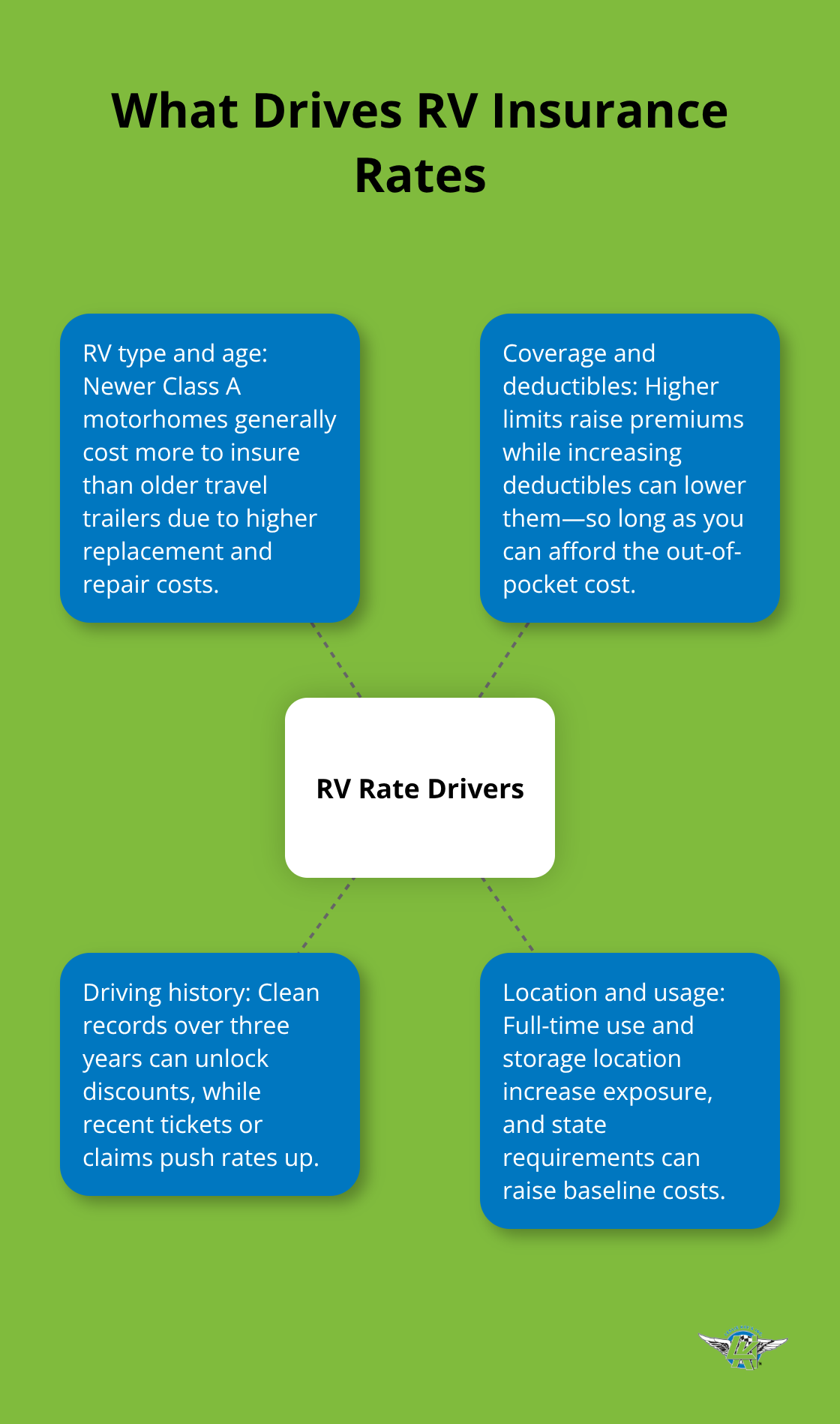
Your RV insurance premium hinges on three major factors that insurers scrutinize carefully. The type and age of your RV matter significantly-a brand-new Class A motorhome costs more to insure than a five-year-old travel trailer because replacement costs and repair expenses differ substantially. Motorhomes run $1,000 or more annually, while travel trailers average around $600 per year, according to Money’s analysis. Older RVs sometimes qualify for lower premiums, but if you financed or leased your vehicle, lenders mandate comprehensive and collision coverage regardless of age, which adds to your costs.
Coverage Choices and Deductibles Impact Your Quote
The coverage limits and deductibles you select directly impact your quote. Increase your deductible from $500 to $1,000, and your premium typically drops noticeably-though this strategy only works if you can actually afford that deductible when a claim happens. Liability-only policies start as low as $125 annually, but that bare-bones approach leaves you vulnerable to theft, weather damage, and mechanical failures. Part-time RVers should carry liability, comprehensive, collision, uninsured motorist protection, and vacation liability coverage at minimum, while full-time residents should add personal property, total loss replacement, and extended liability protection.
Your Driving History Determines Discounts
Your driving history and claims record form the third pillar of your rate calculation. Three years without accidents or violations can unlock a responsible driver discount, while a single recent ticket or claim can raise your rate substantially. One incident can shift your premium upward significantly, so prevention matters more than most realize.
Location and Usage Patterns Affect Pricing
Location plays a role many owners overlook when budgeting for coverage. Where you store your RV, whether you live in it full-time, and your state’s minimum liability requirements all influence pricing. Full-time RVers typically face higher premiums because the vehicle operates year-round and serves as a residence, increasing exposure. States like Hawaii, California, and Washington impose stricter requirements or higher baseline costs due to local regulations and claim frequency. If you pause coverage during off-season months when your RV sits unused, storage programs can reduce your annual cost significantly-storing your vehicle in a locked garage or secure storage facility can lower the risk of theft or damage, leading to reduced rates.
Getting Accurate Quotes Takes Minutes
Accurate quotes require you to provide your RV’s year, make, model, and VIN if available. Online quotes take just three to four minutes to complete, and you can update your VIN later if you don’t have it handy right now. Once you have your basic information ready, you’re positioned to compare quotes across multiple carriers and identify which coverage combinations fit your travel style and budget.
How to Compare RV Insurance Quotes Effectively
Gather Quotes from Multiple Carriers
Request quotes from at least three different carriers to reveal the actual price spread available to you. Online quoting takes three to four minutes per company, so spending fifteen minutes across multiple insurers uncovers savings you’d otherwise miss. Progressive, GEICO, Good Sam Insurance Agency, and Auto-Owners each price RV coverage differently based on their underwriting models, so a quote that seems expensive from one carrier might cost significantly less from another.
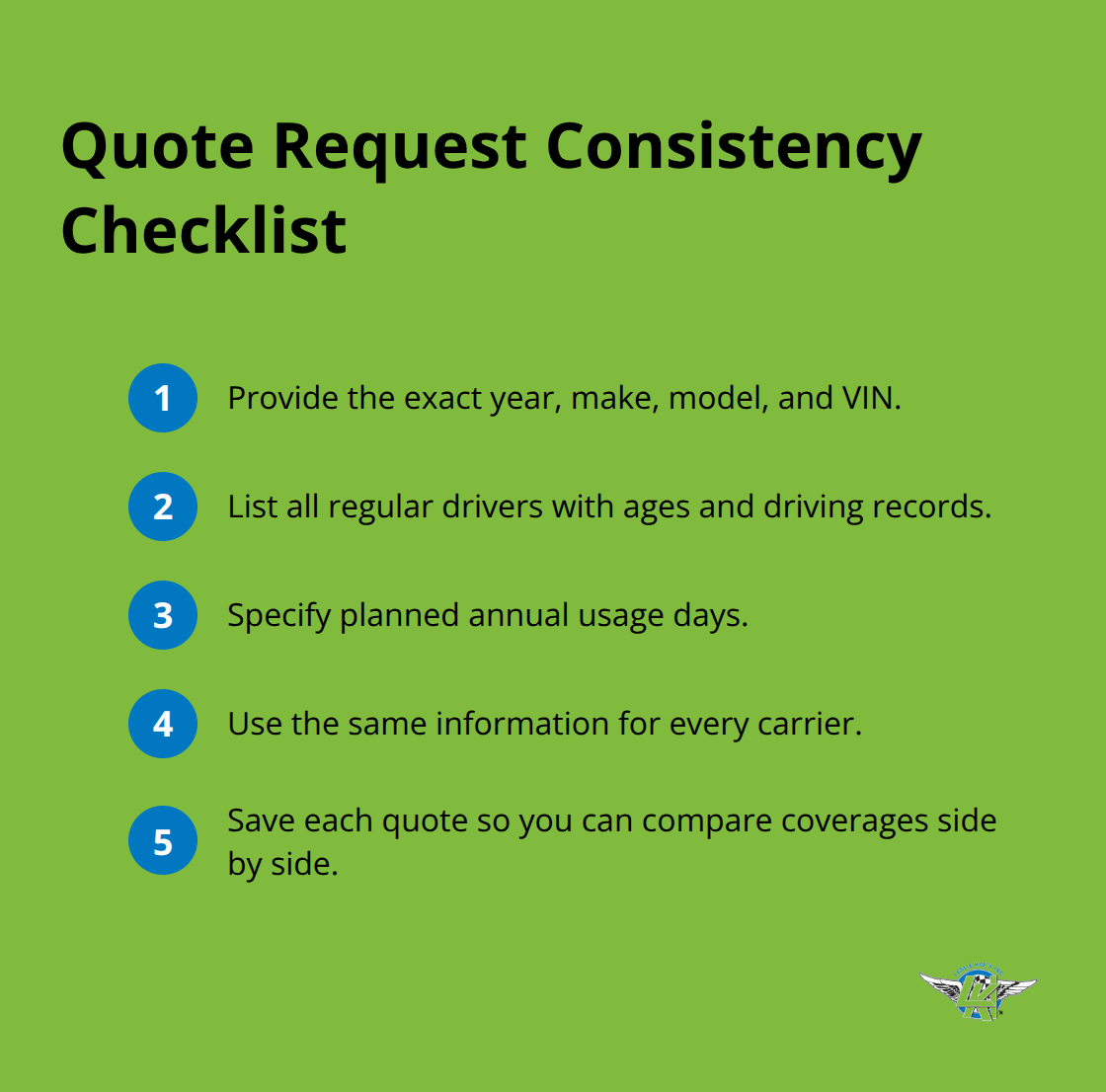
When you request quotes, provide identical information to each company: your RV’s exact year, make, model, and VIN; all regular drivers with their ages and driving records; and your planned annual usage days. This consistency prevents quote variations caused by incomplete data rather than actual rate differences. Good Sam Insurance Agency stands out because it compares quotes from multiple carriers including Progressive, Foremost, Safeco, and National General Group all in one place, eliminating the need to visit separate websites. The process cuts your legwork substantially while exposing you to more pricing options than shopping single-carrier sites alone.
Look Beyond Price to Coverage Details
The dollar amount matters far less than what the coverage actually protects. A $600 annual quote for liability-only coverage sounds affordable until theft or weather damage strikes and you’re left paying repair costs from your own pocket. Money’s analysis shows motorhomes typically run $1,000 or more annually while travel trailers average around $600 per year, but these numbers include comprehensive and collision protection that bare-bones policies exclude.
Full-time RVers especially need to verify that quotes include personal property coverage for belongings inside the RV, total loss replacement for vehicles five model years old or newer, and vacation liability protection since parked RVs create liability exposure that standard auto policies ignore. Lenders require comprehensive and collision coverage if you financed your RV, so any quote missing these becomes irrelevant for financed vehicles. Compare what each carrier includes as standard versus what costs extra, then calculate the true value of each option.
Check Discounts Available for RV Owners
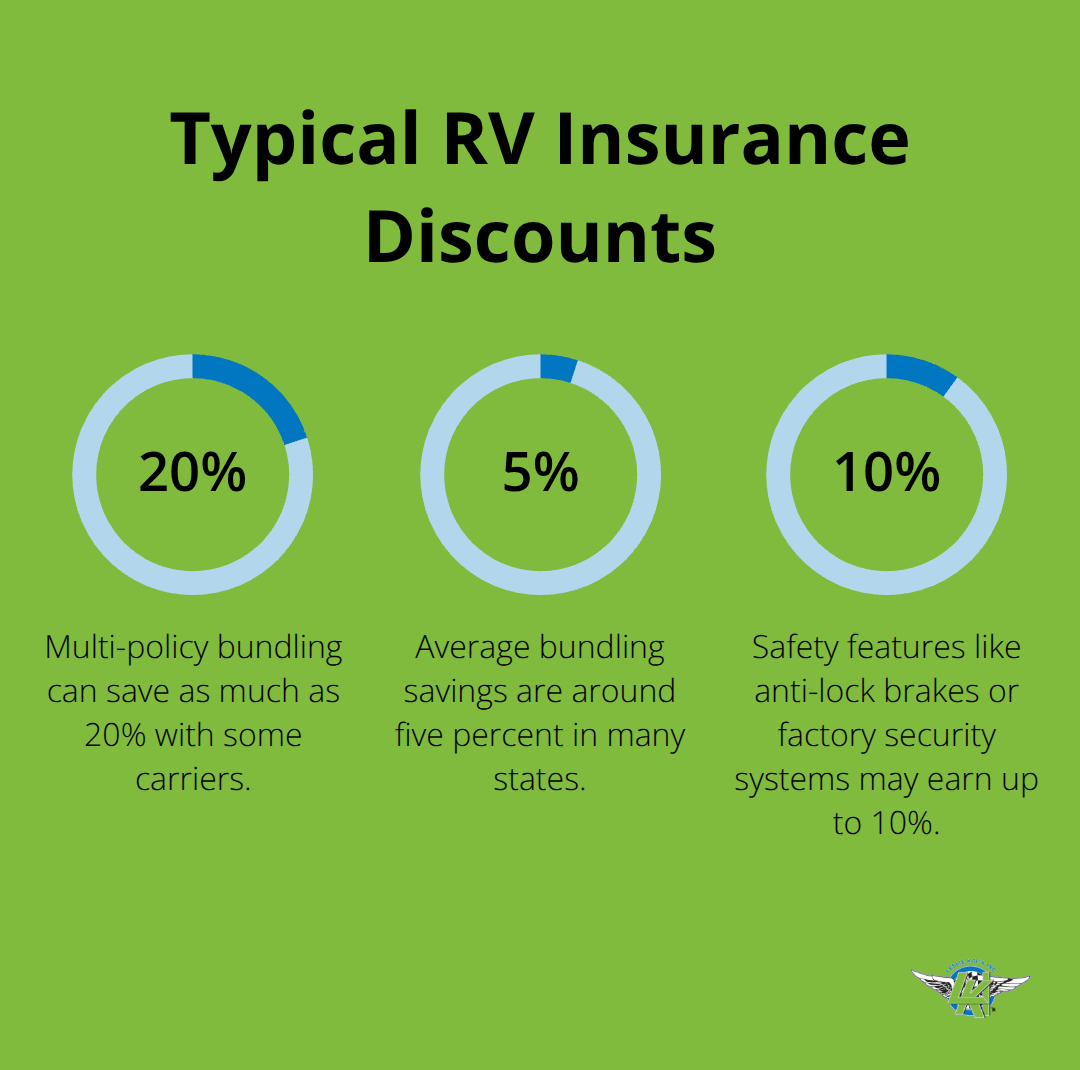
Discounts available to RV owners include bundling your motorhome with auto or homeowners policies for an average savings around five percent in most states, paying your premium in full upfront, maintaining a clean three-year driving record, being the original owner of your RV, and equipping your vehicle with anti-theft or safety devices. State regulations matter too since some states limit which discounts apply, making your actual savings depend on where you live and which carrier you choose.
Request quotes that show discounts applied rather than base prices, then calculate the real cost after savings are subtracted. Many owners focus on the headline rate and miss substantial savings hidden in discount sections. The difference between a base quote and a discounted quote can easily exceed $200 annually, so this step directly impacts your final decision. Understanding which discounts you qualify for positions you to select the carrier that delivers the lowest real cost, not just the lowest advertised price.
Smart Ways to Lower Your RV Insurance Costs
Stack Discounts Through Policy Bundling
Bundling your RV insurance with auto, homeowners, or renters policies generates immediate savings without requiring you to switch carriers or compromise coverage. If you insure two or more vehicles with State Farm and they’re owned by related individuals, you could save as much as 20%. If you already insure a car or truck with a company, adding your RV to that same policy often costs less than shopping the RV separately. Insurers view bundled customers as lower risk and more loyal, so they discount aggressively to keep your entire household’s business. Progressive, GEICO, and Good Sam Insurance Agency all emphasize bundling discounts during quotes, so ask explicitly what percentage reduction applies when you combine your RV with other policies. Some states cap discounts while others allow carriers to stack savings, so your total reduction could exceed initial estimates if you bundle multiple products.
Increase Deductibles to Cut Monthly Premiums
Raising your deductible from $500 to $1,000 on comprehensive and collision coverage typically lowers your premium noticeably, but this tactic only works if you can actually pay that deductible without financial strain when damage occurs. Most owners see monthly reductions between $10 and $30 when they increase deductibles this way, though savings vary by carrier and location. Full-time RVers should approach this carefully since weather damage, theft, or accidents happen more frequently when your RV functions as a permanent residence. Weekend warriors with solid emergency funds can comfortably absorb a $1,000 deductible and pocket the monthly savings.
Install Anti-Theft Devices for Rate Reductions
Installing anti-theft devices, GPS trackers, or alarm systems on your RV qualifies you for safety discounts that reduce premiums without any trade-offs in coverage. These upgrades signal to insurers that you take protecting your investment seriously, and they respond with lower rates. Some carriers offer five to ten percent discounts just for having anti-lock brakes or factory security systems, while aftermarket alarms or tracking devices can generate additional reductions. The one-time cost of installing a quality alarm system pays for itself within two or three years through insurance savings alone (making this investment financially sensible beyond the obvious theft prevention benefit).
Final Thoughts
Finding affordable RV insurance quotes requires you to compare multiple carriers, understand what coverage protects you, and claim every discount you qualify for. The strategies in this guide address the real drivers of your premium-your RV type, driving history, and coverage selections-rather than chasing unrealistic savings promises. Spend fifteen minutes requesting quotes from at least three carriers, then identify which discounts apply to your situation and calculate your actual cost after savings take effect.
Standard auto or homeowners policies leave critical gaps that RV owners face daily. Your regular car insurance won’t cover vacation liability when your motorhome sits parked at a campground, won’t replace personal belongings stolen from your RV, and won’t protect you if you live in your vehicle full-time. At Leslie Kay’s, Inc., we specialize in RV coverage across multiple carriers and states, handling the comparison work so you avoid the legwork yourself.
We shop your policy against competing quotes, identify discounts you’d miss alone, and provide support when claims happen. Working with specialists eliminates guesswork and positions you to obtain affordable RV insurance quotes at the lowest real cost available in your market.
The information provided in this blog is for general informational purposes only and does not constitute legal, financial, or insurance advice. Coverage options, terms, and availability may vary. Please consult with a licensed professional for advice specific to your situation.
Artificial intelligence may have been used to generate text and images in some blog articles.