
Motorcycle riders face insurance challenges that car owners never encounter. At Leslie Kay’s, Inc., we know that motorcycle insurance for riders requires a completely different approach than standard auto policies.
This guide walks you through the coverage types you actually need, how to find affordable rates, and the specific factors that affect your premiums.
Why Motorcycle Insurance Costs More Than Car Coverage
Motorcycle riders pay significantly higher premiums than car owners, and the numbers tell the story. In 2024, motorcyclists were almost 27 times more likely than passenger car occupants to be killed in crashes, according to the National Highway Traffic Safety Administration. This elevated injury rate directly translates to higher claim payouts, which insurers pass along as increased premiums. Over 45,000 motorcycles are stolen annually in the United States according to the National Insurance Crime Bureau, making theft a real financial threat that requires comprehensive coverage. The physics of riding a motorcycle without the protective shell of a vehicle means your body absorbs the impact in an accident, and insurers know this reality shapes their pricing models. Additionally, motorcycle insurance requires specialized coverage types that standard auto policies don’t address. Equipment coverage protects your custom parts and aftermarket upgrades, which can easily run thousands of dollars on a modified bike. Guest passenger liability coverage is essential since you’re responsible for anyone riding with you, and their injuries fall under your policy limits. Roadside assistance for motorcycles differs from cars because your bike may need specialized towing equipment or mechanics who understand motorcycle mechanics.
Sport Bikes and Engine Size Drive Your Rate Higher
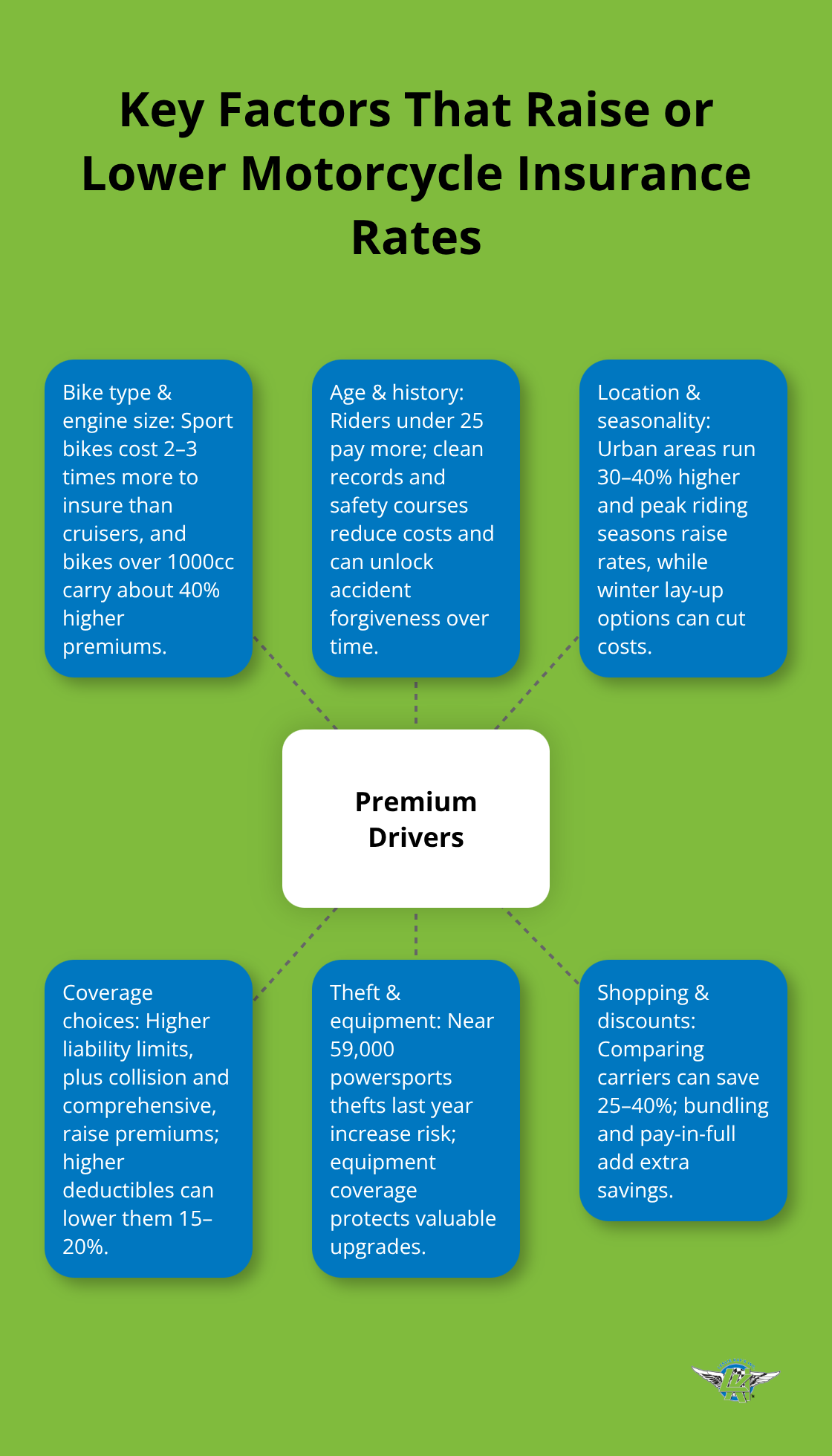
Sport bikes cost 2-3 times more to insure than cruisers, and motorcycles over 1000cc carry about 40% higher premiums than smaller engines according to Kelley Blue Book. A sport bike owner might pay $2,000–$3,500 annually for full coverage while a cruiser rider pays $500–$1,000 for the same protection level. Your bike’s type and displacement directly influence what you’ll pay each month.
Age and Riding History Shape Your Premiums
Riders under 25 pay substantially higher rates, though premiums drop about 10-15% per year after two incident-free years. Taking a Motorcycle Safety Foundation course reduces premiums by 15-20%, making this investment worthwhile. Your riding history determines everything: at-fault accidents raise rates by 20-45% for three years, while maintaining a clean record earns accident forgiveness programs after 3-5 years.
Location and Seasonal Patterns Affect Your Costs
Location affects your costs dramatically, with urban riders paying 30-40% more than rural riders. Seasonal riding patterns also influence pricing, with peak season rates 20-30% higher than off-season costs, though winter lay-up options can cut premiums by 25-40% while maintaining coverage. These factors combine to create significant variation in what different riders actually pay for protection.
Understanding these cost drivers helps you anticipate what your policy will cost and identify which factors you can control. Next, we’ll examine the specific coverage types you need to protect yourself and your bike.
Coverage Your Motorcycle Insurance Must Include
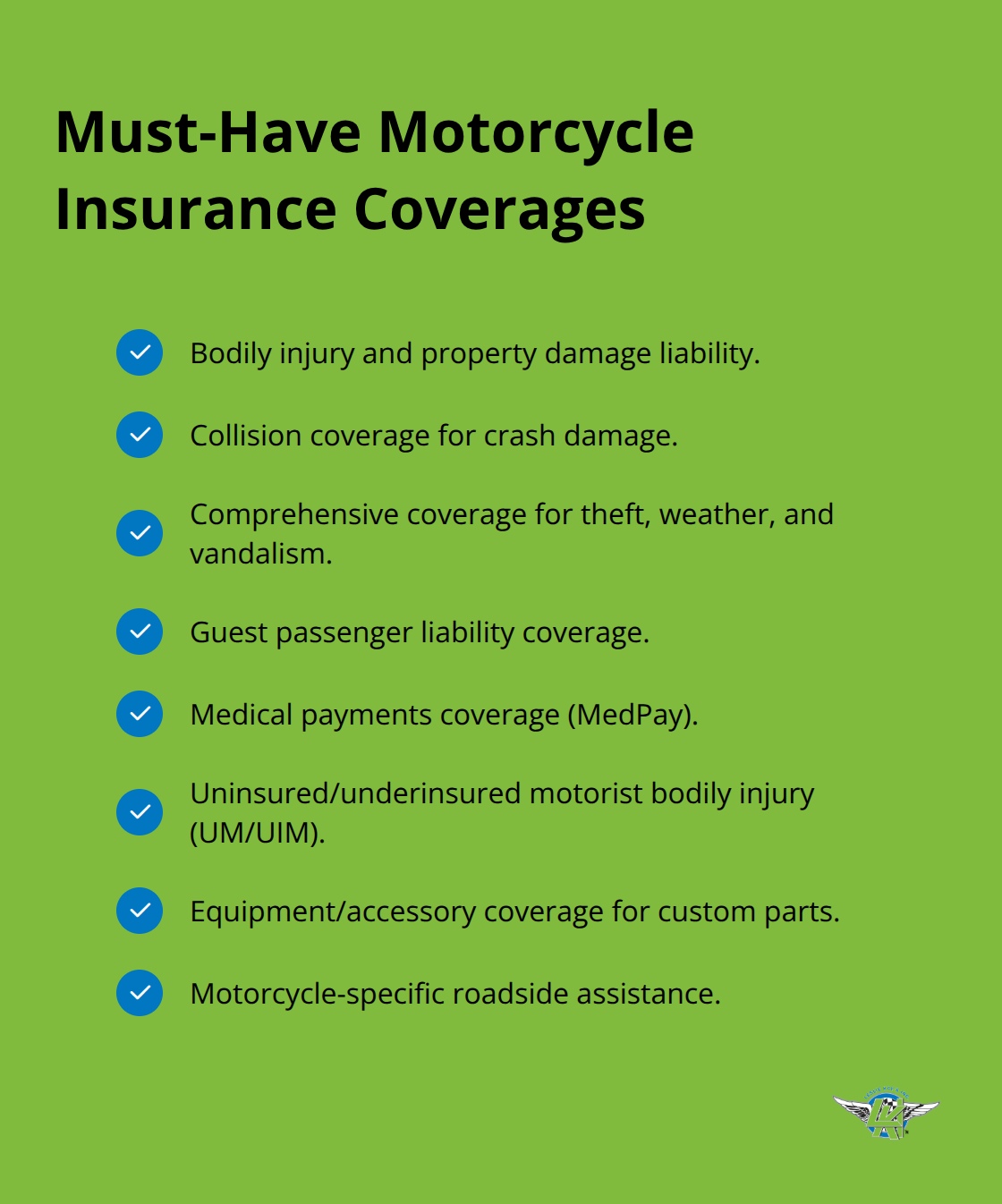
Liability coverage is legally required in nearly every state, and ignoring this requirement costs you far more than the premium. Most states mandate minimum limits of 15/30/5 (bodily injury per person/per accident, property damage), but these minimums leave you dangerously exposed. California requires higher limits at 15/30/5, while other states set different thresholds. Increasing your limits from minimums to 100/300/50 adds only roughly $150–$300 annually according to the Insurance Information Institute. If you cause an accident and the injured party’s medical bills exceed your coverage limit, they can sue you personally for the difference. At-fault accidents raise your rates by 20–45% for three years, making liability claims expensive even when you’re insured.
Collision and Comprehensive Protection for Your Bike
Collision coverage protects your bike when you crash into another vehicle or object, while comprehensive handles theft, weather damage, and vandalism. Nearly 59,000 motorcycles, ATVs, snowmobiles and watercraft were stolen last year according to the National Insurance Crime Bureau, making comprehensive coverage non-negotiable if you own an expensive bike or live in an urban area. Urban riders pay 30–40% more than rural riders, reflecting this theft risk. Collision and comprehensive coverages add about $300–$800 annually to your premium, but raising your deductible from $500 to $1,000 lowers premiums by 15–20%, giving you control over your costs.
Passenger Liability and Medical Protection
Guest passenger liability coverage protects anyone riding with you, and their injuries fall under your policy limits rather than their own insurance. This coverage is essential because passengers have no protection without it, and you remain legally responsible for their safety. Medical payments coverage and uninsured/underinsured motorist bodily injury protection reimburse your own medical expenses and lost income if an uninsured driver hits you.
At-fault accidents raise rates by 20–45% for three years, so medical payments coverage prevents you from paying out-of-pocket while fighting a claim.
Equipment Coverage for Custom Parts
Equipment coverage protects your custom parts and aftermarket upgrades that can easily cost thousands of dollars on a modified bike. Optional coverages like guest passenger coverage cost $100–$200 yearly while accessory coverage runs $15–$30 per $1,000 of equipment protection. Coverage can increase up to $30,000 for comprehensive aftermarket protection, making this investment worthwhile for riders with custom bikes. Roadside assistance for motorcycles differs from car coverage because your bike requires specialized towing equipment and mechanics who understand motorcycle systems.
These layers of protection work together to cover gaps in your primary liability limits and protect your physical body when accidents happen. The right combination of coverages shields you from financial disaster, but finding affordable rates requires a strategic approach to shopping and discounts.
How to Lock in Lower Rates Without Sacrificing Coverage
Compare Quotes Across Multiple Carriers
Comparing quotes across multiple carriers is non-negotiable if you want affordable motorcycle insurance. Most riders stick with their first quote, but shopping around typically saves 25–40% on annual premiums according to the Insurance Information Institute. Progressive, Allstate, and regional carriers price policies differently based on their own risk models, so a sport bike that costs $3,000 annually with one insurer might run $1,800 with another. You should get quotes from at least three carriers before committing, and provide identical information across each quote to ensure accurate comparisons. Your bike’s year, make, model, and VIN matter because insurers use these details to assess theft risk and repair costs. The difference between a $200 monthly premium and a $150 monthly premium adds up to $600 per year-money that belongs in your pocket, not an insurer’s.
Stack Discounts to Maximize Savings
Discounts reward safe riding behavior and loyalty, so claim every one you qualify for. The Good Rider discount applies if you’ve maintained 60 consecutive months without an at-fault accident or major violation, potentially saving hundreds annually. Completing a Motorcycle Safety Foundation course within the past 36 months reduces premiums by 15–20% according to Kelley Blue Book, and this discount pays for itself in one or two months. Membership in organizations like the American Motorcyclist Association, Harley Owners Group, or Honda Riders Club of America unlocks additional savings on top of your base rate.
Bundle Policies and Adjust Deductibles
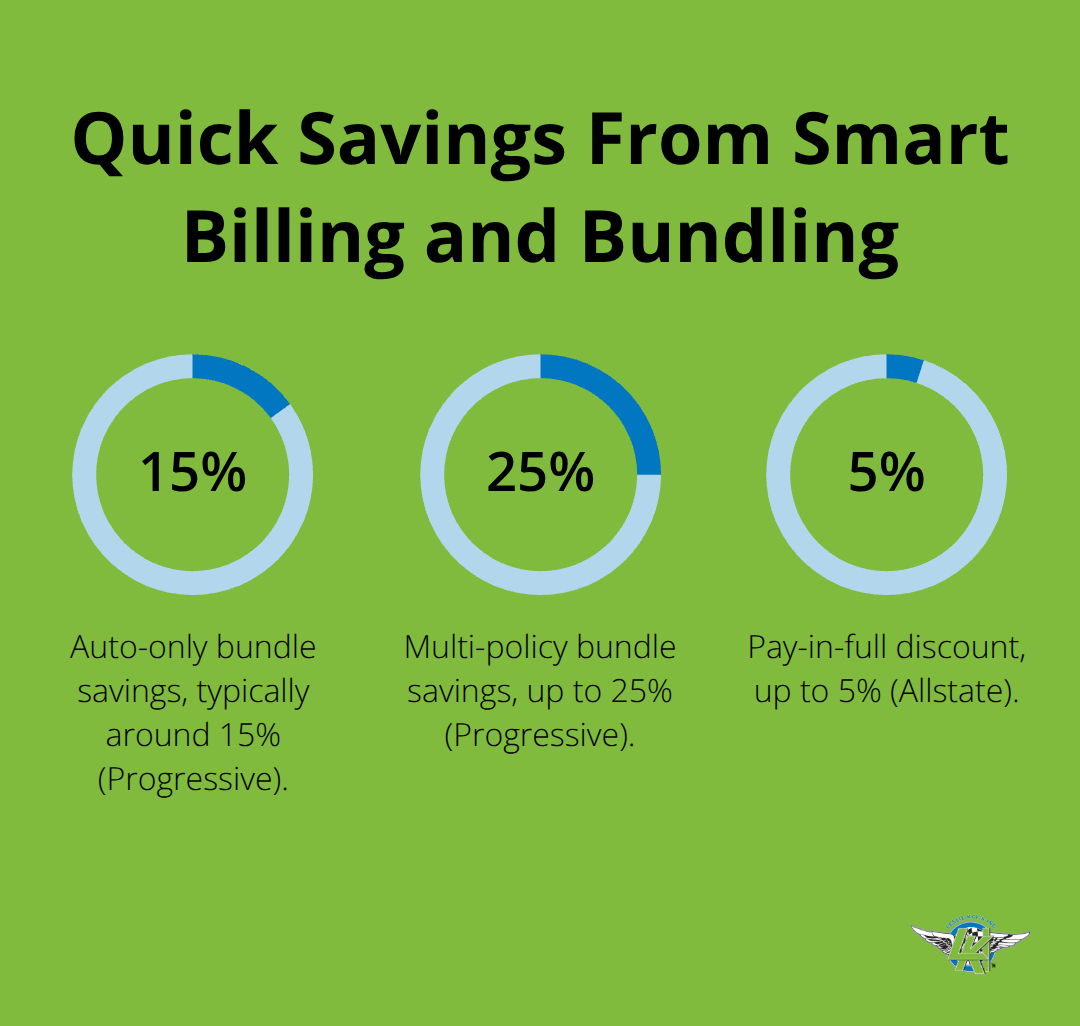
Bundling your motorcycle policy with auto or home insurance cuts costs substantially, with bundled policies typically saving around 15% for auto-only combinations and up to 25% for multi-policy bundles according to Progressive. If you insure multiple motorcycles, that discount stacks on top of everything else. Raising your collision deductible from $500 to $1,000 lowers premiums by 15–20%, and this strategy works if you have emergency savings to cover the deductible yourself. Paying in full rather than monthly installments saves up to 5% according to Allstate, and enrolling at least seven days before your current policy expires adds another discount.
Customize Coverage for Your Bike Type and Location
Custom bikes and vintage motorcycles need specialized coverage, with agreed-value policies protecting classics and often requiring 25–40% higher premiums for customized bikes according to Hagerty. You should tailor your equipment coverage limit based on actual upgrade costs-if your custom parts total $8,000, set your limit there rather than paying for unnecessary protection. Urban riders should prioritize comprehensive coverage given that nearly 59,000 motorcycles were stolen last year, but rural riders might reduce collision coverage limits to lower costs.
Final Thoughts
Motorcycle insurance for riders demands a customized approach because your riding style, bike type, location, and budget shape what protection you actually need. State minimums satisfy legal requirements but leave you dangerously exposed-increasing your limits from minimums to 100/300/50 adds only $150–$300 annually yet prevents a single accident from destroying your finances. Collision and comprehensive coverage protect your bike, while medical payments coverage keeps you from paying out-of-pocket for injuries after an accident.
Shopping quotes across multiple carriers typically saves 25–40% on annual premiums, and stacking discounts can lower your costs by another 25–40%. Raising your deductible from $500 to $1,000 cuts premiums by 15–20%, giving you control over monthly payments. Completing a safety course, maintaining a clean riding record, bundling policies, and joining motorcycle organizations all reward you with lower rates.
We at Leslie Kay’s, Inc. specialize in motorcycle insurance for riders across multiple states and work to deliver customized policies built for your specific needs. Get a personalized quote that reflects your actual riding profile, bike type, and coverage priorities. The right motorcycle insurance protects both you and your bike without draining your budget.
The information provided in this blog is for general informational purposes only and does not constitute legal, financial, or insurance advice. Coverage options, terms, and availability may vary. Please consult with a licensed professional for advice specific to your situation.
Artificial intelligence may have been used to generate text and images in some blog articles.